Uppercase identification Normal Uppercase Letters Worksheets for Ages 3-6
5 filtered results
-
From - To
Introducing our "Uppercase Identification Normal Uppercase Letters Worksheets" for ages 3-6, designed to help young learners master recognizing and identifying uppercase letters of the alphabet. Through fun and engaging activities, these worksheets aid in developing your child's letter recognition, visual discrimination, and fine motor skills. Each worksheet features vibrant images and interactive tasks, making learning enjoyable and effective. Perfect for preschools, kindergartens, and at-home practice, our worksheets offer a solid foundation for early literacy. Ensure your child’s success in alphabet mastery with our user-friendly and educational resources. Join us at Kids Academy today!
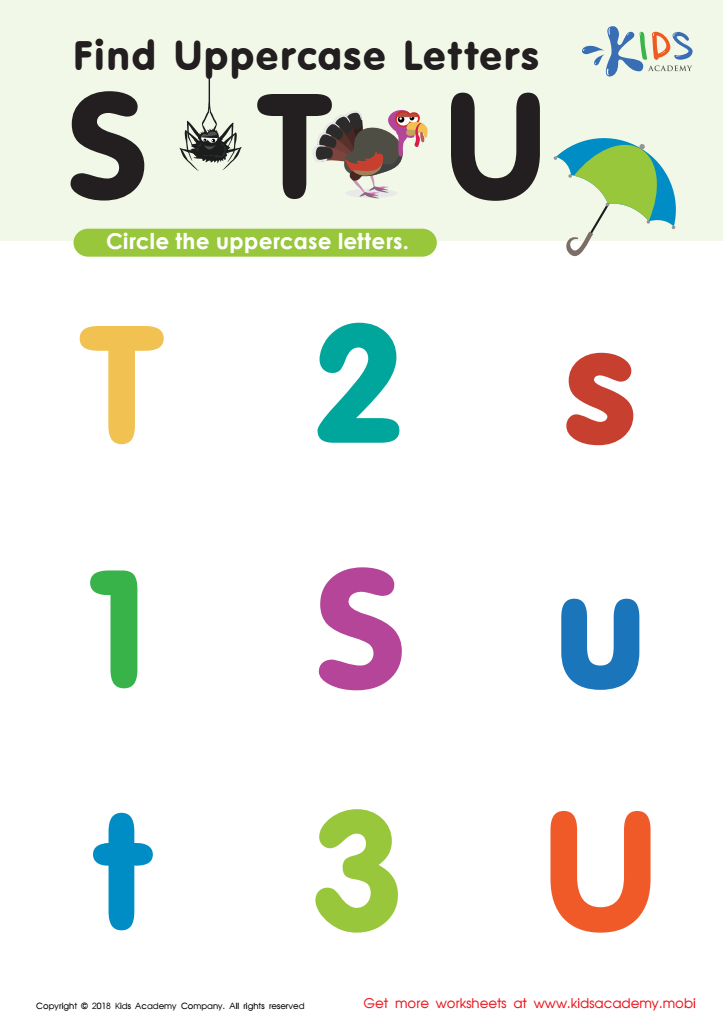
Find Uppercase Letters Worksheet
 Assign to My Students
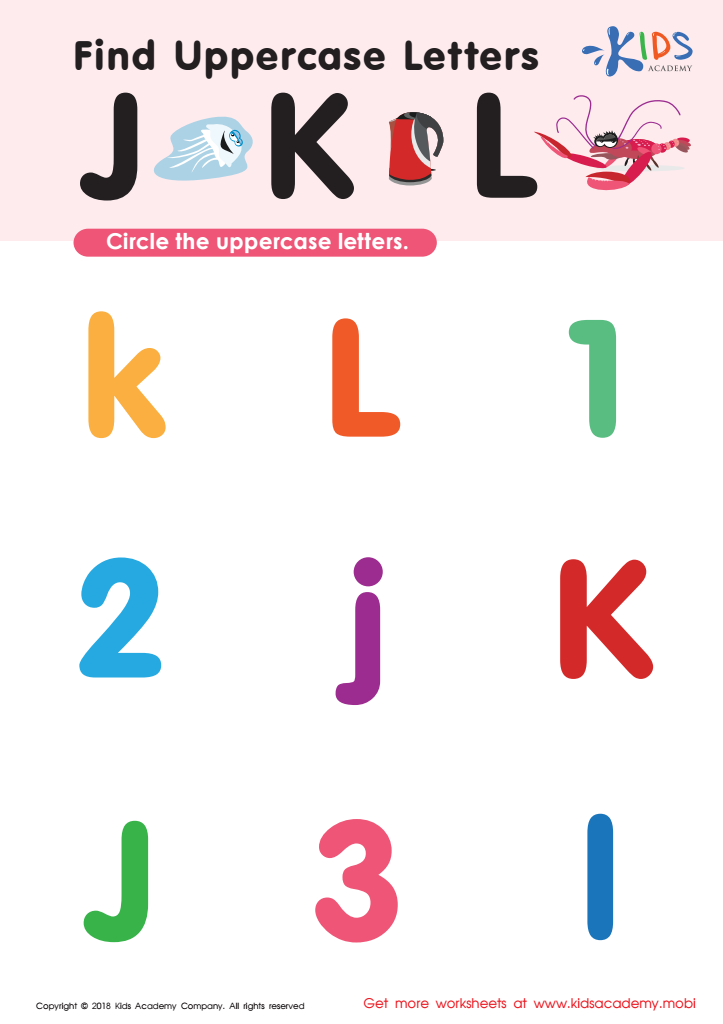
Find Uppercase Letters J, K, and L Worksheet

Find Uppercase Letters A, B, and C Worksheet
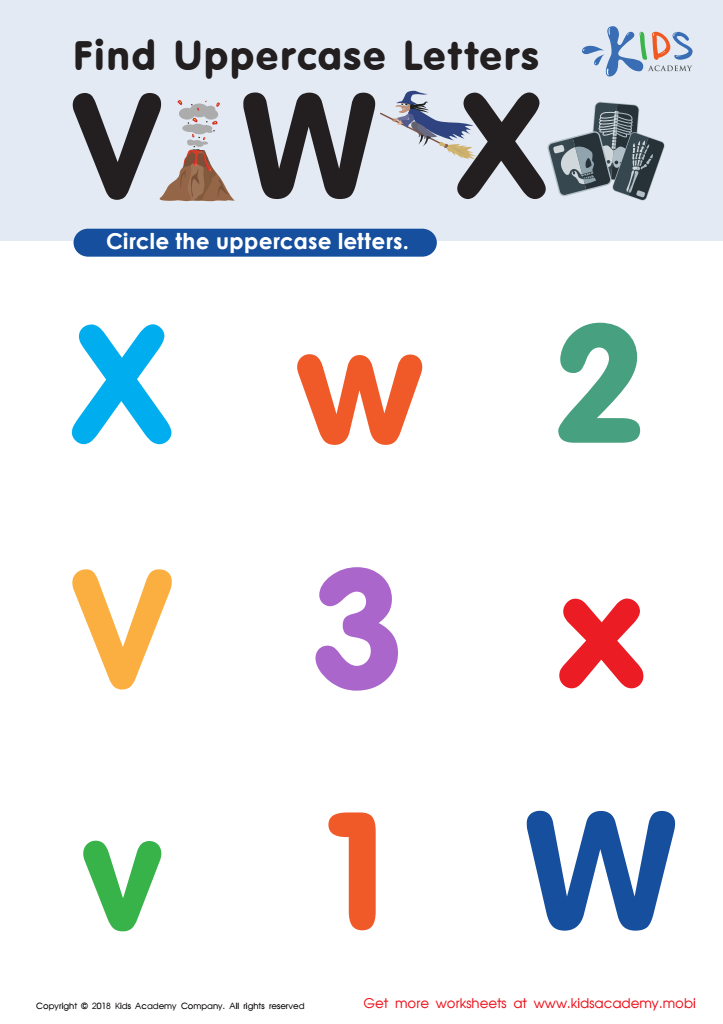
Find Uppercase Letters V, W, X Worksheet
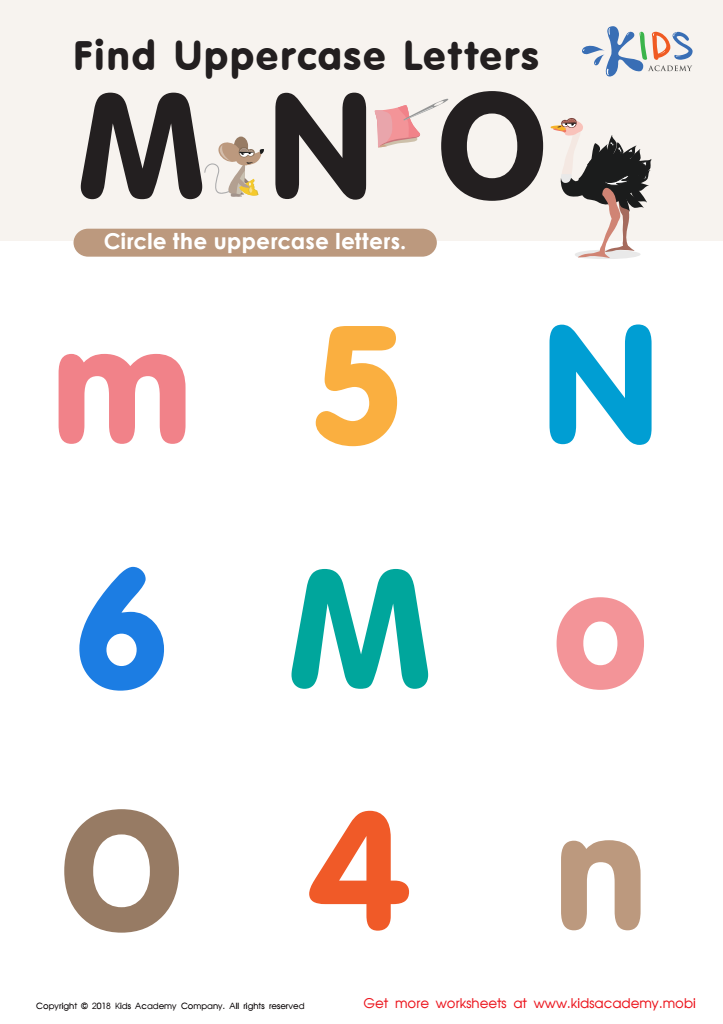
Find Uppercase Letters M, N, and O Worksheet








Familiarizing young children, ages 3-6, with uppercase letter identification is crucial for early literacy development. During these formative years, children's brains are highly receptive to learning, and recognizing uppercase letters provides a foundational step towards reading and writing proficiency. These skills are critical because they form the building blocks of more complex literacy skills. Uppercase letters are often more distinct and visually simpler than their lowercase counterparts, making them easier for young learners to identify and remember.
Introducing uppercase letters at an early age also aids in proper alphabet sequencing, essential for organized learning and effective communication. As children familiarize themselves with these letters, it enhances their ability to recognize their names in print, a key milestone in literacy development. Furthermore, encouraging early literacy stimulates cognitive skills, including memory, attention to detail, and visual processing capacities. Such early interventions directly influence future academic success, promoting confidence and eagerness in learning.
Neglecting early letter recognition can result in struggling readers, leading to frustration, decreased self-esteem, and long-term academic difficulties. Thus, parents and teachers should actively engage in nurturing uppercase letter knowledge, helping to lay a robust groundwork that supports literacy acquisition and educational growth throughout their academic journey.