Hand-eye Coordination Normal Vowels Worksheets for Ages 3-6
4 filtered results
-
From - To
Enhance your child's hand-eye coordination with our engaging Normal Vowels Worksheets designed for ages 3-6. Each colorful worksheet aims to improve fine motor skills while teaching essential vowel sounds, making learning enjoyable and effective. Children will trace, color, and match vowels, fostering better control and precision. Perfect for young learners, these activities combine fun and education, ensuring your child is developing crucial early literacy skills. Visit our webpage today to explore our vibrant collection of worksheets that turn learning vowels into an interactive and skill-building experience! Secure your child's educational foundation with Kid’s Academy.
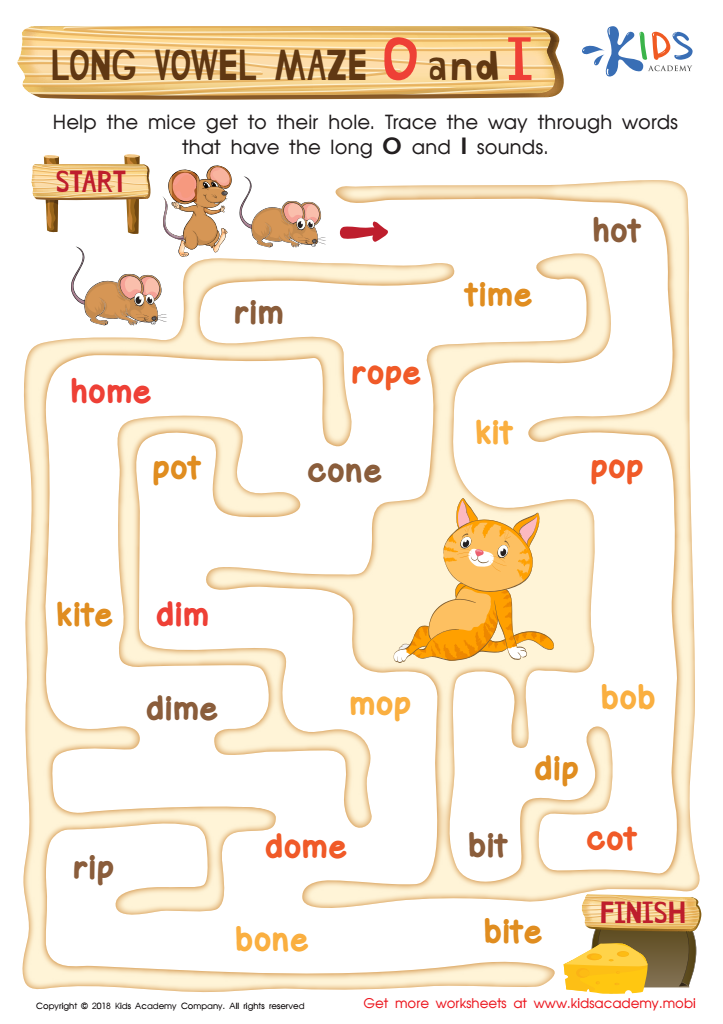
Long Vowel Maze /o/ and /i/ Worksheet
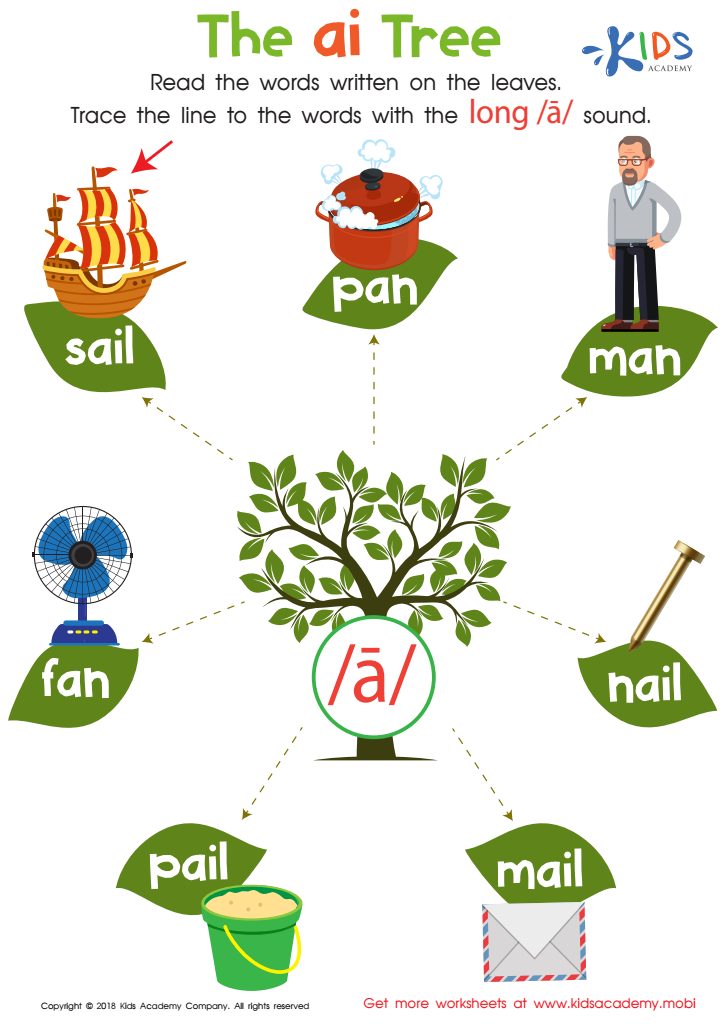
The AI Tree Worksheet

Long and Short U Worksheet
 Assign to My Students
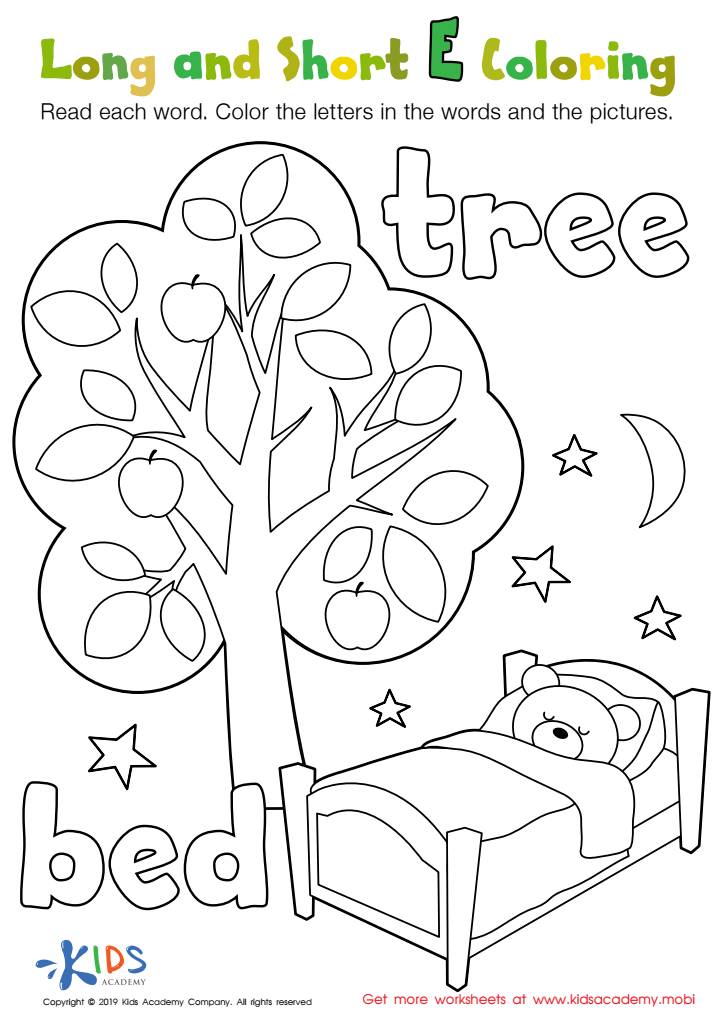
Long and Short E Worksheet
Assign to My Students





Parents and teachers should prioritize hand-eye coordination and the understanding of normal vowels for children aged 3-6 because these skills form critical building blocks for later learning and development. Hand-eye coordination, the synchronous control of eye movement and hand manipulation, is essential for activities like writing, cutting with scissors, and playing sports. It enhances fine motor skills, which are crucial for school readiness and general cognitive development. Fine-tuned hand-eye coordination supports independence and confidence in young children, fostering a positive attitude toward future learning experiences.
Understanding and recognizing normal vowels is equally important, as it establishes a foundation for language development. Proficiency in vowel sounds facilitates phonemic awareness, which is the ability to identify and manipulate individual sounds in words. This ability is critical for reading and spelling, as it underlies the process of decoding (reading) and encoding (writing). By mastering vowel sounds, children become more adept at forming words and sentences, thereby improving their communication skills.
In summary, focusing on hand-eye coordination and normal vowel recognition aids in fine motor skill development and early literacy, ensuring children are well-prepared for academic and social success. Therefore, both parents and teachers should actively foster these skills to support the holistic growth of their children.






