
Sound recognition Normal Vowels Worksheets for Ages 3-6
3 filtered results
Difficulty Level
Grade
Age
-
From - To
Subject
Activity
Standards
Our "Sound Recognition Normal Vowels Worksheets" are perfect for children aged 3-6. Carefully designed, these worksheets help early learners distinguish between normal vowel sounds in a fun and engaging way. Each worksheet offers vibrant images and interactive activities to keep youngsters intrigued while enhancing their phonemic awareness. Ideal for at-home learning or classroom use, these tools support foundational reading skills, boost listening abilities, and reinforce vowel sound recognition. Foster your child's early literacy with these effective and enjoyable worksheets, setting the stage for their academic success. Enjoy a seamless learning experience tailored perfectly for young minds.
Favorites
With answer key
Interactive
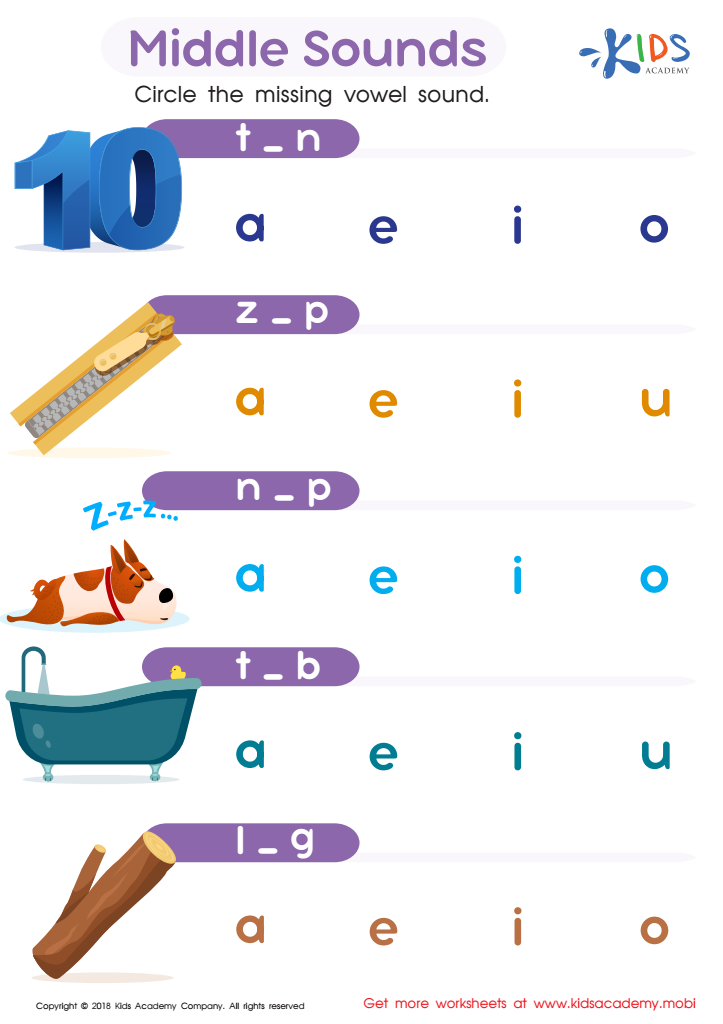
Middle Sounds Worksheet
Download this free worksheet and help your reader identify middle sounds in words. Pictures provide clues to the word, while tracing circles around the middle vowel sound strengthens fine motor and visual discrimination skills. It's a great way to teach sound discrimination between similar-sounding short vowels - a key component for proficient reading.
Middle Sounds Worksheet
Worksheet

Long and Short U Worksheet
Revised: Spice up your lesson on long and short vowels with this fun printout! Kids read the words "tube" and "tub," then reinforce the sound by coloring in the words and pictures. It's a great way to make phonics class enjoyable!
Download (PDF)
 Assign to My Students
Assign to My Students
Long and Short U Worksheet
Worksheet
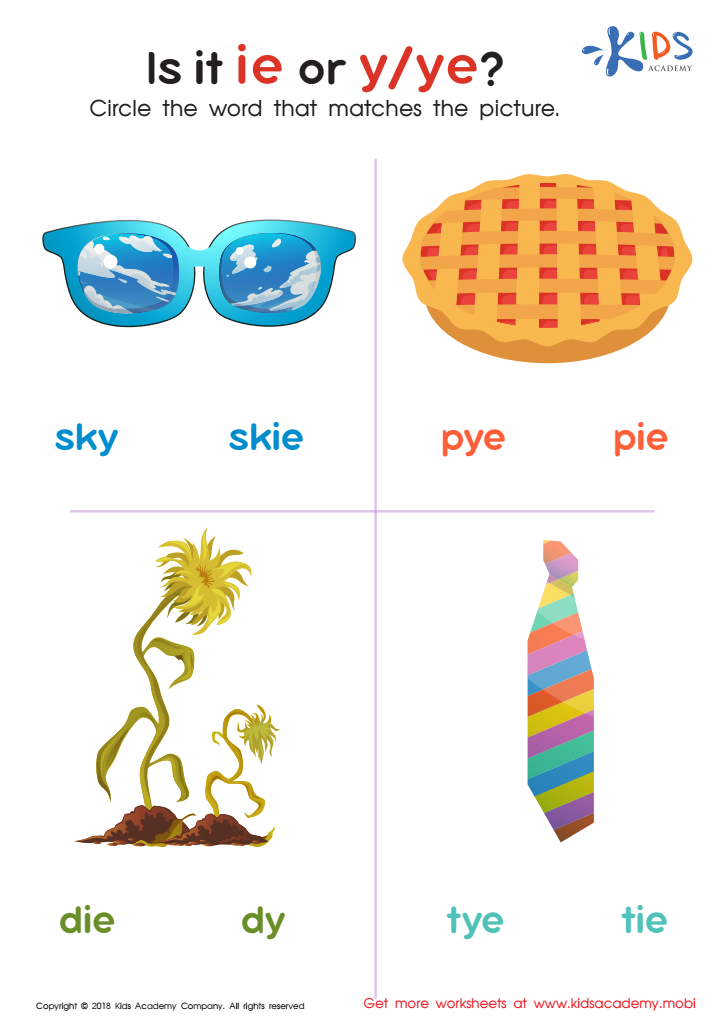
Is It IE or Y/Ye? Worksheet
Test your child's picture identification skills by pointing at common items in your house and asking them to name them. Then, look at the objects in this worksheet with your little one. Point at each one, ask for the name, then ask which spelling is correct. Help them circle the correct word.
Is It IE or Y/Ye? Worksheet
Worksheet
Join Kids Academy for Free
Who is primarily going to use this learning content?





Sound recognition of normal vowels for ages 3 to 6 is crucial as it lays the foundation for early literacy and overall language development. During these formative years, children's brains are exceptionally receptive to acquiring language skills, which are built upon recognizing and distinguishing sounds. Vowel sounds, being the core building blocks of words, play a vital role in this process.
When children correctly identify vowel sounds, they are better equipped to decode words, enhancing their reading skills. This early familiarity aids in phonemic awareness, where children understand how sounds form words, enabling smoother transitions into more complex phonics. Good vowel sound recognition is directly linked to improved spelling and writing abilities, as children start to understand word patterns and sound correspondences.
For parents and teachers, focusing on vowel sound recognition fosters a positive, confident start in a child's educational journey. It encourages active listening and communication skills, essential for effective learning and social interactions. Moreover, addressing sound recognition early can mitigate potential reading difficulties and dyslexia, facilitating a smoother academic progression.
Ultimately, nurturing these skills in early childhood unlocks a world of learning opportunities, promoting long-term academic success and a lifelong love for reading and learning. Engaging children with playful, auditory-rich activities ensures this essential developmental milestone is both enjoyable and impactful.






