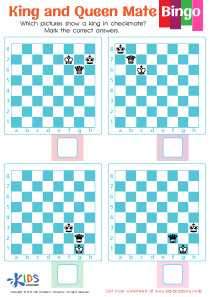
Problem-solving practice Normal Chess Worksheets for Ages 3-6
3 filtered results
Difficulty Level
Grade
Age
-
From - To
Subject
Activity
Standards
Discover engaging Problem-Solving Practice Normal Chess Worksheets designed for children ages 3-6! These thoughtfully crafted worksheets foster critical thinking skills and enhance cognitive development through the captivating world of chess. Young learners will embark on fun, interactive activities that promote problem-solving abilities, adaptability, and strategic thinking. Each worksheet is tailored to build essential skills while keeping kids entertained, ensuring a solid foundation for future learning. Whether at home or in the classroom, these worksheets provide a perfect blend of education and play. Start your child’s chess journey today and watch them grow as confident thinkers and problem solvers!
Favorites
With answer key
Interactive
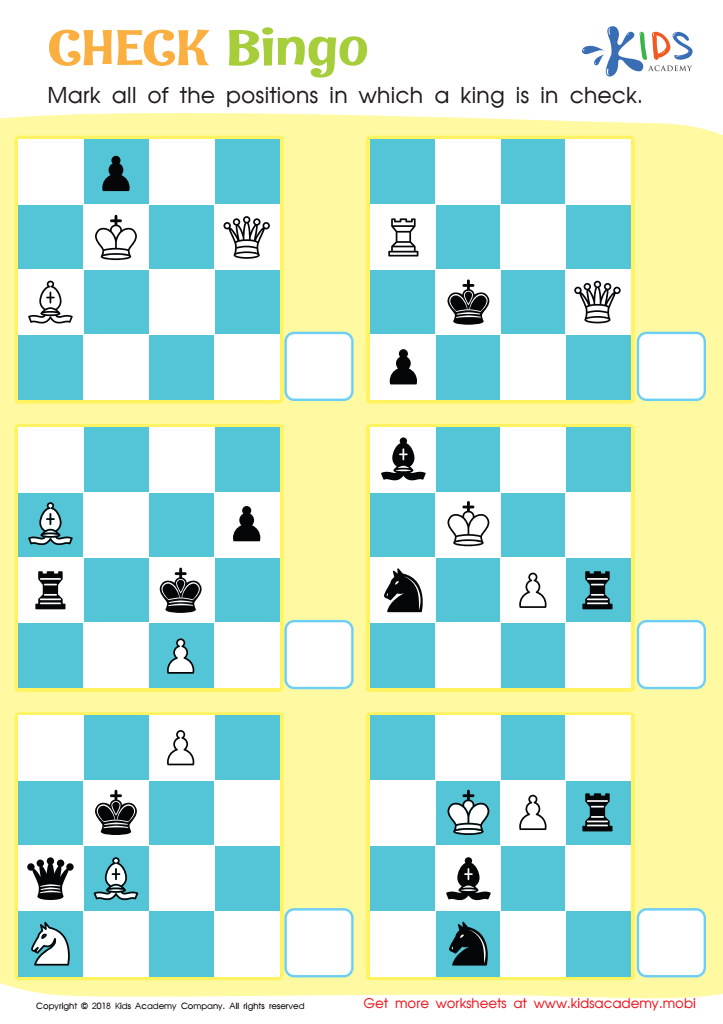
Check Bingo Worksheet
Chess helps young minds build critical thinking, problem-solving and logical reasoning skills. This free PDF worksheet is a fun way to teach these skills. It explains the concept of check and includes gameboards with kings in various positions. Students mark off the boards where a king isn't in check, and they're ready to move onto checkmate!
 Assign to My Students
Check Bingo Worksheet
Worksheet
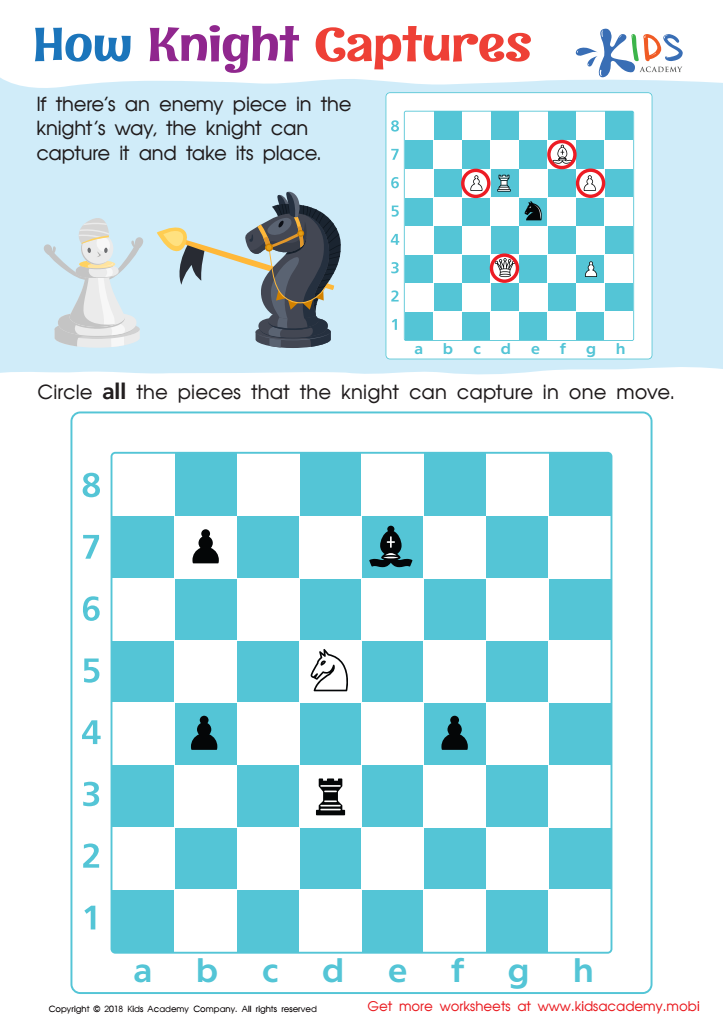
How Knight Captures Worksheet
Test your child's knowledge of chess pieces by asking them to identify the knight. It is shaped like a horse and its goal is to capture the enemy king in order to win the game. The knight has the advantage of being able to jump over other pieces, taking them out and taking their place. See how many pieces the knight can capture in one move with this worksheet.
How Knight Captures Worksheet
Worksheet
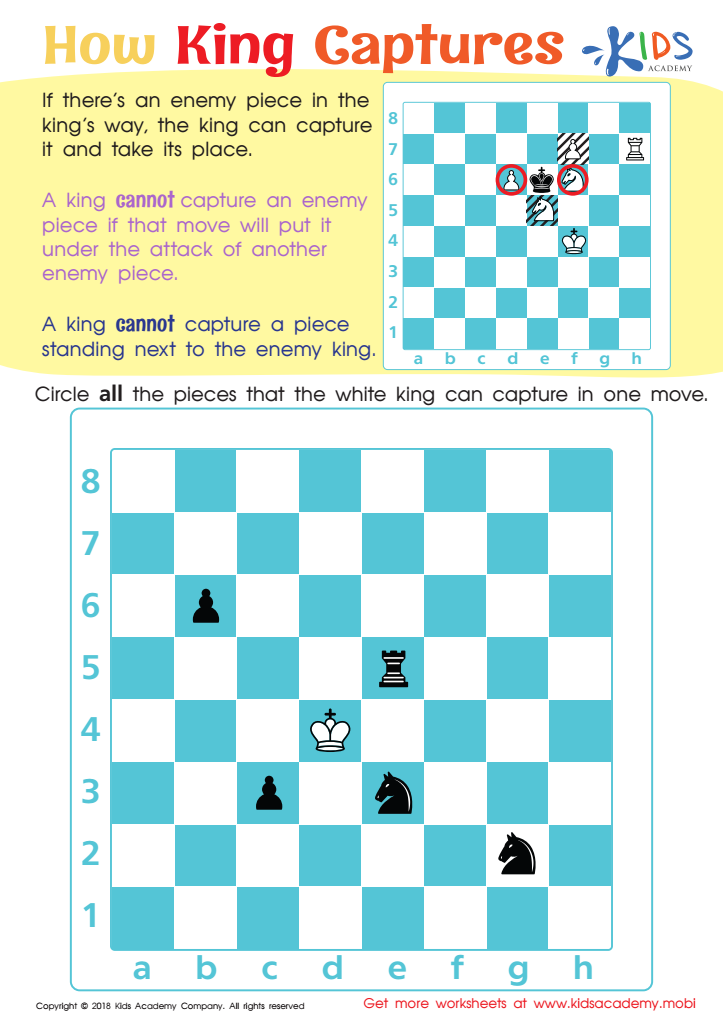
How King Captures Worksheet
The king can capture an enemy piece by taking its place. But it cannot move if the action will put it at risk of attack, or if it's next to the enemy king. On this worksheet, circle the places the white king can capture in one move. (80 words)
How King Captures Worksheet
Worksheet
Join Kids Academy for Free
Who is primarily going to use this learning content?







Problem-solving practice, such as through Normal Chess, is essential for children ages 3-6 as it significantly enhances critical cognitive and social skills. Engaging with chess at a young age helps children develop strategic thinking, enabling them to analyze situations, foresee consequences, and make informed decisions—a foundational skill for academic success and everyday life.
Chess encourages imaginative play and creative problem-solving, nurturing a child’s ability to think independently and approach challenges from various angles. Furthermore, it fosters patience and concentration, as they must focus for extended periods to understand the game’s nuances.
Through playing chess, children also learn valuable social skills, such as turn-taking, cooperation, and respect for opponents. It teaches the importance of losing graciously and celebrating wins with humility, vital traits for emotional intelligence.
Additionally, integrating problem-solving practice through games reinforces early math and literacy skills, helping bridge learning gaps that might arise when children enter formal education. In an age where many distractions exist, cultivating an enjoyable learning tool like chess can help cultivate a lifelong love for learning, making it an excellent choice for parents and educators committed to fostering well-rounded, articulate, and capable individuals.