Contextual understanding Normal Worksheets for Ages 3-6
3 filtered results
-
From - To
Help your child build crucial early learning skills with our Contextual Understanding Normal Worksheets for Ages 3-6. Aimed at fostering comprehension, these engaging worksheets cover various themes to highlight the importance of context in daily scenarios. Kids will enhance their vocabulary, improve critical thinking, and learn to interpret information effectively. Designed by educational experts, our worksheets offer an engaging and fun way to nurture your child's natural curiosity. Perfect for both classroom and at-home learning, give your preschooler a head start in understanding the world around them. Explore our free resources today and set your child on a path to success.
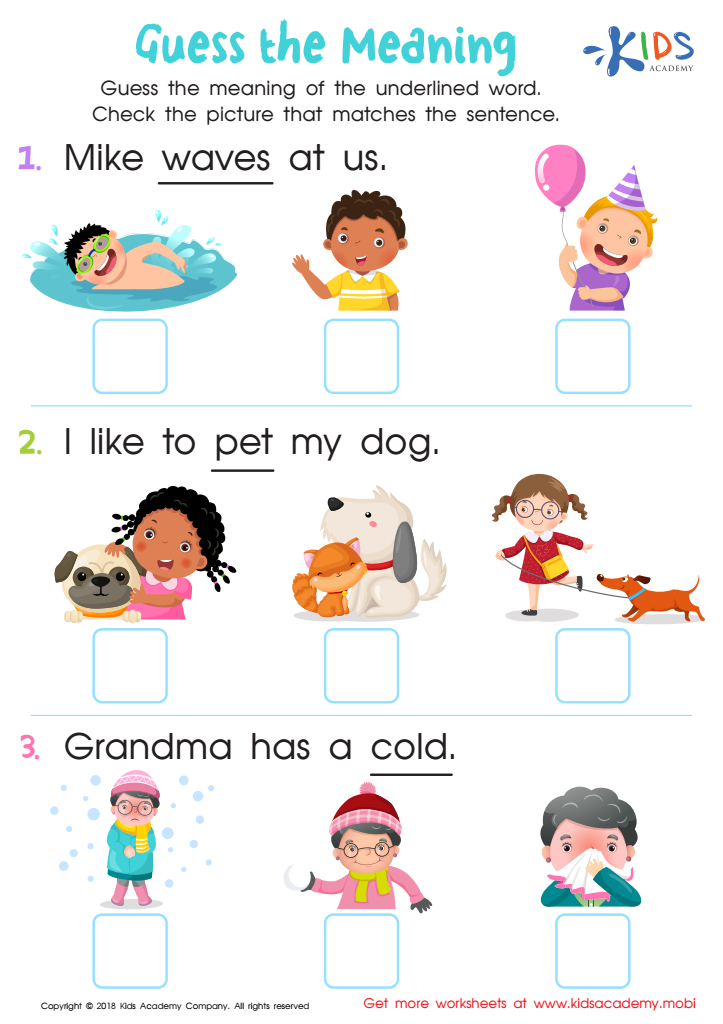
Guess the Meaning Worksheet
 Assign to My Students
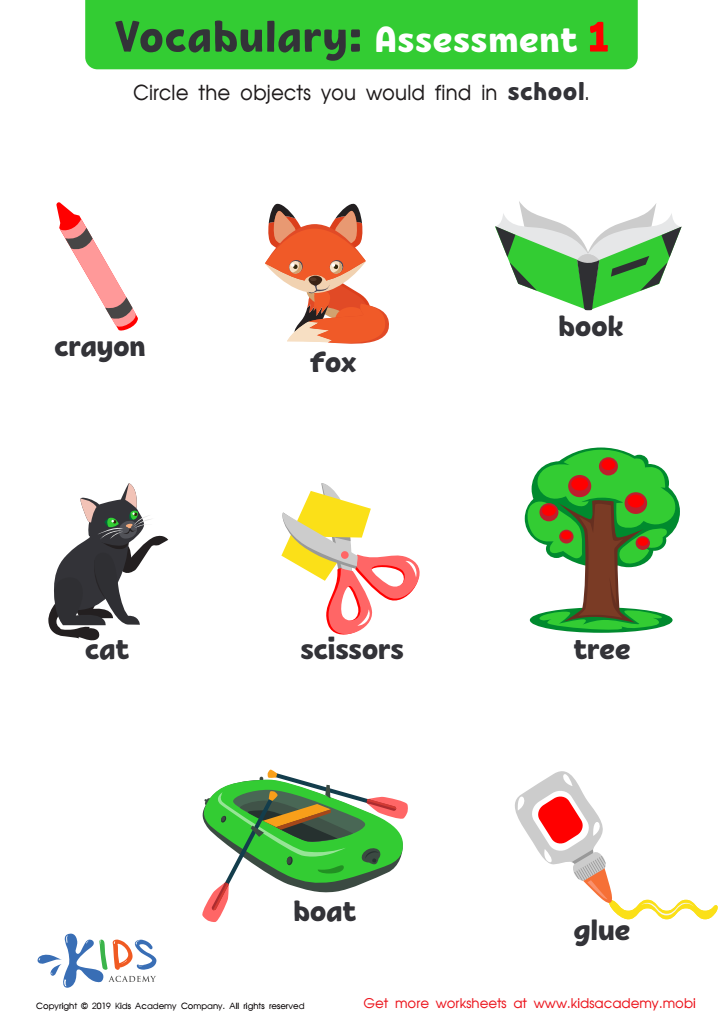
Vocabulary: Assessment 1 Worksheet
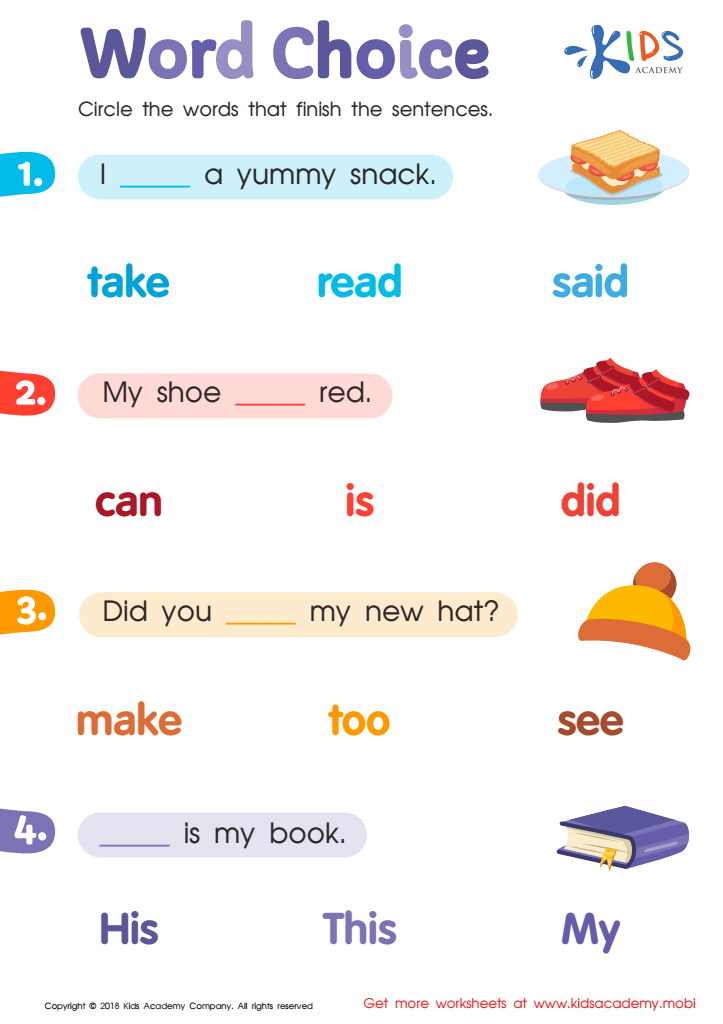
Word Choice Worksheet



.jpg)




Contextual understanding is critical for children aged 3-6 because it aids in comprehending the world around them, which is essential for their cognitive and social development. For example, knowing that a ball is for playing and a spoon is for eating helps children understand the purpose and function of different objects, which supports their language development and concept formation.
For parents and teachers, fostering contextual understanding means children can better understand instructions, stories, and daily interactions. This understanding helps them become more engaged and effective learners. For example, when a teacher reads a story about a farm, children who understand the context can connect the narrative with their knowledge of animals and agriculture, making the story more meaningful and memorable.
Furthermore, strong contextual understanding enhances problem-solving skills. If a child understands the context of why sharing toys is good, they are more likely to engage in cooperative play, which reaps emotional and social benefits. Having such understanding from an early age also supports their adaptability and coping mechanisms when they face new situations or challenges.
In essence, parents and teachers who prioritize and nurture this skill set are setting up children for long-term success, facilitating not only academic growth but also emotional resilience and social competency.








