Differentiating shapes Normal Worksheets for Ages 3-6
3 filtered results
-
From - To
Welcome to our Differentiating Shapes Normal Worksheets for Ages 3-6! Designed to enhance early math skills, these engaging worksheets help young learners identify and differentiate various shapes in an interactive and enjoyable way. Featuring colorful visuals and age-appropriate activities, children will explore circles, squares, triangles, and more as they practice matching, sorting, and tracing. Ideal for preschool and kindergarten settings, our resources support fine motor skills and shape recognition. Accessible and easy to use, these worksheets empower educators and parents to provide a vibrant and effective learning experience. Start your child's journey toward geometric understanding today!
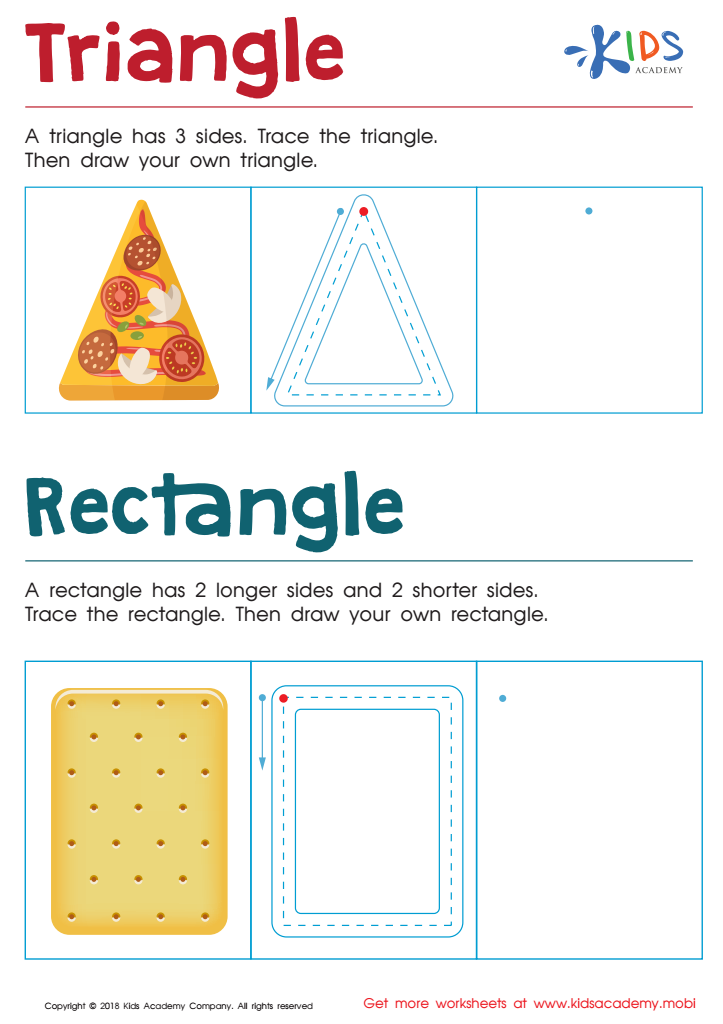
Triangle Rectangle Worksheet
 Assign to My Students
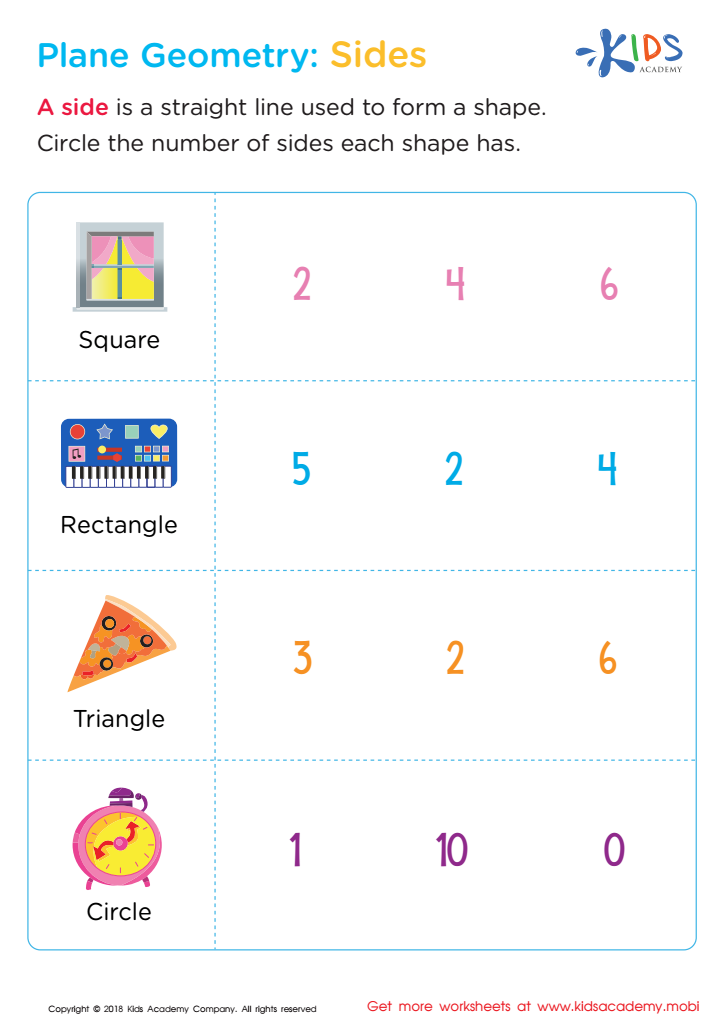
Plane Geometry: Sides Worksheet
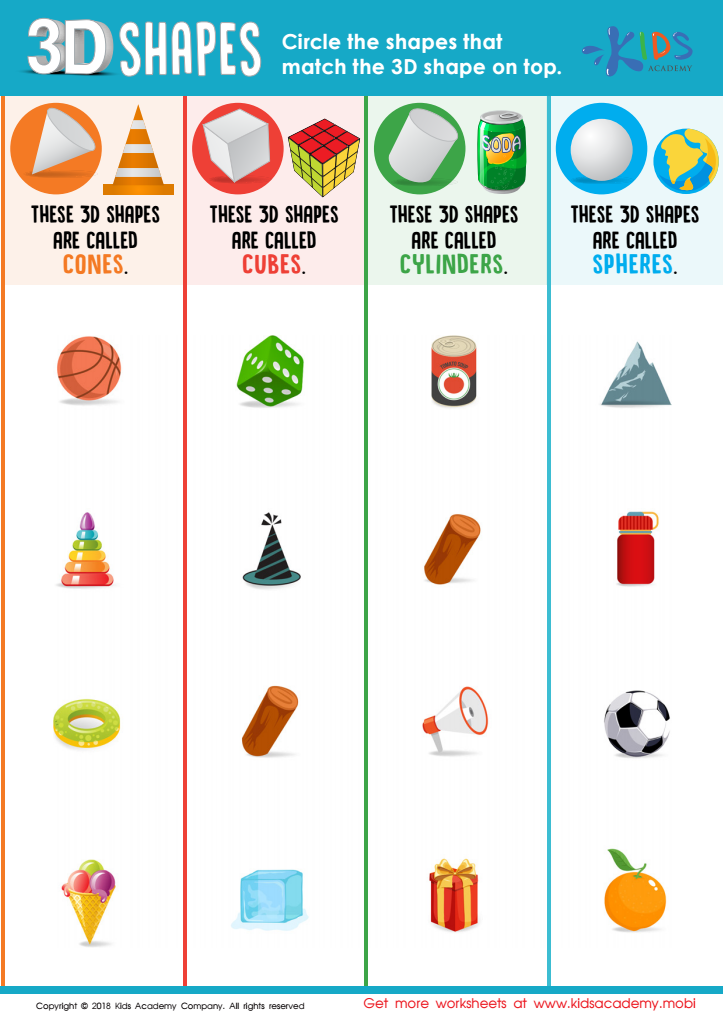
3D Shapes Worksheet







Differentiating shapes in young children aged 3-6 is crucial for several reasons. First, it lays the foundation for essential cognitive skills by helping kids develop spatial awareness, reasoning, and problem-solving abilities. Recognizing various shapes enables children to categorize objects, understand patterns, and make connections between different pieces of information.
Second, differentiating shapes enhances language development. As children learn the names and characteristics of shapes, they expand their vocabulary and improve communication skills. Teaching the terms associated with shapes—such as “circle,” “square,” and “triangle”—opens opportunities for rich discussions and descriptions in everyday activities.
Additionally, shape differentiation supports fine motor skills through hands-on activities such as sorting, tracing, and constructing with shape blocks. This kinesthetic learning approach enables children to experience concepts in a tactile way, which reinforces their understanding.
Lastly, recognizing shapes is a vital precursor for math skills that will be developed later in their education, such as geometry. Ultimately, by caring about teaching and differentiating shapes, parents and teachers can foster a well-rounded educational experience that cultivates confident, capable learners ready to tackle future challenges.








