Number comparison Normal Worksheets for Ages 3-6
3 filtered results
-
From - To
Discover our engaging "Number Comparison Normal Worksheets" designed for kids aged 3-6 to enhance their mathematical skills! These fun and interactive worksheets simplify number comparison through colorful visuals and age-appropriate activities. Your little learners will enjoy sorting, comparing, and identifying greater or lesser numbers, fostering their critical thinking and problem-solving abilities. Perfect for teachers or parents seeking to build a strong numerical foundation, these resources promote essential skills in a playful way. Download our worksheets today to make number comparison an enjoyable learning experience that keeps young minds active and excited about math!
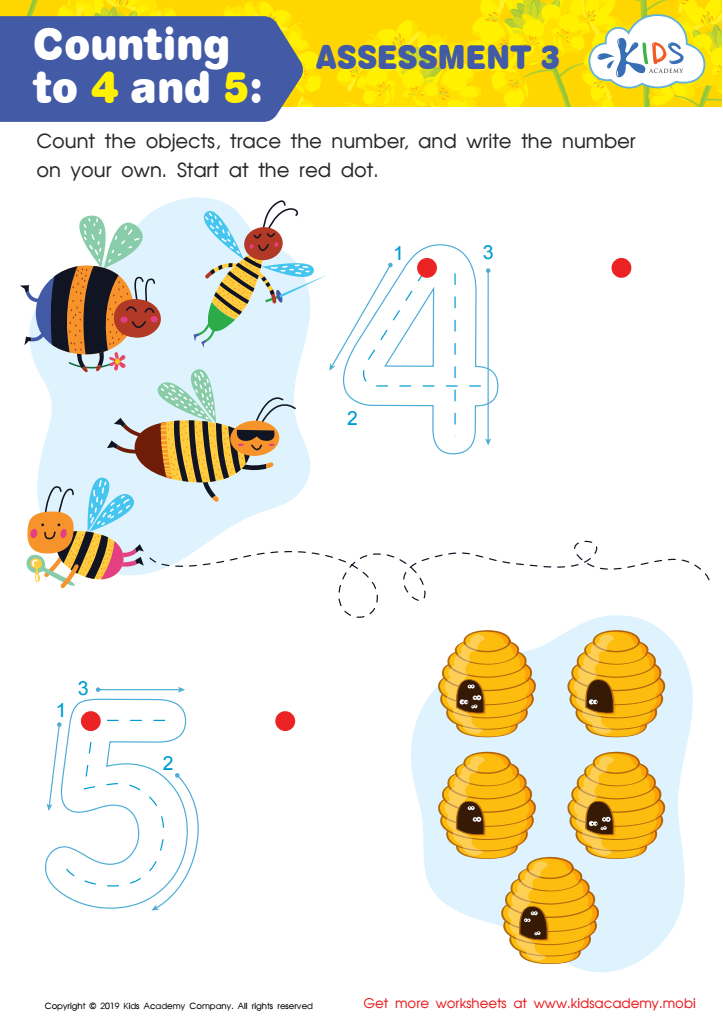
Counting to 4 and 5: Assessment 3 Worksheet
 Assign to My Students
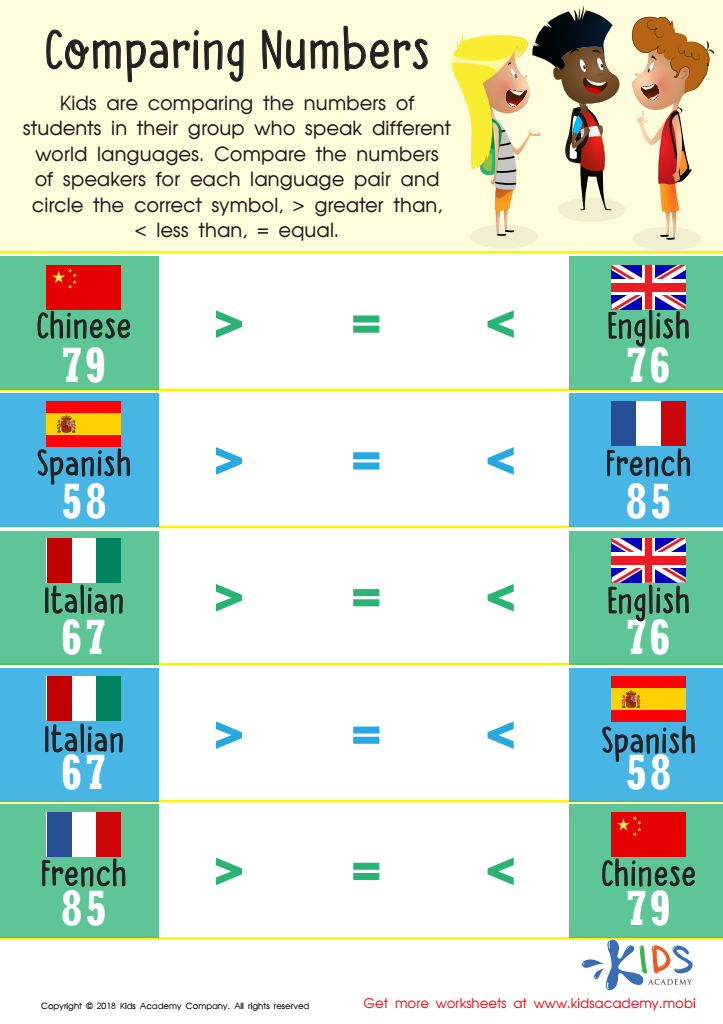
Comparing Numbers Worksheet for 1st Grade
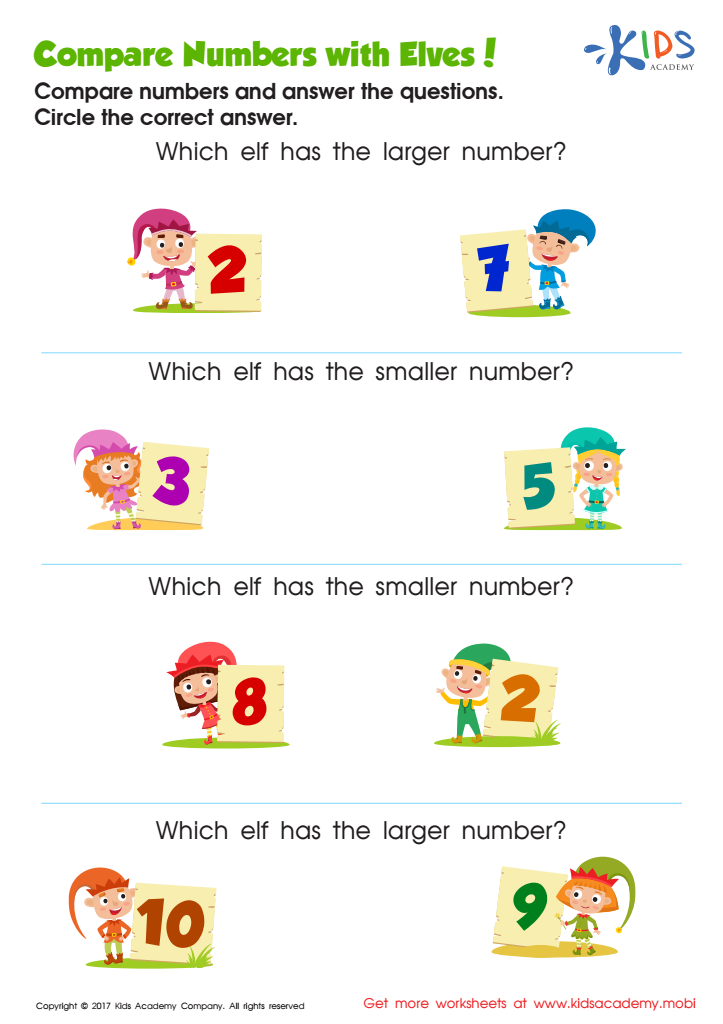
Comparing Numbers Worksheet for Kindergarten








Number comparison is a vital skill for children aged 3-6, as it lays the foundation for future mathematical understanding. This early competency involves recognizing and understanding the size, order, and value of numbers. Parents and teachers should care about it because it fosters critical thinking and problem-solving skills essential for success in school and beyond.
At this age, children are naturally curious and eager to explore concepts. Introducing number comparison in engaging and playful ways can enhance their cognitive development, reinforcing concepts such as greater than, less than, and equal to. These foundational skills not only support mathematical proficiency but also aid in developing logical reasoning abilities.
Furthermore, number comparison activities can facilitate language development as children learn to articulate their thinking and reasoning. Engaging discussions around numbers helps children build a vocabulary related to mathematics. Additionally, nurturing this skill promotes confidence and a positive attitude towards learning math, which can counteract later math anxiety.
Ultimately, fostering number comparison skills can significantly contribute to a child's overall development, providing essential tools for academic success and lifelong learning. Therefore, parents and teachers play a crucial role in encouraging early math experiences that will benefit children in the long run.








