
Sorting skills Normal Worksheets for Ages 3-6
7 filtered results
Difficulty Level
Grade
Age
-
From - To
Subject
Activity
Standards
Discover our engaging "Sorting Skills Normal Worksheets" designed specifically for children ages 3-6. These printable resources help young learners master sorting and categorizing objects through fun, hands-on activities. Each worksheet features vibrant illustrations and age-appropriate tasks that encourage cognitive development and critical thinking. Kids will explore various sorting criteria such as color, shape, size, and type, fostering essential skills for early literacy and math. Ideal for home or classroom use, our worksheets make learning enjoyable and interactive. Start enhancing your child's sorting abilities today with these delightful educational tools! Perfect for parents and educators eager to support early learning.
Favorites
With answer key
Interactive
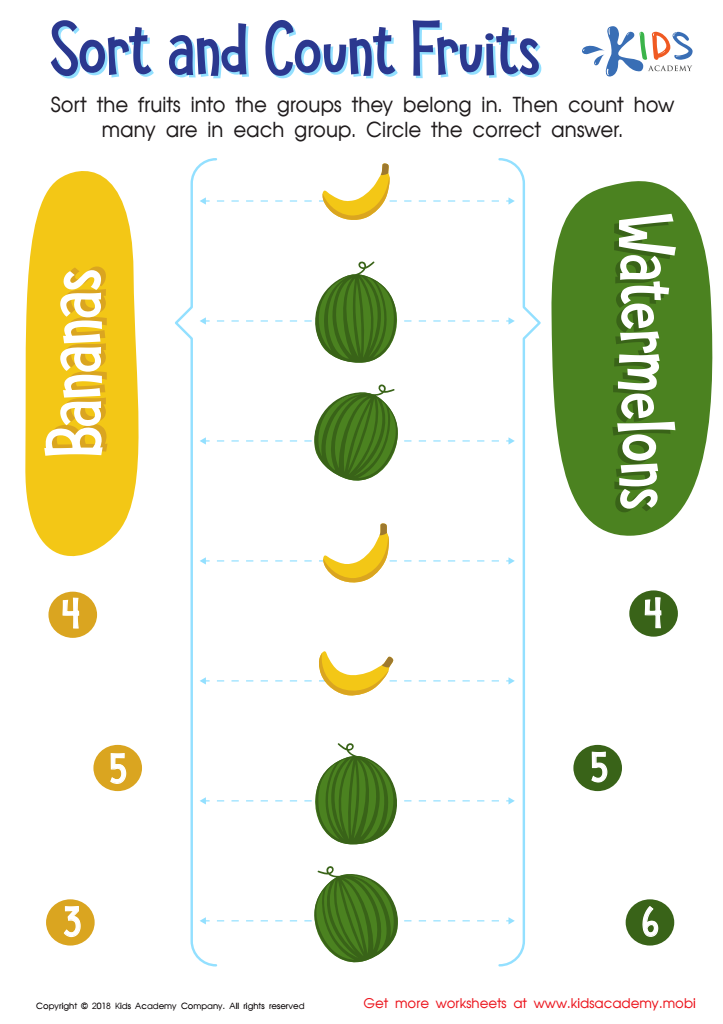
Sort and Count Fruits Worksheet
Allow your children to hone their critical thinking and number reasoning skills with this free worksheet. They'll sort, count, and trace fruits while learning basic number sense. A fun, delicious learning experience with familiar pictures they'll love.
 Assign to My Students
Sort and Count Fruits Worksheet
Worksheet
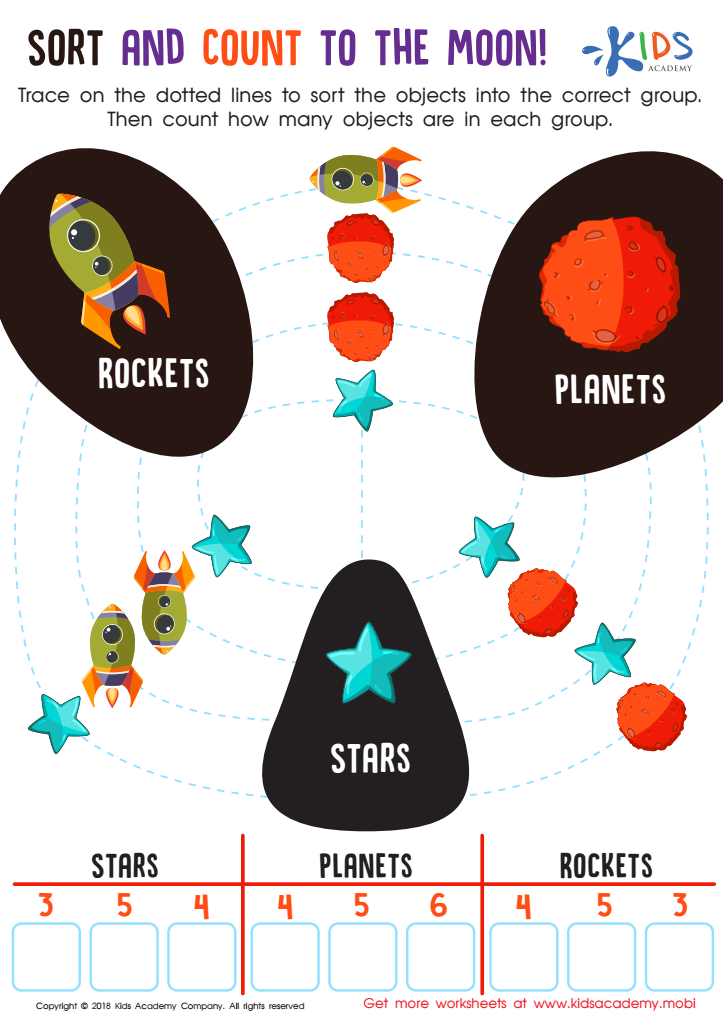
Sort and Count to the Moon Worksheet
Little space explorers will love counting, sorting and strengthening number sense with this galactic worksheet! They'll use traceable lines to sort pictures of stars, planets and rockets into categories according to properties. After sorting, they'll count each item and fill in the boxes. Bold pictures make it fun and build critical thinking skills.
Sort and Count to the Moon Worksheet
Worksheet
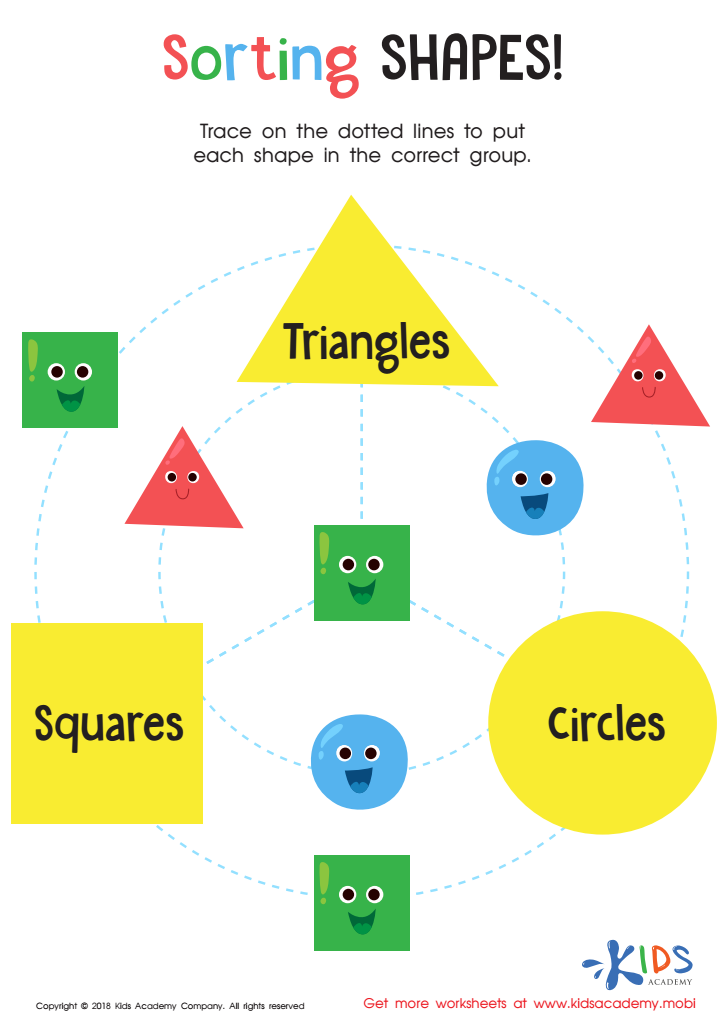
Sorting Shapes - Part 3 Worksheet
Download this fun PDF to help your kiddos recognize basic shapes like circles, squares, and triangles. It'll sharpen their fine motor skills as they trace and sort shapes by color, size, and sides. Your kids won't even realize they're learning with these cheery shapes!
Sorting Shapes - Part 3 Worksheet
Worksheet
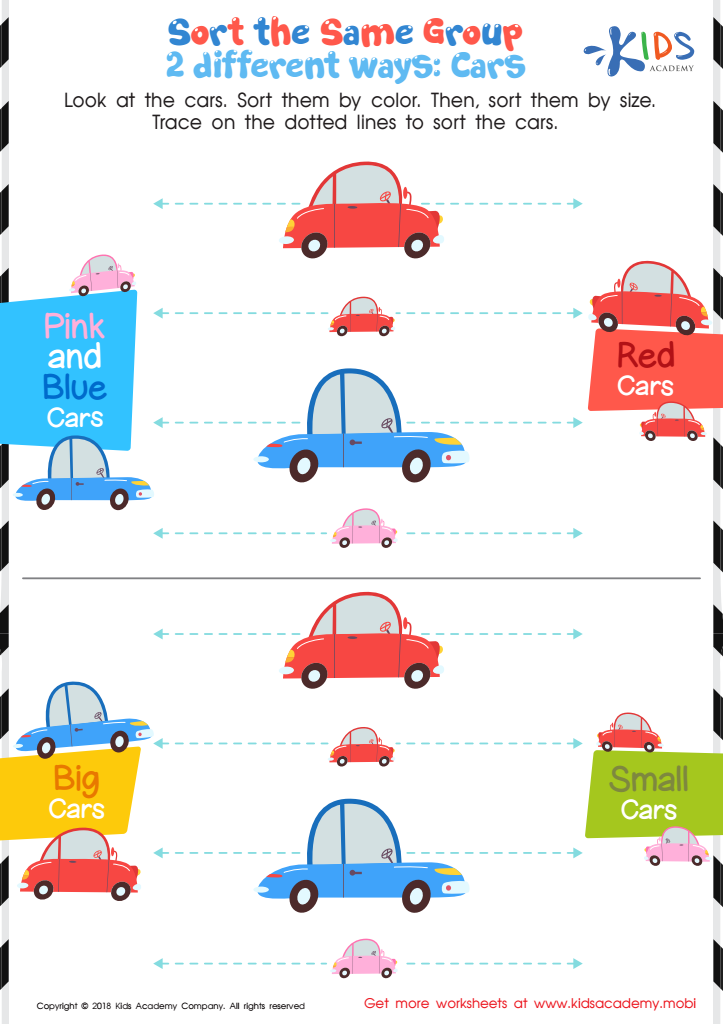
Sort the Same Group 2 Different Ways: Cars Worksheet
Look at the pictures with your child. Can they identify the objects? Ask them to sort the cars first by color and then size. Assist them to trace the dotted lines to sort the cars by color and size. This worksheet lets you easily assess your child's color and size organization skills.
Sort the Same Group 2 Different Ways: Cars Worksheet
Worksheet
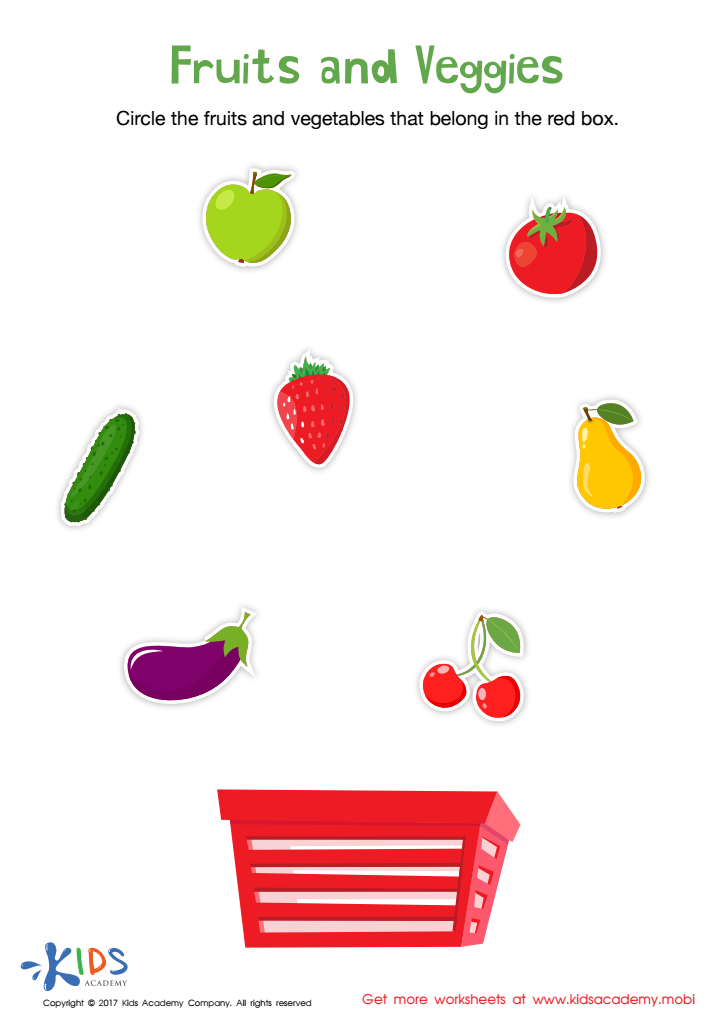
Classifying Fruits and Veggies by Color Sorting Worksheet
Worksheet
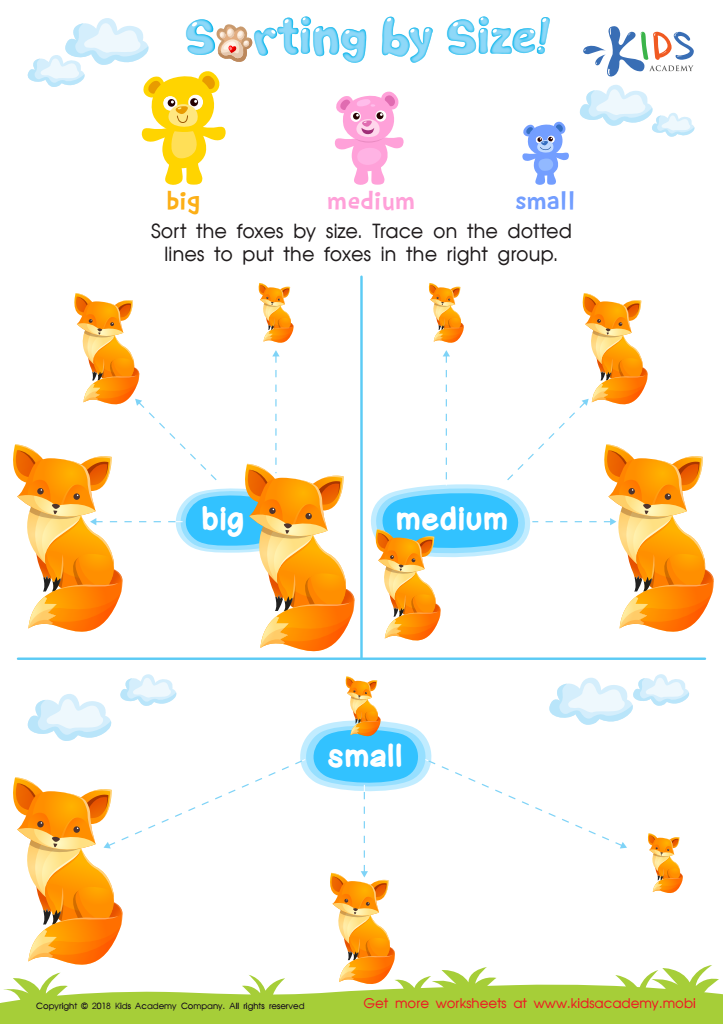
Sorting by Size Worksheet
This bright printout lets your students sort the foxes by size. Ask them to identify objects, then trace the dotted lines to put the foxes in the right group. Clear and easy instructions make this a fun and colorful exercise for your young ones.
Sorting by Size Worksheet
Worksheet
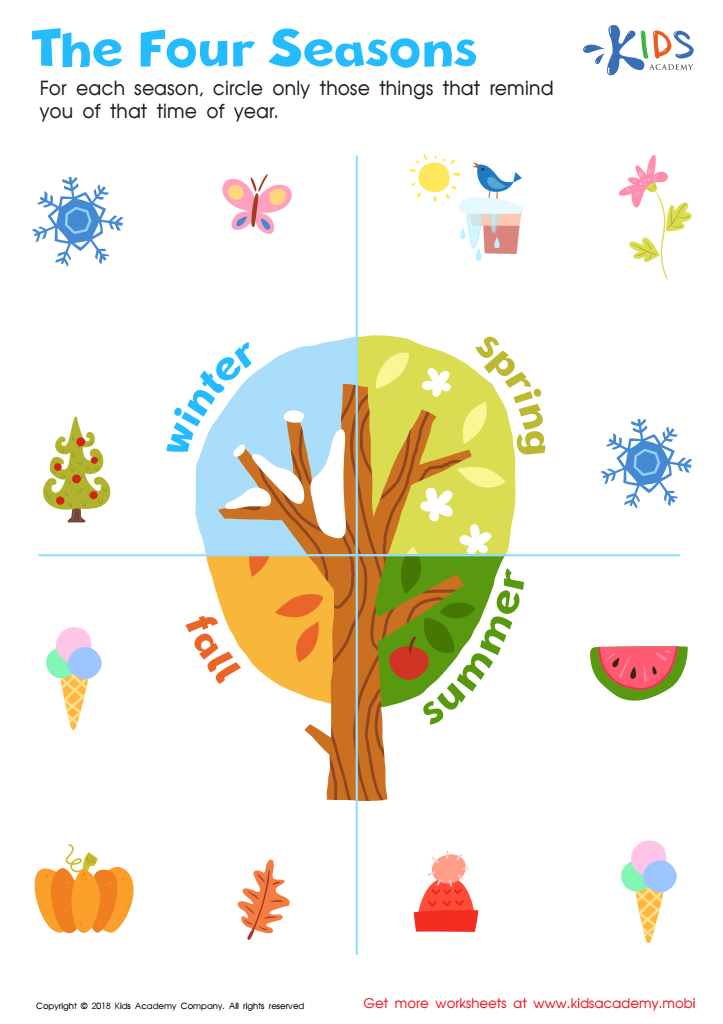
The Four Seasons Worksheet
Tell your child to circle things that remind them of each season. The tree has four squares, one for each season. Some things in each square match the season, others don't. Ask if any are out of place. Help them circle only items that remind them of that season.
The Four Seasons Worksheet
Worksheet
Join Kids Academy for Free
Who is primarily going to use this learning content?







Sorting skills are fundamental cognitive abilities that emerge in early childhood, particularly between the ages of 3 to 6. These skills lay the groundwork for later learning and developmental tasks. Parents and teachers should care about sorting abilities as they are integral to the development of critical thinking and problem-solving skills.
Firstly, sorting activities help children categorize and understand the world around them, sharpening their discrimination skills. By sorting objects based on colors, shapes, or sizes, children learn to recognize similarities and differences, a critical skill in various subjects, including math and science.
Moreover, sorting is directly related to numeracy skills. Understanding sets and groups is foundational to grasping more complex mathematical concepts later on. As children engage in sorting exercises, they develop perseverance, focus, and organizational skills, which are beneficial in school settings and beyond.
Furthermore, these activities encourage language development, allowing children to articulate their thought processes and descriptions of their sorting criteria. Given the long-term educational and social benefits, parents and teachers should prioritize engaging children in sorting activities to cultivate these essential skills early on. Addressing sorting skills promotes holistic development and prepares children for future academic success.








