Explore our “Understanding Directions Normal Worksheets” designed for children ages 3-6! These engaging and interactive worksheets help young learners develop essential listening and comprehension skills as they follow simple directions. Featuring colorful illustrations and age-appropriate challenges, the activities are tailored to captivate and hold the attention of early learners. From identifying objects to following step-by-step commands, our resources encourage critical thinking and improve spatial awareness. Perfect for parents and educators, these worksheets can be easily downloaded and printed for use at home or in the classroom. Foster confidence and understanding in your child with fun exercises that make learning enjoyable!

Check out this FREE "Understanding directions" Trial Lesson for age 3-6!

Relative Positions - Top, Bottom, Up Down

Favorites
With answer key
Interactive
  • 3-6
  • Understanding directions
  • Normal
Going up or Down? Worksheet

Going up or Down? Worksheet

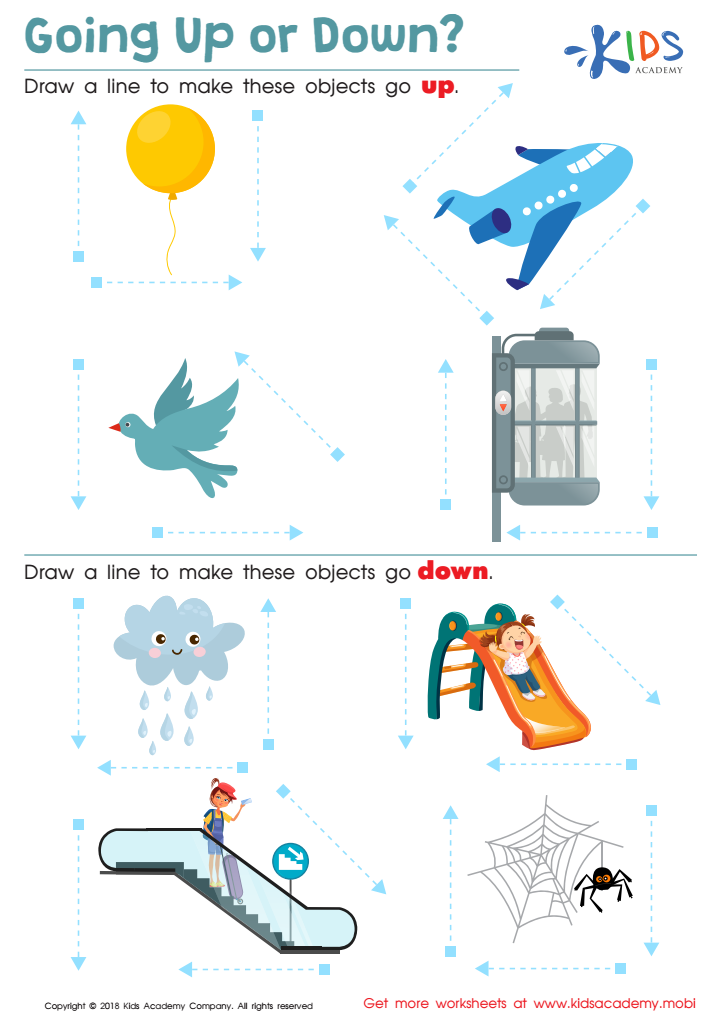
Young students learn the concept of up and down with this geometry worksheet. They trace lines to identify relative positioning as an object travels. Kids can use position words to describe an object's movement, enhancing their spatial relationship skills - an important geometry foundation.
Going up or Down? Worksheet
Worksheet
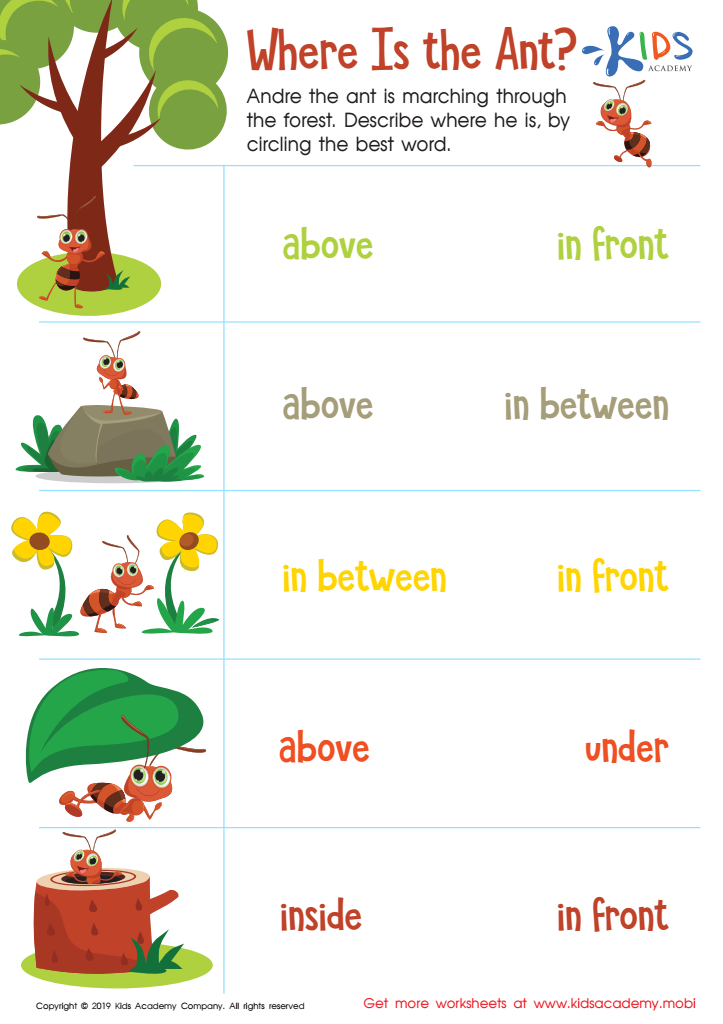
Where Is the Ant? Worksheet

Where Is the Ant? Worksheet

Kids are captivated by ants. Andre is a busy ant, marching through the forest. Help your child circle the best word that best describes what he's doing in each picture. This colorful printout will show them the way.
Where Is the Ant? Worksheet
Worksheet
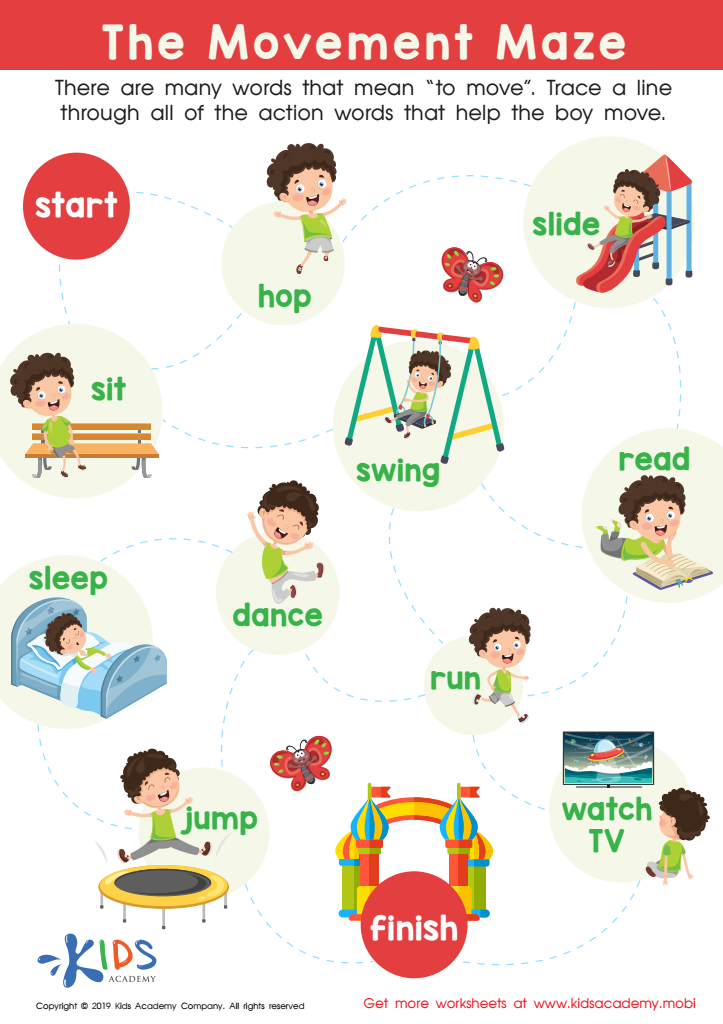
The Movement Maze Worksheet

The Movement Maze Worksheet

Let your child have fun with this interactive PDF download. Kids will learn movement words with cute pictures, plus practice fine motor skills as they trace. A fun way to reinforce vocabulary. Jump, hop and sit – it's all here!
The Movement Maze Worksheet
Worksheet
Which Direction Will it Go? Worksheet

Which Direction Will it Go? Worksheet

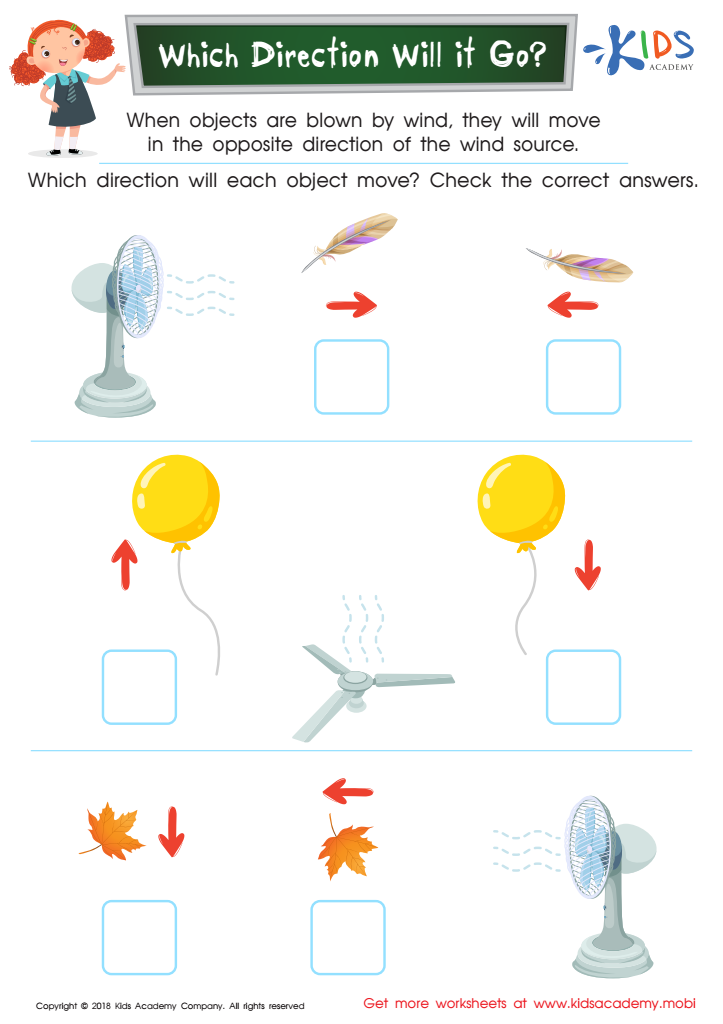
Explain to your students: when objects are blown by wind, they will move in the opposite direction. In the worksheet, there are pictures of wind sources and objects being blown by the wind. Ask your child to identify and check the direction each object will move.
Which Direction Will it Go? Worksheet
Worksheet
Where Is 3? Worksheet

Where Is 3? Worksheet

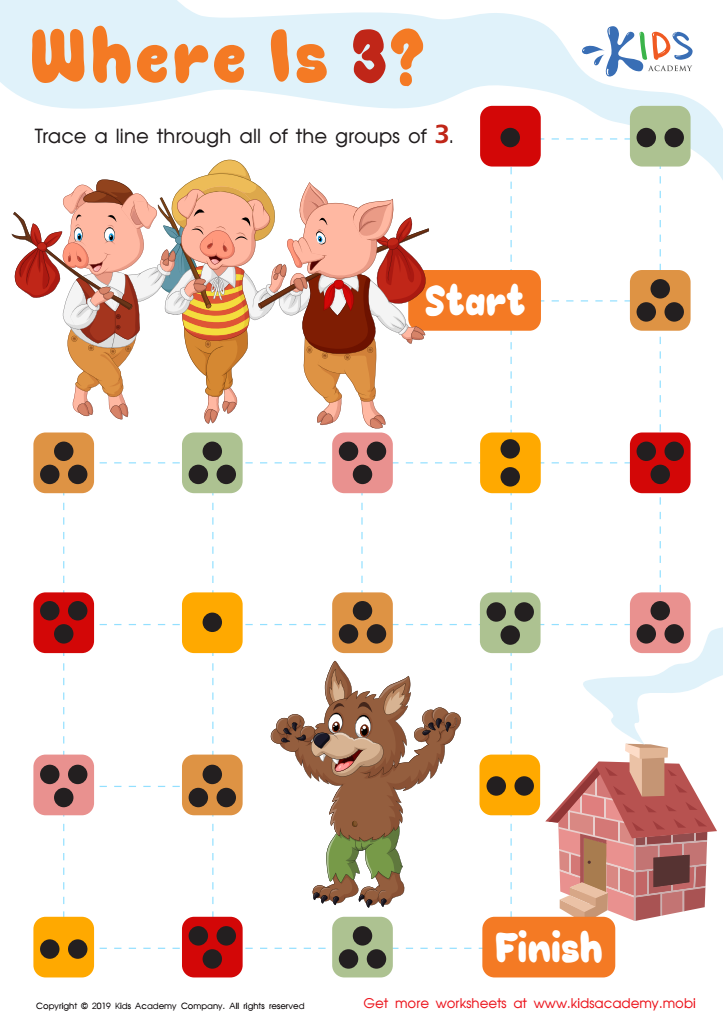
Let your little mathematician join the Three Little Pigs on an adventure! With this free worksheet, they'll guide the pigs through a maze of numbered bricks, using one-to-one representation to get to the sturdy house. Have fun helping the piggy friends past the wolf!
Where Is 3? Worksheet
Worksheet
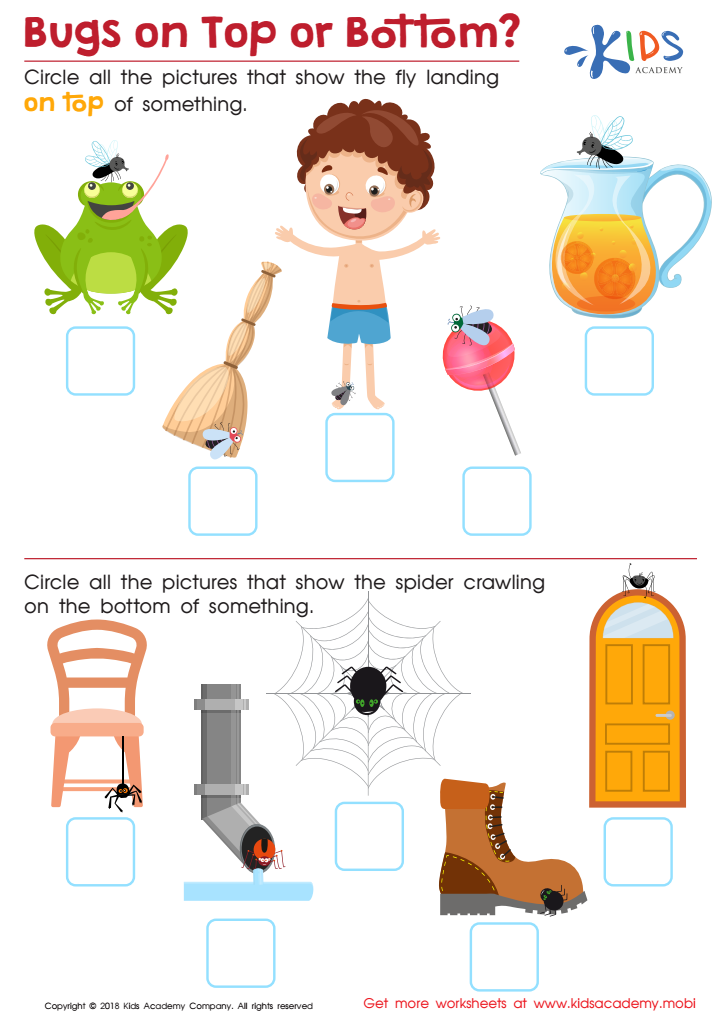
Bugs on Top or Bottom? Worksheet

Bugs on Top or Bottom? Worksheet

Preschoolers need to learn directional skills such as top and bottom. This PDF worksheet helps them recognize bugs on the top or bottom using fun visuals. It builds their spatial reasoning while teaching prepositional words in an engaging way.
Bugs on Top or Bottom? Worksheet
Worksheet
Knight and Pawn Worksheet

Knight and Pawn Worksheet

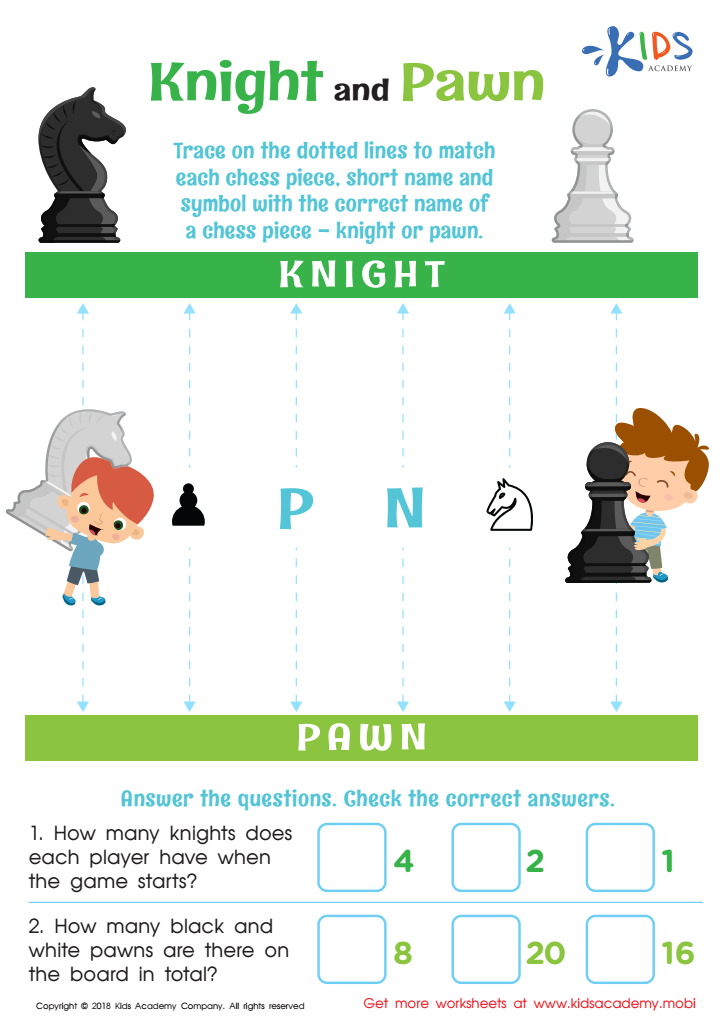
This tracing worksheet teaches kids about chess. They trace the dotted lines to match pieces, names and symbols to the correct chess piece. Questions at the bottom test their understanding. It's a simple exercise for a fun way to learn.
Knight and Pawn Worksheet
Worksheet
Space maze worksheet: Telescope

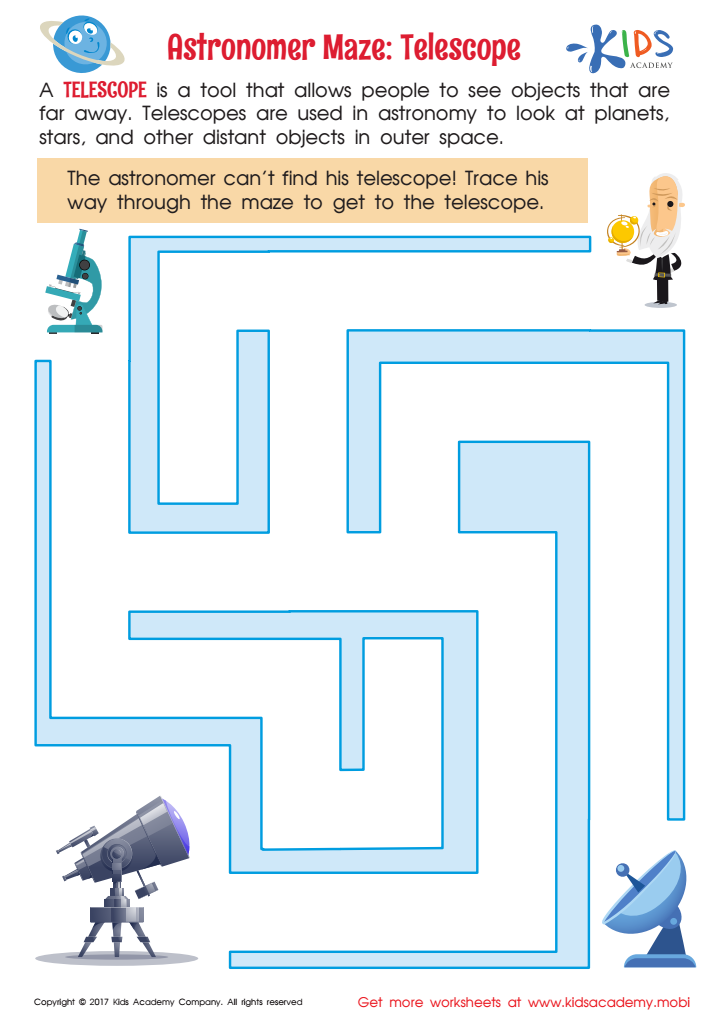
Astronomer Maze: Telescope Worksheet

Let your mini astronomer explore the galaxy with this fun and puzzling space maze worksheet – Telescope! Your child will have a great time navigating the maze, while learning how telescopes help scientists study the stars.
Astronomer Maze: Telescope Worksheet

Worksheet


Understanding directions is a critical skill for children aged 3 to 6, as it lays the foundation for effective communication, safety, and learning. Parents and teachers should prioritize this development, as it significantly enhances a child's ability to navigate their environment and interact with others. At this age, children are naturally curious and eager to explore, making comprehension of directions essential for fostering independence.

When children can understand and follow directions, they develop essential problem-solving skills and gain confidence. This not only helps them in their immediate tasks—such as playing games, completing activities, or following routines—but also translates to better social interactions and cooperation with peers. Furthermore, following directions prepares them for more complex learning tasks as they progress in school.

In a classroom or at home, clear and consistent direction can reduce frustration and confusion. It helps manage behavior and encourages self-discipline, making activities more enjoyable and productive. As a result, parents and teachers who invest time in teaching children how to understand and follow directions can cultivate a positive learning atmosphere, equipping children with skills that will benefit them throughout their educational journey and beyond.