Counting skills Normal 2D Shapes Worksheets for Ages 3-6
4 filtered results
-
From - To
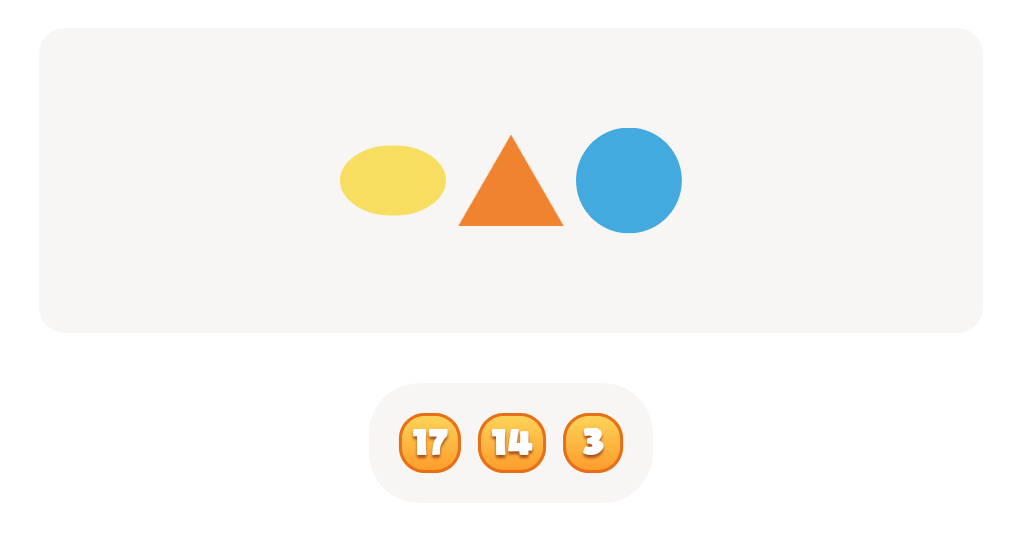
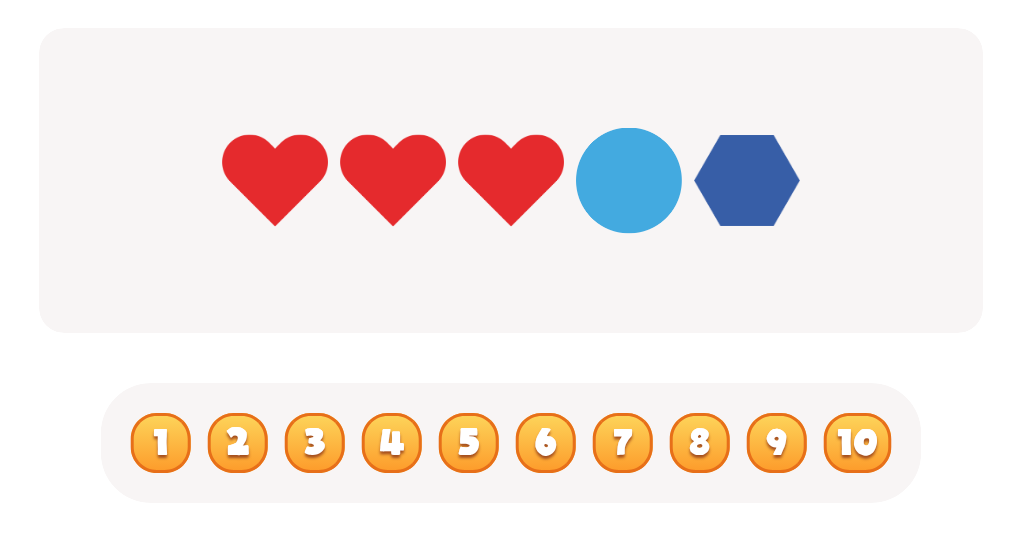
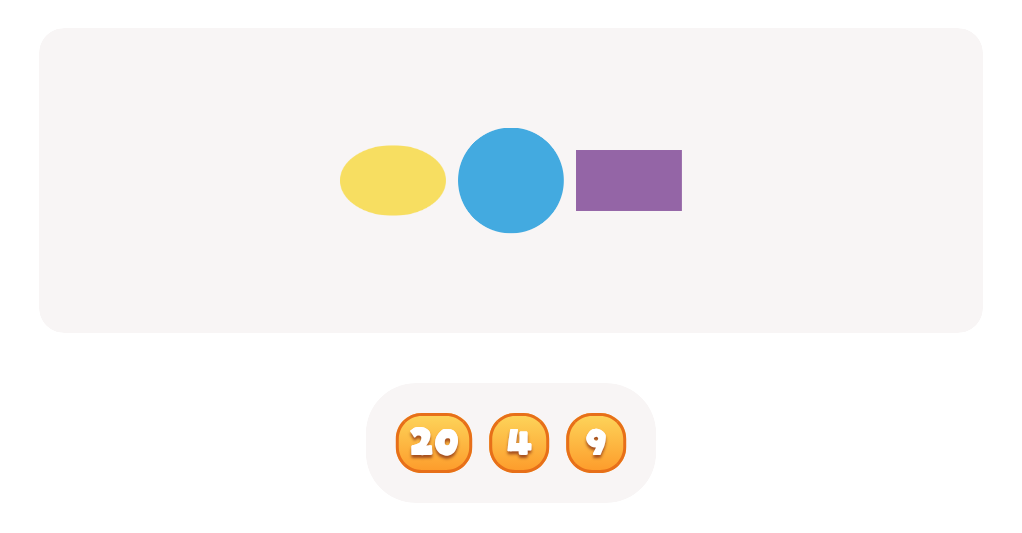
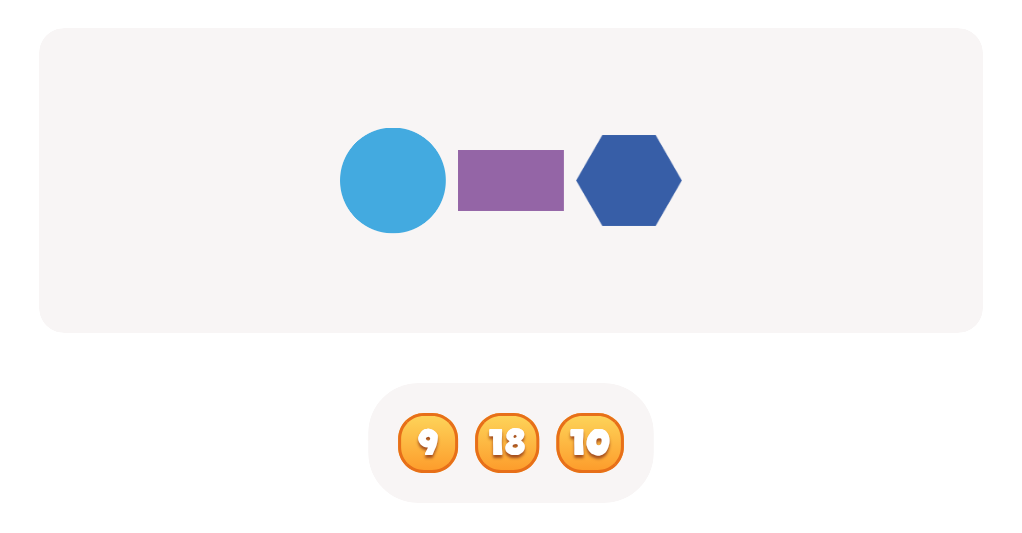
Unlock your child's mathematical potential with our engaging Counting Skills Normal 2D Shapes Worksheets, tailored for ages 3-6. These worksheets provide a fun and interactive way for young learners to explore basic counting concepts while recognizing and identifying common 2D shapes such as circles, squares, and triangles. Each activity is designed to enhance their number sense, motor skills, and shape recognition through colorful illustrations and educational exercises. Perfect for home or classroom use, these worksheets will make counting a delightful experience as your little ones build confidence in their math abilities. Start shaping bright futures today with our exciting resources!
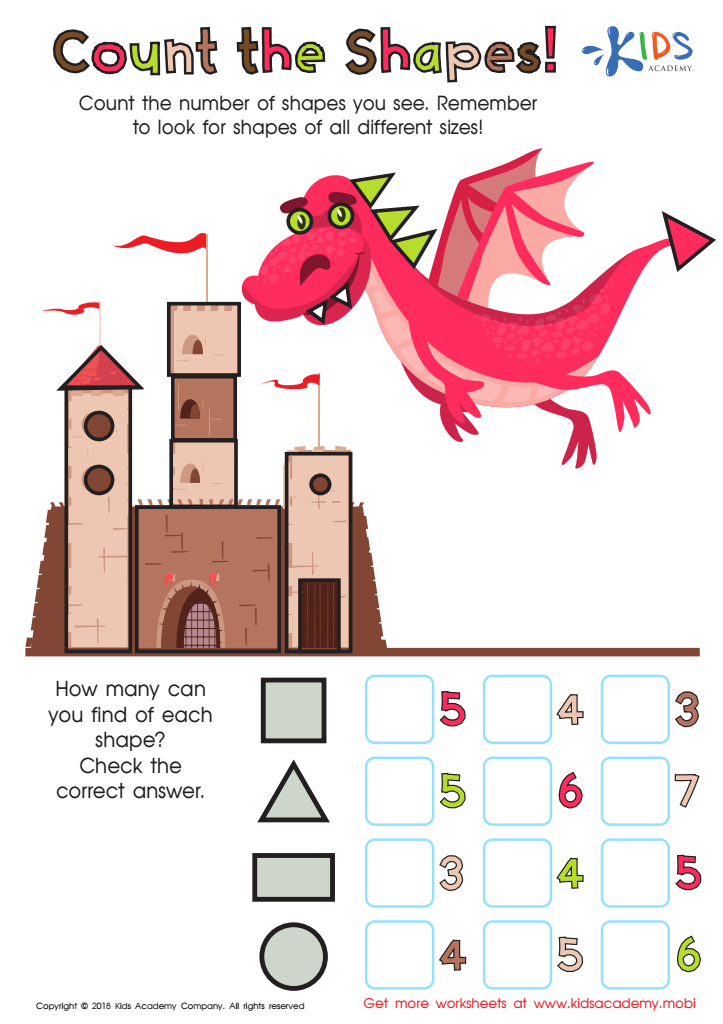
Count the Shapes Worksheet
 Assign to My Students


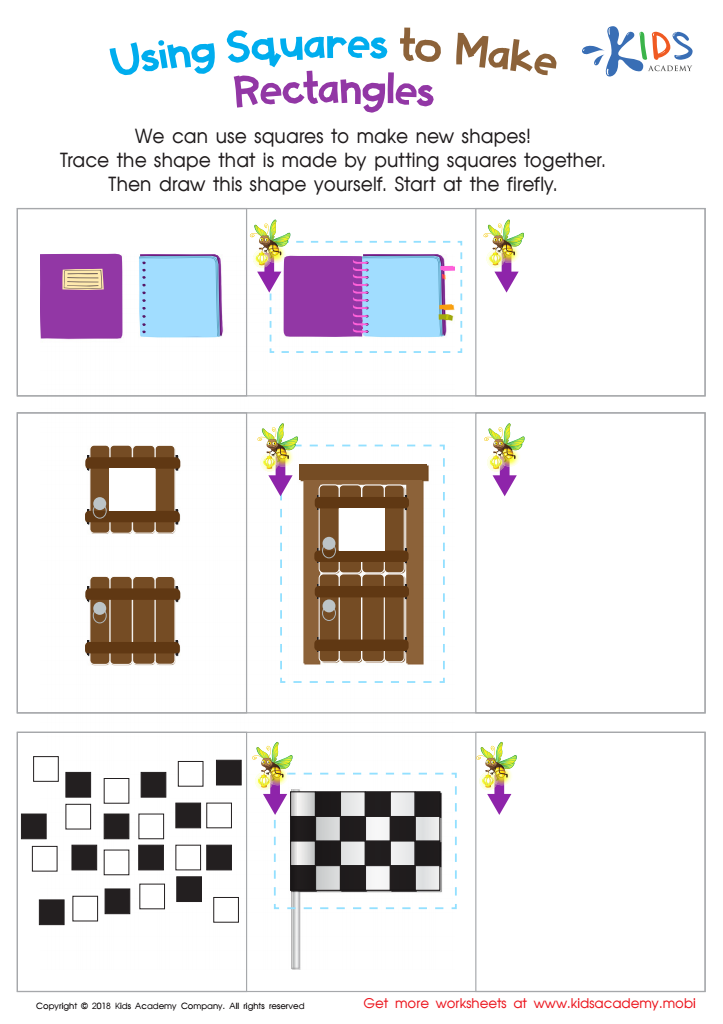
Using Squares to Make Rectangles Worksheet
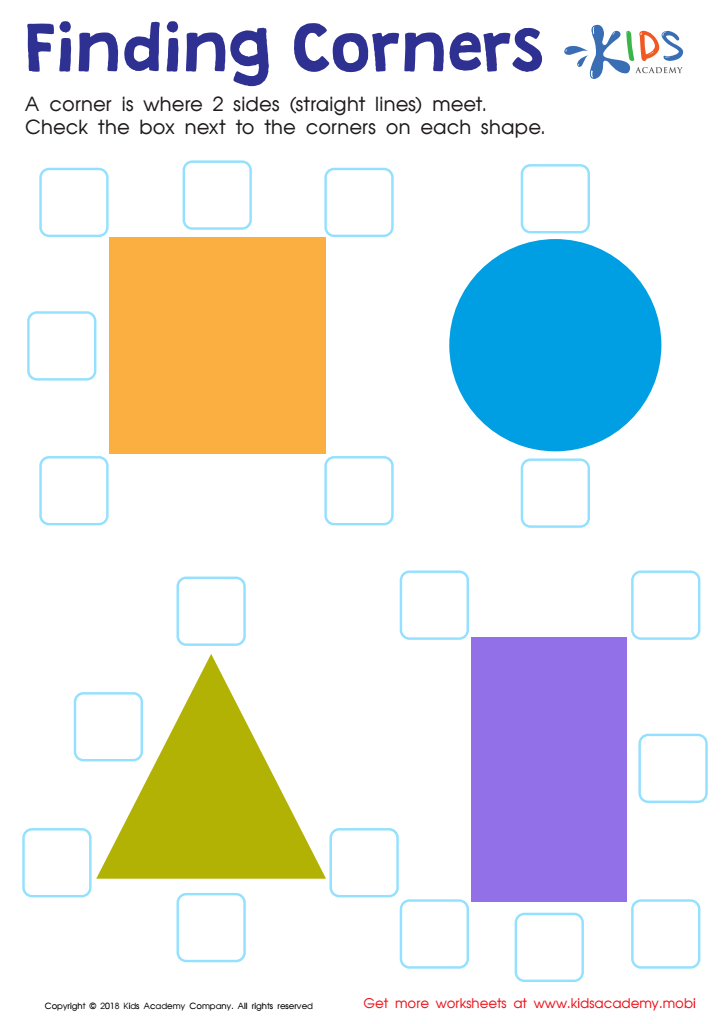
Finding Corners Worksheet
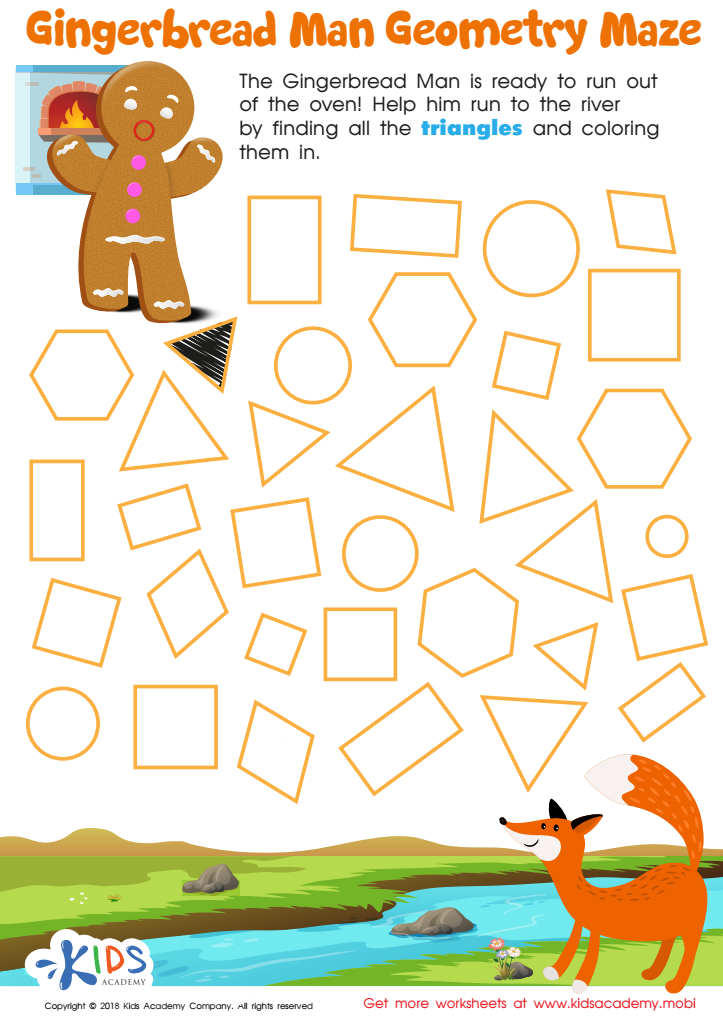
Gingerbread Man Geometry Maze Worksheet








Counting skills and understanding normal 2D shapes are fundamental building blocks for children aged 3-6, crucial for their cognitive development and future academic success. At this age, young children are like sponges, eagerly absorbing information from their environment. Mastering counting engages them in numerical literacy, fosters problem-solving abilities, and enhances critical thinking skills. This knowledge lays the groundwork for more complex math concepts as they progress through school.
Simultaneously, familiarity with normal 2D shapes—such as circles, squares, triangles, and rectangles—helps children make sense of their visual world. Recognizing and naming shapes encourages spatial awareness, which is essential for everyday tasks, from understanding maps to comprehending architectural designs. Furthermore, these skills enhance creative expression and logical reasoning, supporting learning in subjects like science and art.
Parents and teachers should prioritize counting skills and 2D shape recognition by incorporating fun activities and games that make learning engaging. Such interactive experiences foster a love of learning and encourage children to explore their environment mathematically and artistically. Investing time in these foundational skills helps set children on a path to academic achievement and lifelong learning, ensuring they have the tools they need to navigate and understand their world confidently.