Basic Math Skills Normal Math Worksheets for Ages 3-6 - Page 2
25 filtered results
-
From - To
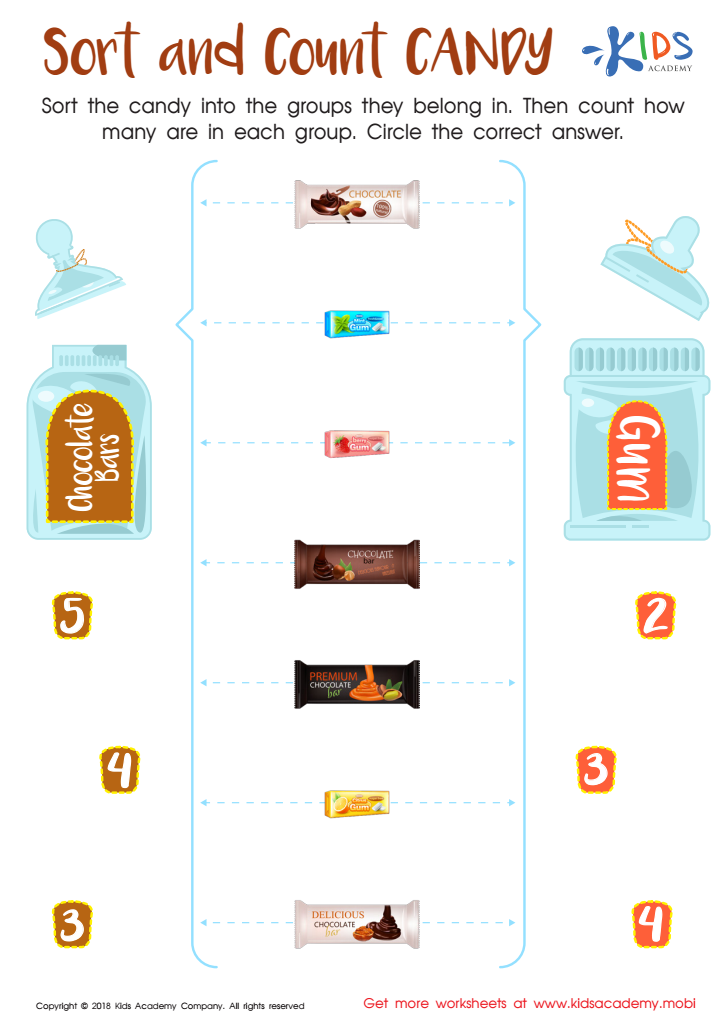
Sort and Count Candy Worksheet
 Assign to My Students







Basic math skills for children ages 3-6 set the foundation for future academic success and life skills. Early math abilities such as counting, recognizing numbers, and understanding simple addition and subtraction promote cognitive development, enhancing a child's analytical and problem-solving skills. These foundational skills are interconnected with various aspects of everyday life, such as measuring ingredients for a recipe or sorting toys by size and color, fostering practical know-how and independence.
Parents and teachers should recognize that early exposure to math helps children build confidence in their abilities, combatting math anxiety, which can hinder their academic trajectory later on. Engaging in age-appropriate math activities stimulates a child’s curiosity and interest in learning, offering them a head start compared to their peers. Additionally, early math proficiency is often correlated with better performance in other academic areas like reading, as it nurtures logical thinking and pattern recognition.
Teaching math at ages 3-6 should be playful and interactive, using games, songs, and hands-on activities to make learning enjoyable. Parents and teachers serving as positive role models when engaging in math activities considerably enrich the child's learning experience. Thus, a strong investment in basic math skills during these formative years cultivates a well-rounded, confident, and capable learner.








