Addition Practice Normal Numbers up to 100 Worksheets for Ages 3-6
3 filtered results
-
From - To
Enhance your child's math skills with our printable "Addition Practice Normal Numbers up to 100 Worksheets for Ages 3-6." Designed to cater to early learners, these engaging worksheets help children grasp essential addition concepts in a fun and interactive way. Our activities focus on simple addition problems, promoting confidence and proficiency in math through colorful, thoughtfully crafted exercises. Perfect for classroom use or at-home practice, these sheets provide an excellent foundation for future mathematical learning, helping your child to develop strong skills in a supportive and enjoyable environment. Unlock your child's potential with our expertly designed addition worksheets!
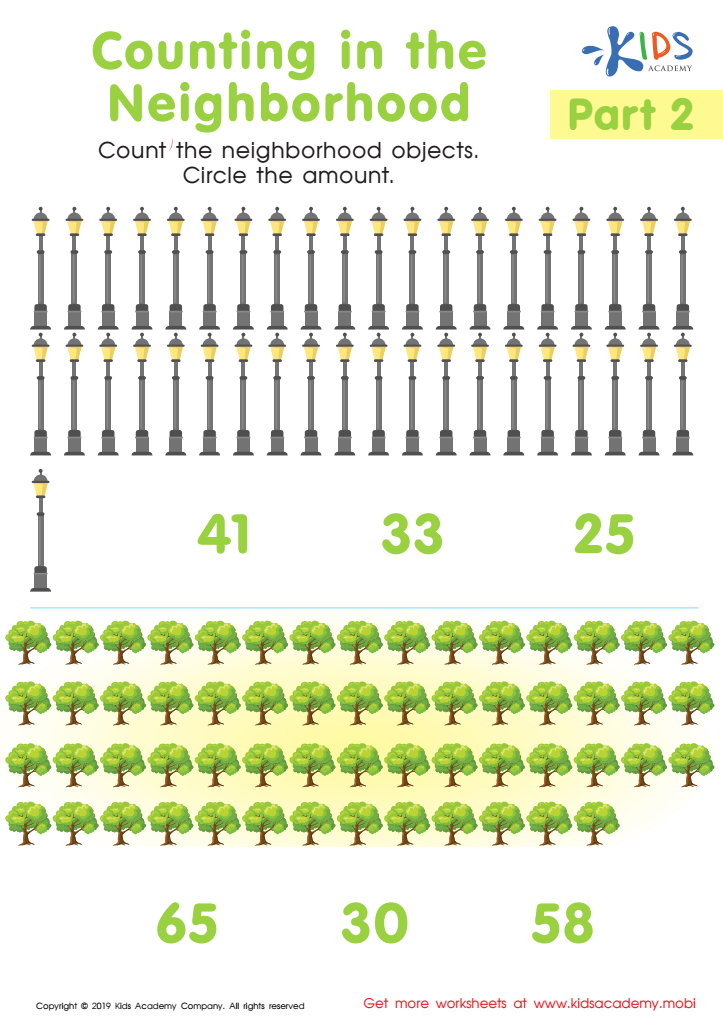
Counting In The Neighborhood Part 2 Worksheet
 Assign to My Students
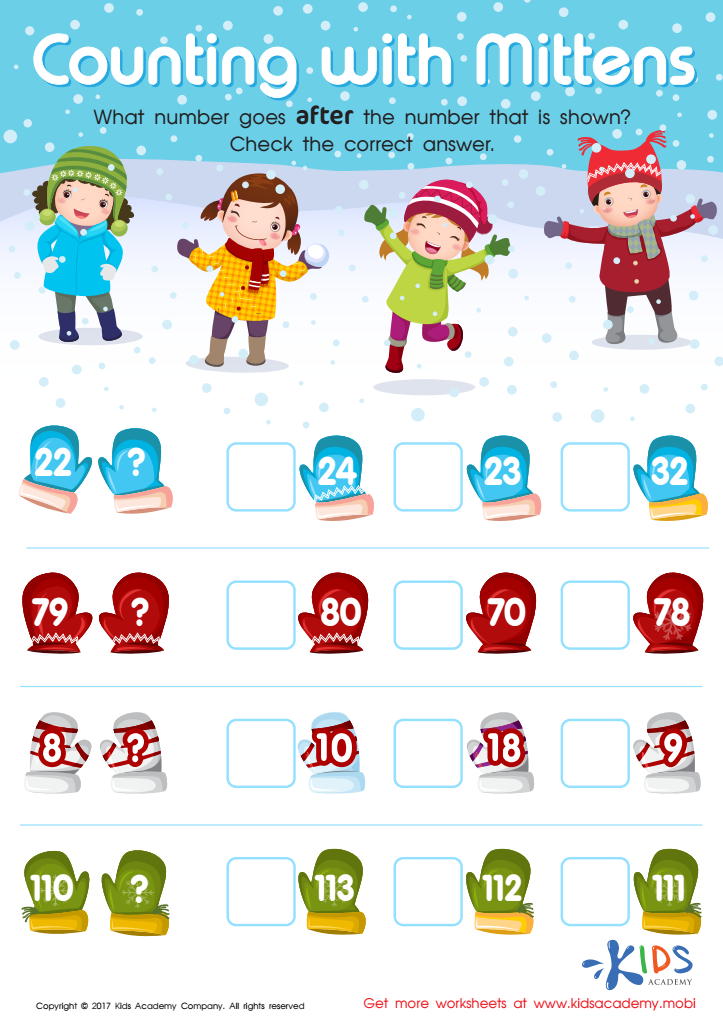
Counting with Mittens Worksheet
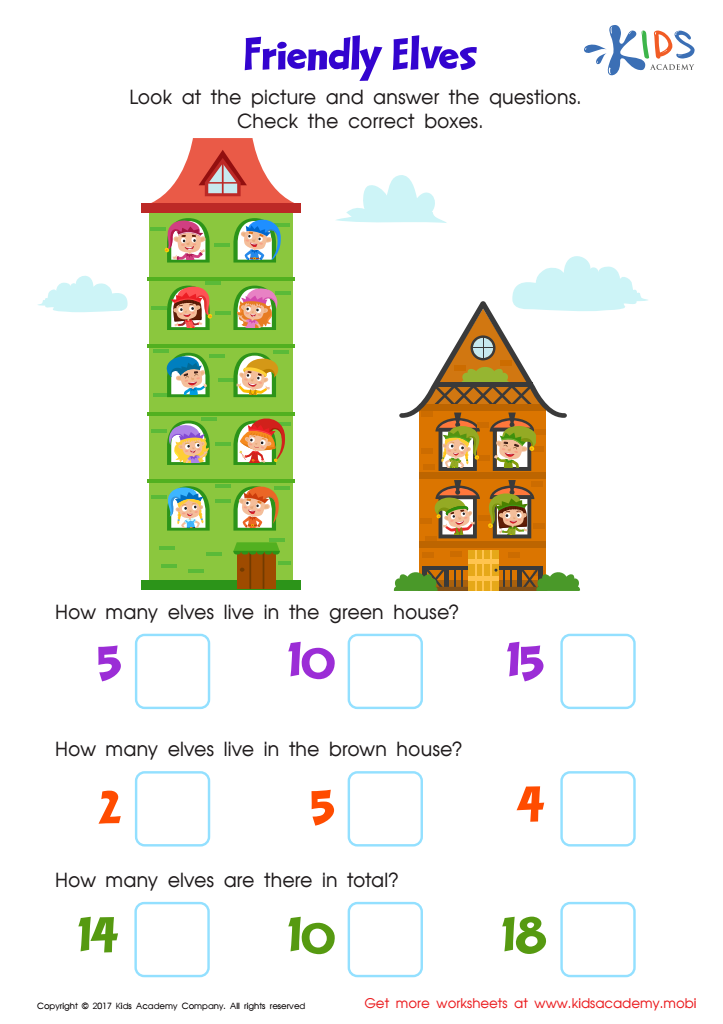
Place Value: Friendly Elves Worksheet



%20(1).jpg)




Introducing addition practice with normal numbers up to 100 for children ages 3-6 is crucial in fostering early numeracy skills. At this developmental stage, young minds absorb new information rapidly, making it an ideal period to introduce foundational mathematical concepts. Here are a few reasons why parents and teachers should care about this practice:
Cognitive Development
Engaging in addition practice enhances children's cognitive abilities by stimulating logical thinking and problem-solving skills. It helps in establishing the neural pathways that support more complex mathematical reasoning later in life.
Confidence Building
Early success in mastering basic addition boosts self-esteem and promotes a positive attitude toward learning. Children who feel confident in their math skills are more likely to embrace future academic challenges with enthusiasm.
Real-world Application
Counting and addition are essential skills for everyday activities, such as understanding time, managing money, and measuring quantities. Practicing addition helps children make connections between numbers and real-life situations, fostering practical problem-solving abilities.
Foundational Skills
Addition is one of the fundamental building blocks of mathematics. Proficiency in early arithmetic paves the way for grasping more intricate mathematical concepts such as subtraction, multiplication, and division as they progress through their education.
By prioritizing addition practice up to 100, parents and teachers set the stage for a lifelong aptitude and appreciation for mathematics.