Counting skills Normal Sorting Worksheets for Ages 3-6
3 filtered results
-
From - To
Enhance your child's counting skills with our engaging Normal Sorting Worksheets designed for ages 3-6! These interactive worksheets encourage young learners to explore numbers, practice sorting, and develop essential math skills in a fun and enjoyable way. Tailored for early childhood education, our resources promote cognitive growth by allowing children to distinguish between different quantities and organize objects accordingly. Perfect for classroom use or at-home learning, these worksheets foster critical thinking and boost confidence in young mathematicians. Help your little ones embark on their counting journey today with our carefully crafted sorting exercises that encourage discovery and reinforce learning in a playful environment!
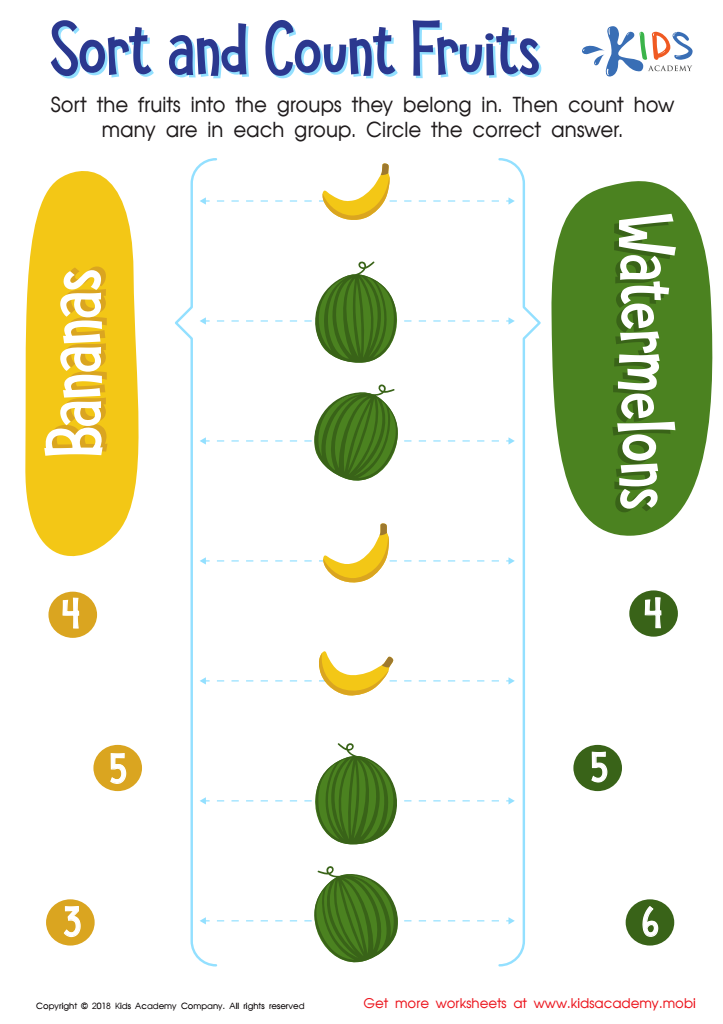
Sort and Count Fruits Worksheet
 Assign to My Students
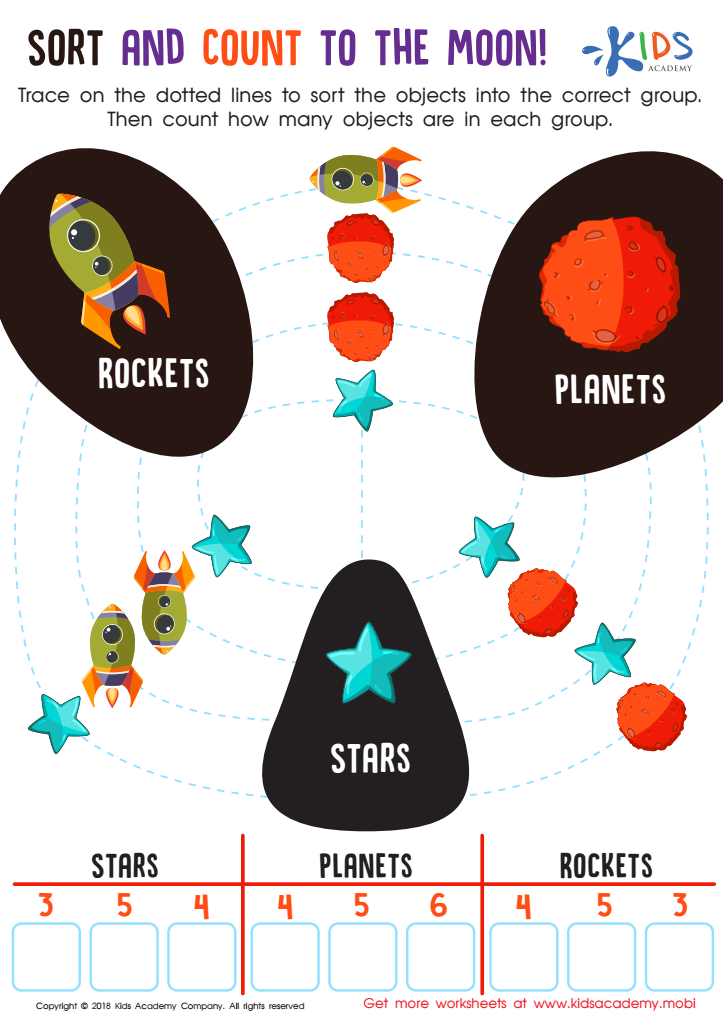
Sort and Count to the Moon Worksheet
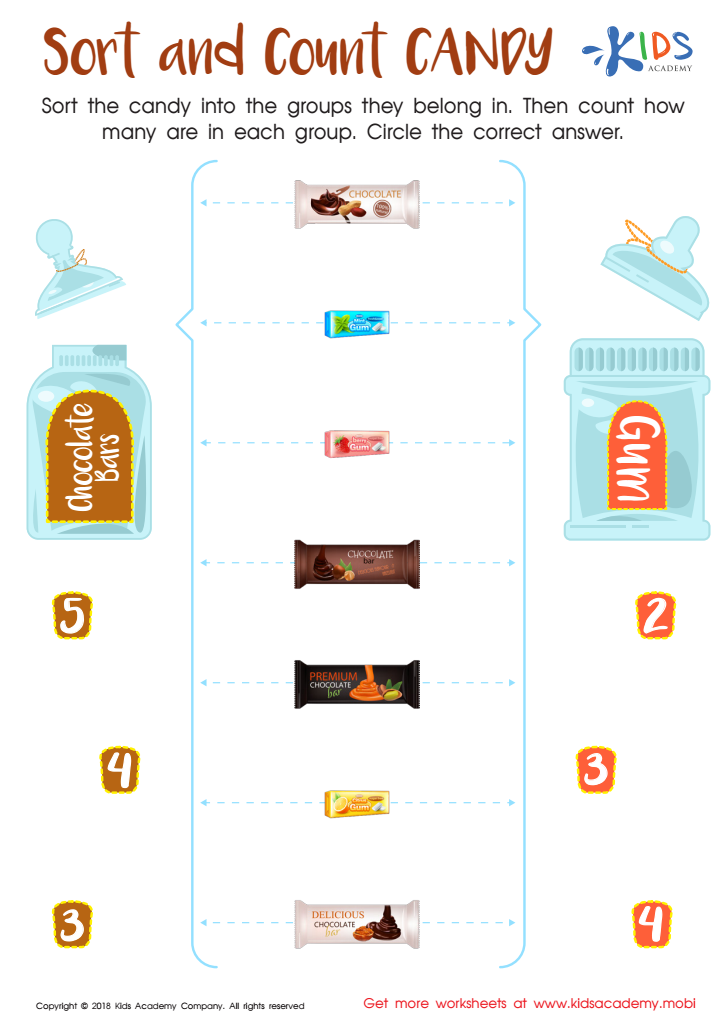
Sort and Count Candy Worksheet








Counting skills and normal sorting are fundamental concepts in early childhood development that play a vital role in shaping a child’s cognitive abilities. For children aged 3-6, these skills are not only essential in mathematical understanding but also significantly enhance their critical thinking and problem-solving abilities.
Firstly, counting skills lay the groundwork for numeracy. Children learn how to recognize numbers, understand their value, and establish concepts like one-to-one correspondence. This foundational knowledge is critical as it serves as a precursor for future mathematical learning, making it easier for children to tackle more complex concepts later on.
Normal sorting, on the other hand, promotes the development of categorization skills, which are crucial for cognitive development. When children sort objects by size, shape, or color, they learn to recognize attributes and make connections between different items. This activity also supports language development, as children learn vocabulary associated with their sorting activity.
Engaging children in counting and sorting activities can also fortify their fine motor skills and encourage social interaction when done in groups. By fostering these skills early on, parents and teachers empower children to approach mathematics with confidence and curiosity, laying a strong foundation for lifelong learning.








