Sight word recognition Normal Building Vocabulary Worksheets for Ages 3-6
5 filtered results
-
From - To
Boost your child's reading skills with our Sight Word Recognition Normal Building Vocabulary Worksheets designed for ages 3-6. These engaging and interactive worksheets help young learners recognize essential sight words, enhancing their vocabulary and fluency. Packed with fun activities like matching exercises, word searches, and fill-in-the-blanks, these resources make learning enjoyable. Our worksheets encourage repeat practice, fostering confidence as kids master their reading skills. Ideal for home or classroom use, these worksheets are perfect for nurturing early literacy development. Start your child's reading journey today and set the foundation for future academic success with our thoughtfully crafted resources!
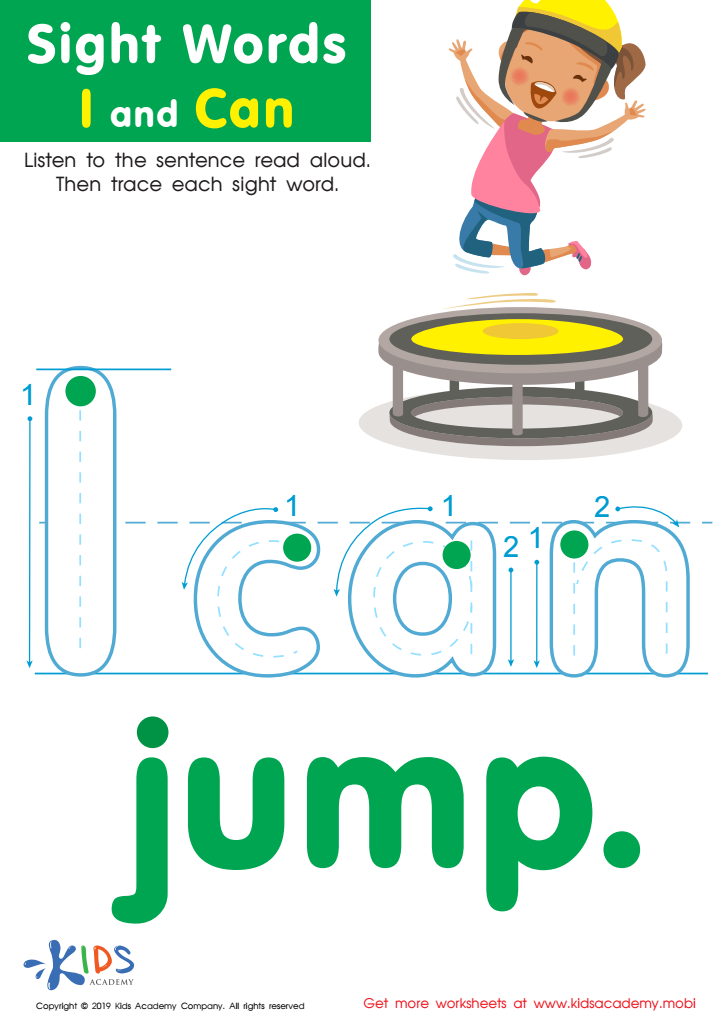
Sight Words I Can Worksheet
 Assign to My Students











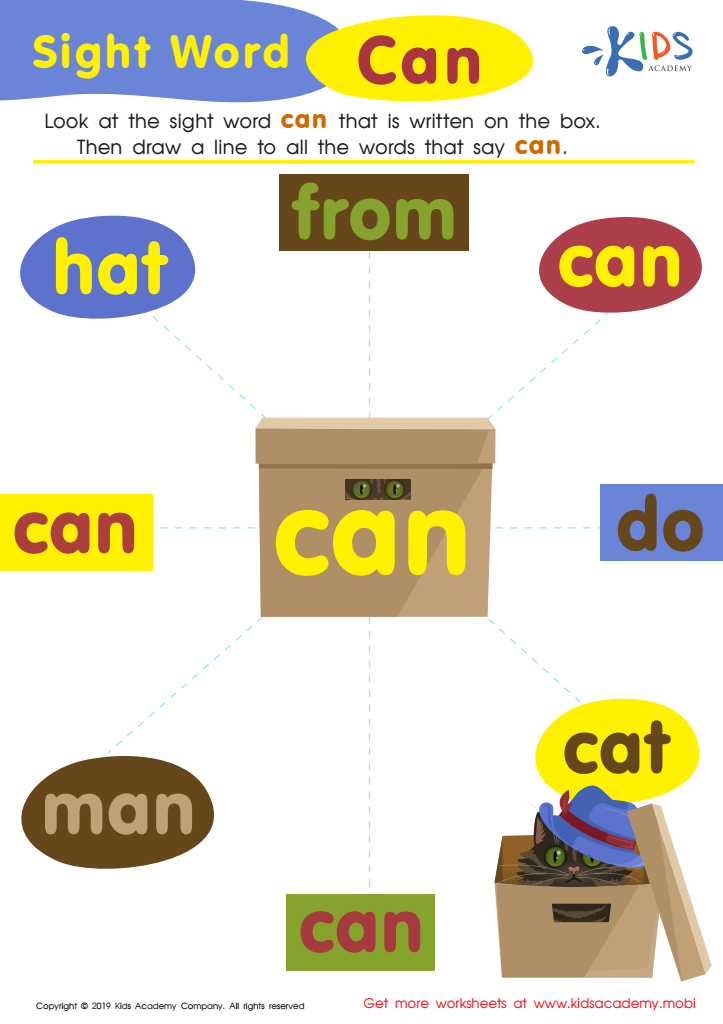
Sight Word Can Worksheet
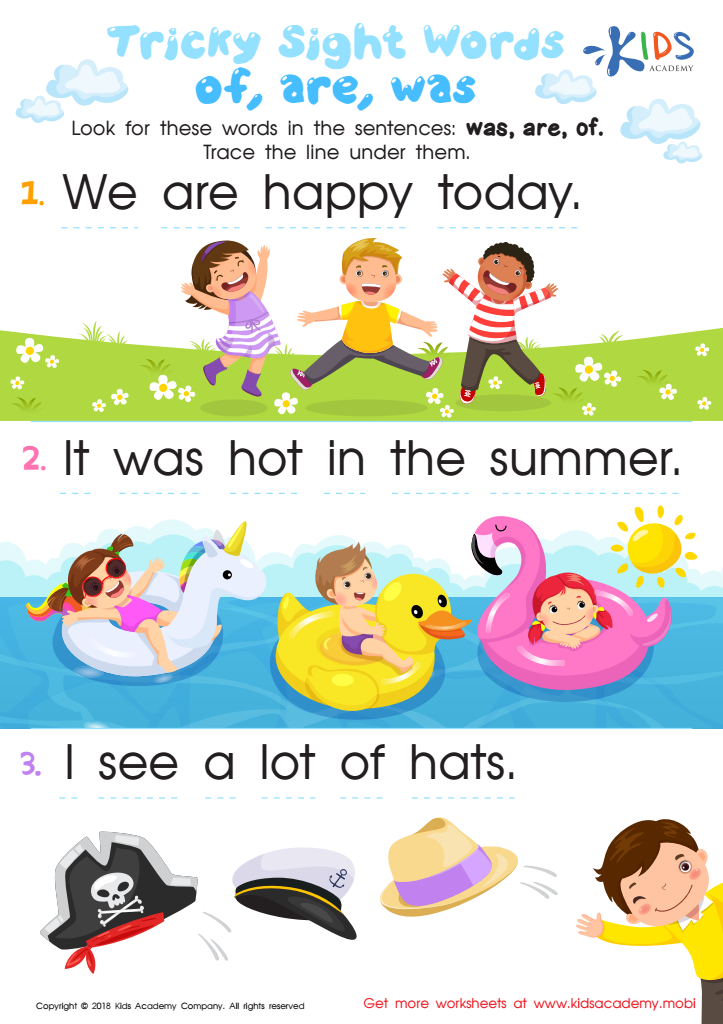
Tricky Sight Words Worksheet
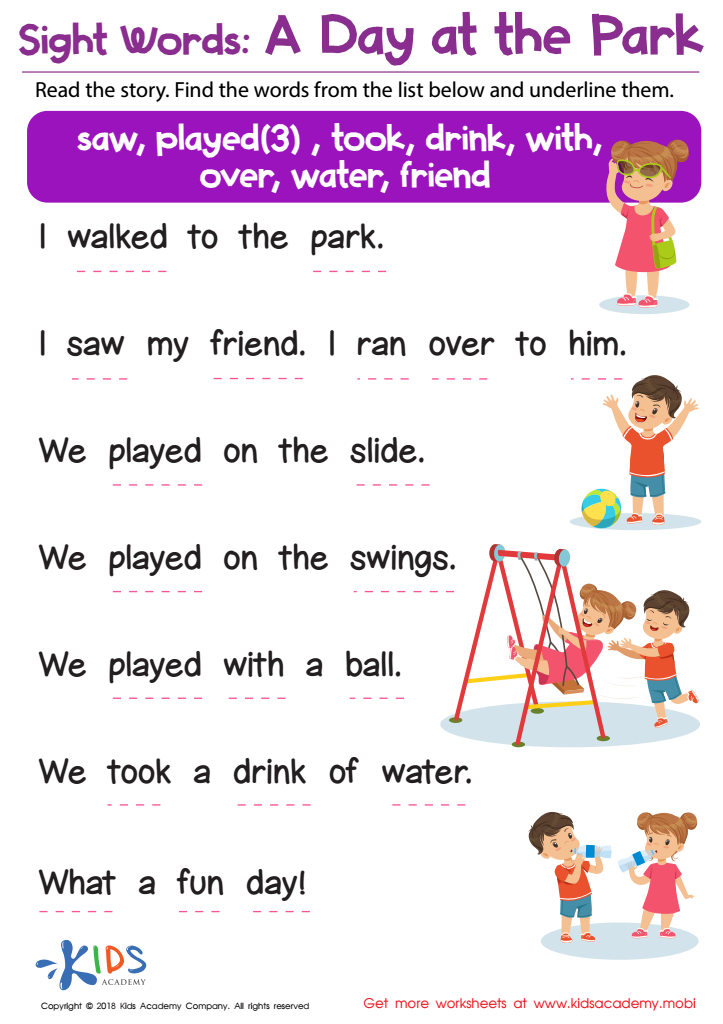
Sight Words: A Day at the Park Worksheet
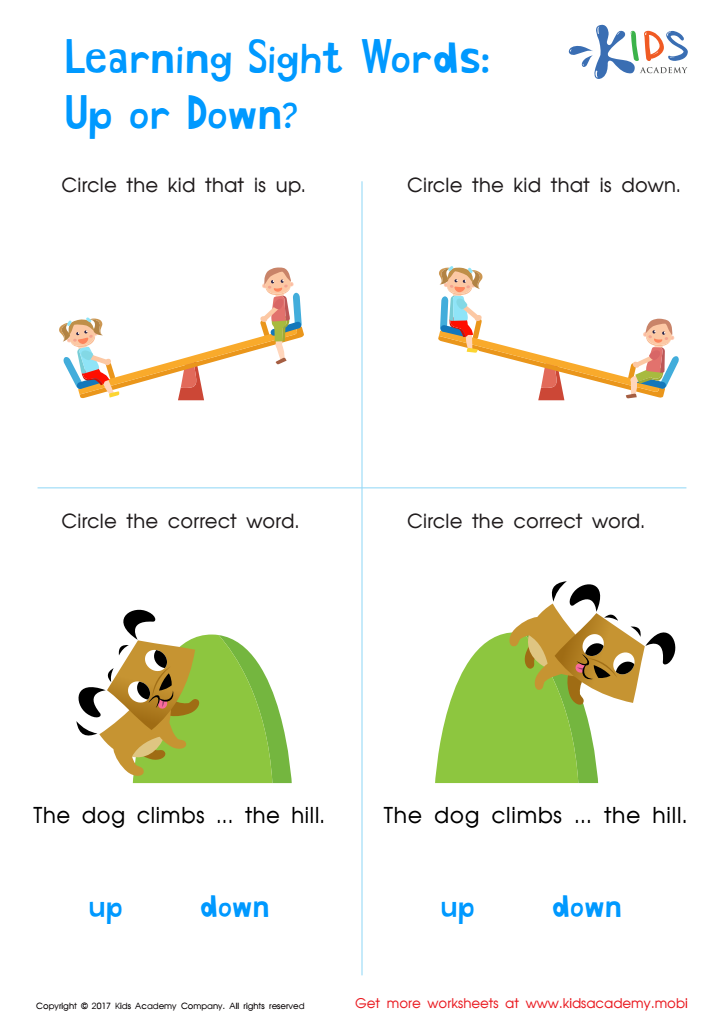
Up or Down Printable Sight Words Worksheet








Sight word recognition and vocabulary building are crucial for children ages 3-6 as they lay the foundation for literacy development. At this young age, children are like sponges, soaking up language and patterns, making it the ideal time for them to encounter common sight words—words they should recognize instantly without needing to decode. Recognizing these words helps enhance fluency in reading, fostering confidence and comprehension.
Moreover, expanding a child’s vocabulary is equally essential. A rich vocabulary allows for better expression of thoughts and feelings and improves reading comprehension. When children engage with a variety of words, they not only learn meanings but also how to use words in different contexts, thereby enhancing their communication skills.
Parents and teachers play a pivotal role in reinforcing these skills through interactive and engaging activities, such as reading together or incorporating words and vocabulary into play. By prioritizing sight word recognition and vocabulary building, they prepare young learners for academic success and a lifelong love for reading. This ultimately leads to stronger literacy skills, critical thinking, and enhanced learning capabilities, ensuring that children are well-prepared for the challenges of future educational endeavors.








