
Story analysis Normal Building Vocabulary Worksheets for Ages 3-6
3 filtered results
Difficulty Level
Grade
Age
-
From - To
Subject
Activity
Standards
Enhance early reading skills with our "Story Analysis Normal Building Vocabulary Worksheets for Ages 3-6." These engaging, age-appropriate worksheets help young learners develop critical thinking and vocabulary through interactive story analysis. Each activity encourages children to explore story elements such as characters, settings, and plots while building their understanding and use of new words. Perfect for parents and educators, our worksheets offer a fun, effective way to boost language development and comprehension in early learners, setting a strong foundation for future reading success. Explore our collection today and watch your child's language skills soar!
Favorites
With answer key
Interactive
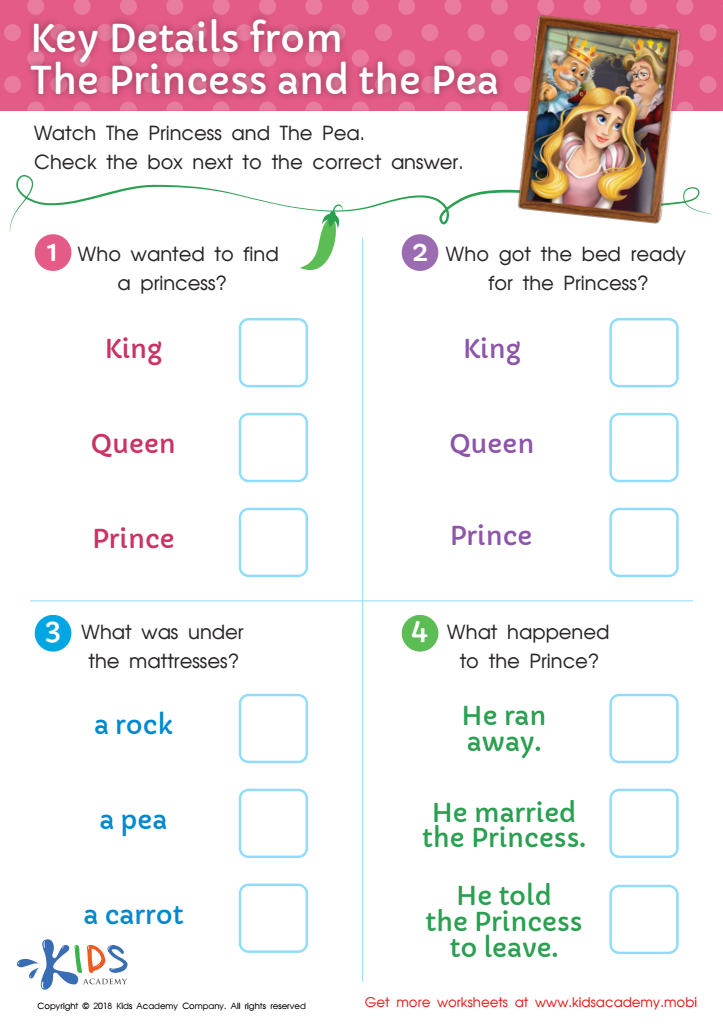
Key Details from the Princess and the Pea Worksheet
After reading The Princess and the Pea, ask your students questions to assess their comprehension of the story. Check their knowledge of key details. This printable can be used to help evaluate their understanding. Encouraging the recall of story events helps build important reading skills.
 Assign to My Students
Key Details from the Princess and the Pea Worksheet
Worksheet











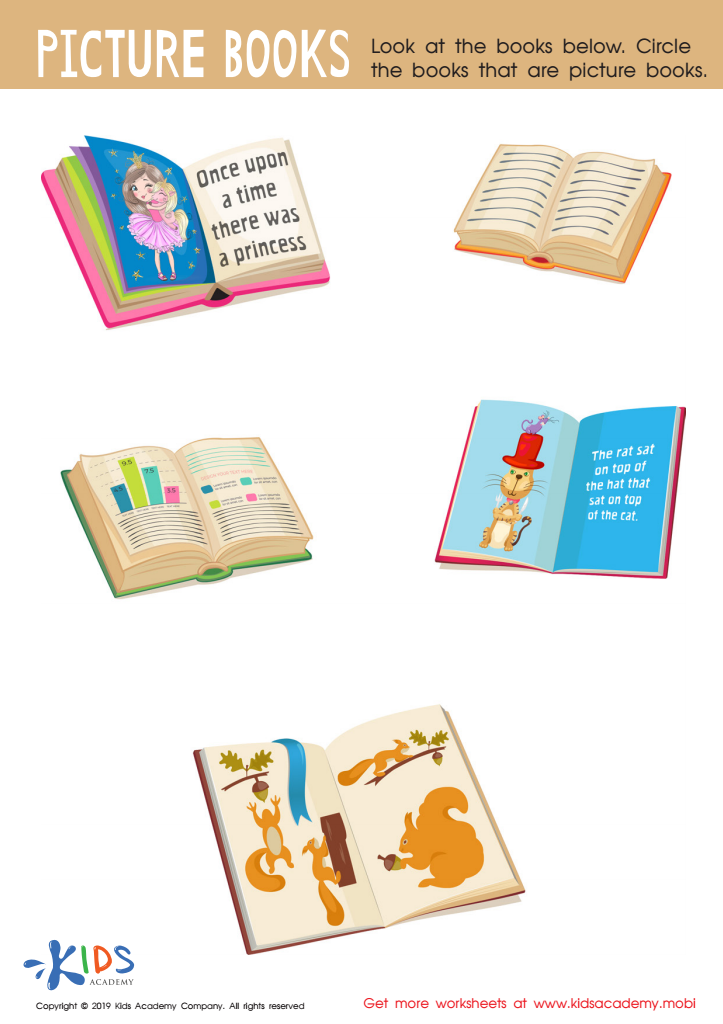
Picture Books Worksheet
Kids will love this exercise! Get their imaginations going with five colorful picture books. Ask them to circle the books that are picture books and have them enjoy the exciting stories, along with the colorful images. Reading can become that much more enjoyable!
Picture Books Worksheet
Worksheet
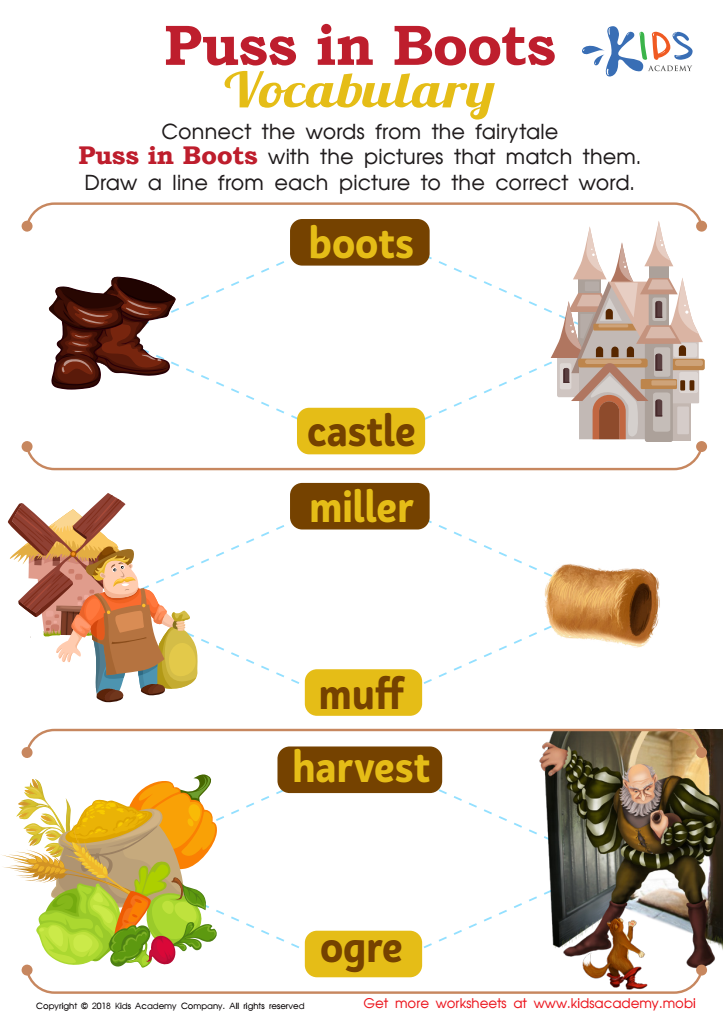
Puss in Boots Vocabulary Worksheet
Let your kids enjoy story-telling while learning at the same time. Help them learn from the fairytale, Puss in Boots, by connecting words from the worksheet with the matching pictures. Ask them to draw a line between each picture and corresponding word to build their vocabulary.
Puss in Boots Vocabulary Worksheet
Worksheet
Join Kids Academy for Free
Who is primarily going to use this learning content?








Fostering story analysis and building vocabulary in children ages 3-6 is crucial for their cognitive and language development. At this critical stage, young minds are rapidly absorbing and learning from their surroundings. Engaging with stories enhances their understanding of narrative structures, characters, and plot development, which lays the groundwork for future reading comprehension skills.
When parents and teachers prioritize story analysis, they encourage children to think critically about what they hear, promoting higher-level thinking skills. It can help them identify main ideas, predict outcomes, and make connections to their own experiences. These skills are transferable to other areas of learning and problem-solving.
Vocabulary building is equally essential. A rich vocabulary allows children to effectively express their thoughts, feelings, and needs. Early exposure to diverse words through stories provides them with the tools to better understand and navigate the world around them. Children with strong vocabularies tend to perform better academically, as they find it easier to comprehend complex instructions and engage with educational materials.
In summary, investing time in story analysis and vocabulary building helps nurture attentive listeners, articulate speakers, and engaged learners. These skills are foundational, serving as a springboard for academic success and effective communication in later life, and they make learning an enjoyable, imaginative, and interactive process.








