Rhyming skills development Normal Reading Worksheets for Ages 3-6
3 filtered results
-
From - To
Enhance your child's literacy with our engaging Rhyming Skills Development Normal Reading Worksheets, specially designed for ages 3-6. These interactive resources foster essential reading skills through fun-filled activities that encourage children to recognize and create rhymes. Each worksheet is packed with colorful illustrations and age-appropriate tasks that capture young learners' attention, promoting phonemic awareness and language development. By exploring rhymes, children not only boost their vocabulary but also improve their listening and reading skills. Perfect for parents and educators alike, our worksheets provide a joyful and effective way to nurture a love for reading in early learners. Start their literacy journey today!

Rhyming Words Rhyming Worksheet
 Assign to My Students
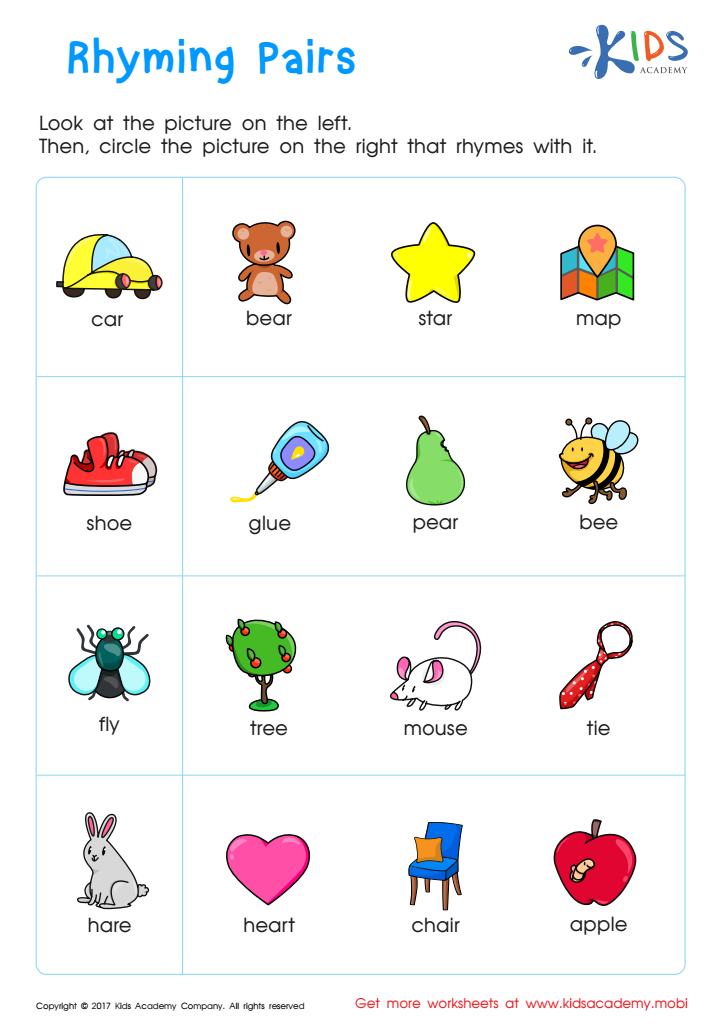

First Words: Picture Rhymes Worksheet







Rhyming skills are a crucial aspect of early literacy development for children ages 3-6, and parents and teachers should prioritize this foundation. At this age, children are learning to recognize sounds and develop phonemic awareness, which is essential for reading. Rhyming helps children identify similar sounds in words, enhancing their ability to isolate, blend, and manipulate phonemes. This familiarity with sound patterns lays the groundwork for word recognition and spelling.
Furthermore, rhyming activities promote vocabulary building and comprehension. Engaging with rhymes introduces children to new words in a fun and memorable way, aiding their understanding of language structure. Songs, poems, and nursery rhymes serve as captivating tools for learning, making literacy enjoyable and interactive.
Additionally, the playful nature of rhyming fosters a love for reading, encouraging children to explore books and stories independently. When parents and teachers support rhyming skills, they not only enhance literacy development but also strengthen bond through shared reading experiences.
Ultimately, emphasizing rhyming skills contributes to the holistic development of children, equipping them with essential language tools that can influence their academic success and lifelong love for literature.








