Problem-Solving Skills Normal Reading Comprehension Worksheets for Ages 3-6
5 filtered results
-
From - To
Enhance your child's reading comprehension with our engaging Problem-Solving Skills Worksheets, designed specifically for ages 3-6. These interactive activities foster critical thinking and encourage young learners to analyze stories and answer relevant questions. By navigating through colorful illustrations and relatable scenarios, kids will develop essential problem-solving skills while enjoying the learning process. Suitable for both home and classroom use, these worksheets help build a strong foundation for reading comprehension that will benefit your child throughout their educational journey. Encourage curiosity and creativity in young minds today—explore our delightful problem-solving worksheets and watch them thrive!
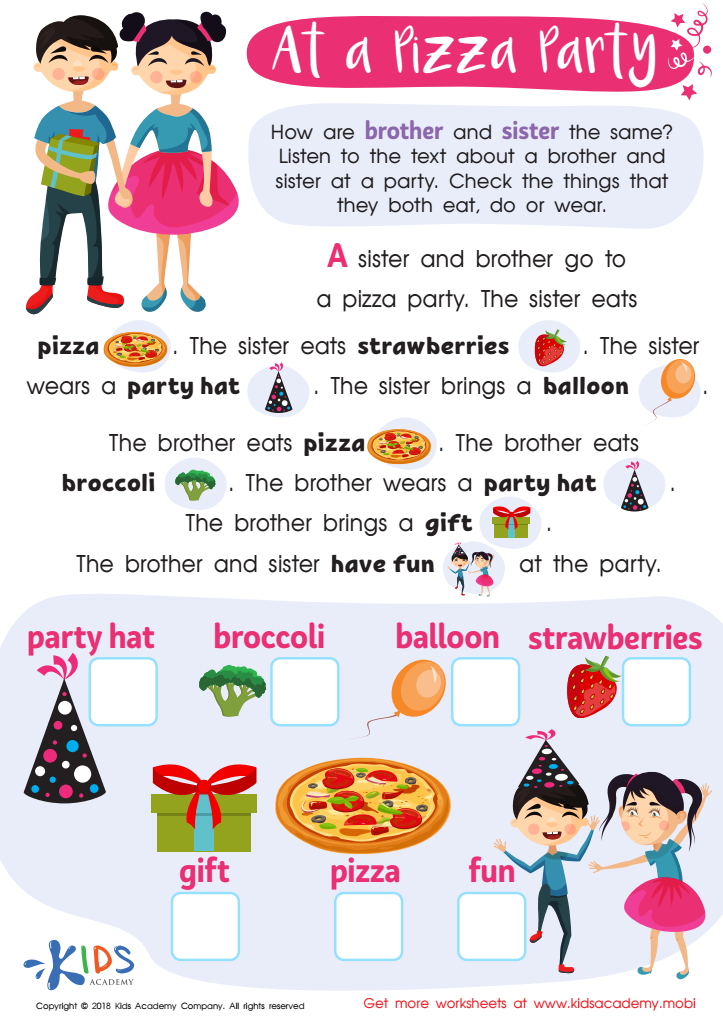
At a Pizza Party Worksheet
 Assign to My Students
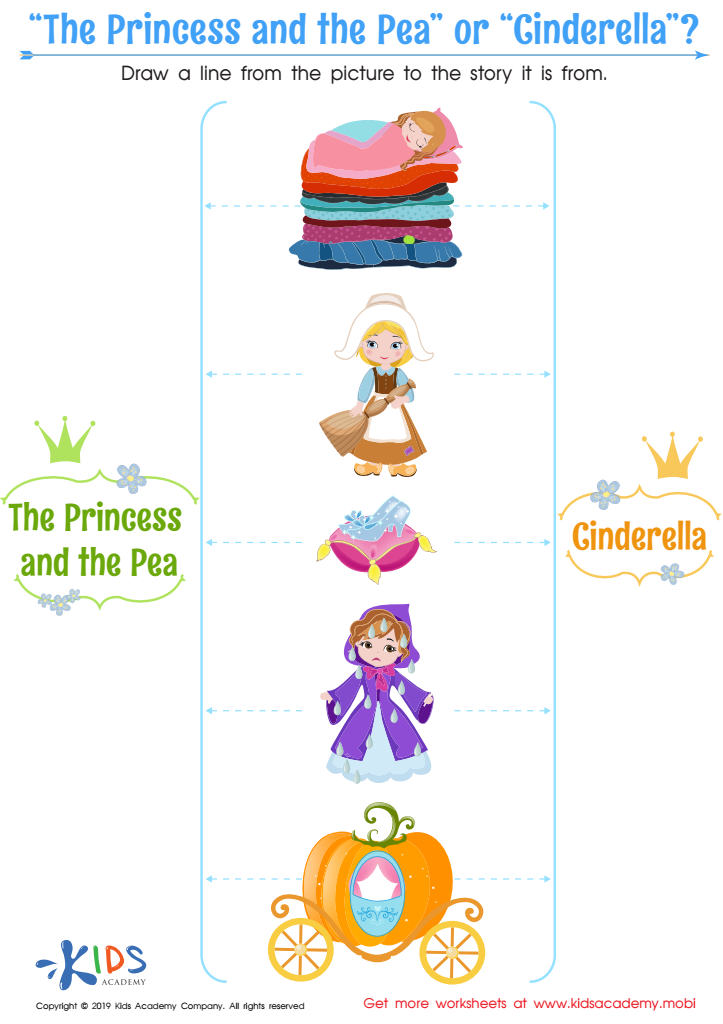
“The Princess and the Pea” or “Cinderella” Worksheet

Towns Worksheet
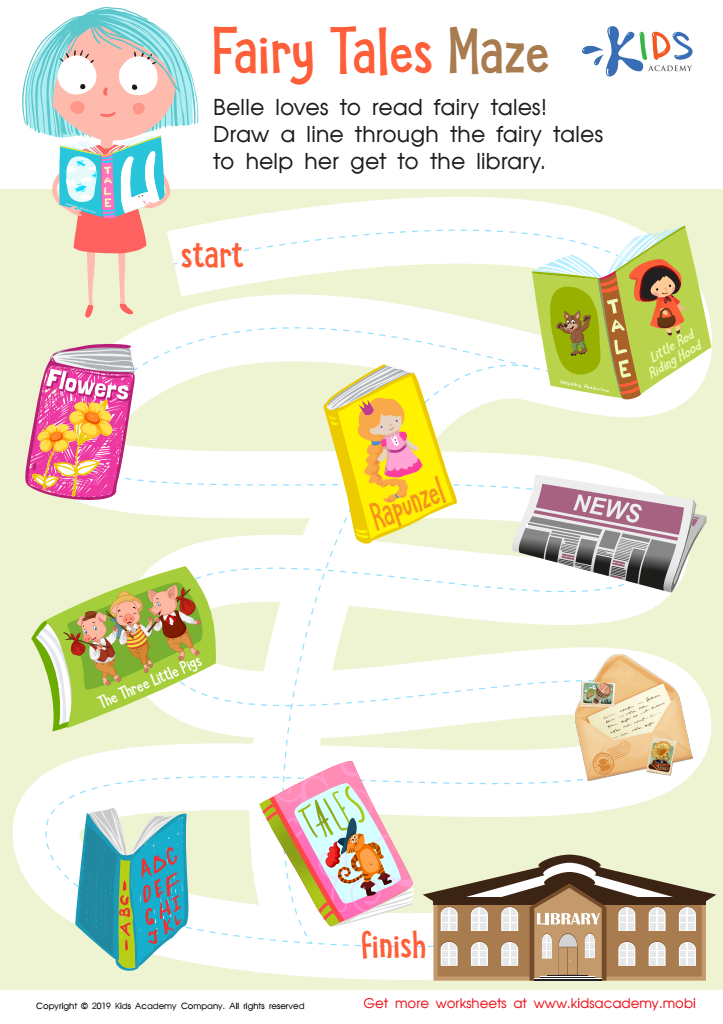
Fairy Tales Maze Worksheet

Take a Look - Part 1 Worksheet








Parents and teachers should care about developing problem-solving skills and reading comprehension in children aged 3-6 because these foundational abilities play a crucial role in overall cognitive development. At this age, children are rapidly absorbing information and learning how to navigate their environment, making early intervention vital.
Problem-solving highlights critical thinking, creativity, and resilience, enabling children to take on challenges effectively. Activities that encourage children to explore and find solutions foster their confidence and perseverance—qualities that are essential for lifelong learning.
Reading comprehension is equally important; it helps children understand and engage with stories, enhancing their vocabulary and expressive language. Comprehension lays the groundwork for later academic success and encourages a love for reading. When children can connect with the material, they develop emotional intelligence and empathy, as they learn to understand other perspectives.
Moreover, early exposure to these skills cultivates a positive attitude toward education. When parents and teachers prioritize and nurture problem-solving and reading comprehension, they equip children with tools that will benefit them throughout their educational journey, helping them become independent learners capable of thinking critically and communicating effectively. Ultimately, a strong foundation in these areas creates a pathway for success in both school and life.