Story comprehension Normal Reading Comprehension Worksheets for Ages 3-6
5 filtered results
-
From - To
Discover the joys of reading with our Story Comprehension Normal Reading Comprehension Worksheets designed for children ages 3 to 6! These engaging worksheets nurture young minds by enhancing their understanding of stories through fun activities. Each worksheet encourages critical thinking and creativity, allowing kids to explore characters, settings, and narratives, all while improving their vocabulary and storytelling skills. Designed with bright illustrations and age-appropriate language, these resources make reading a delightful experience. Perfect for teachers and parents alike, our worksheets provide a solid foundation for literacy development, setting children on a path to becoming confident and enthusiastic readers!
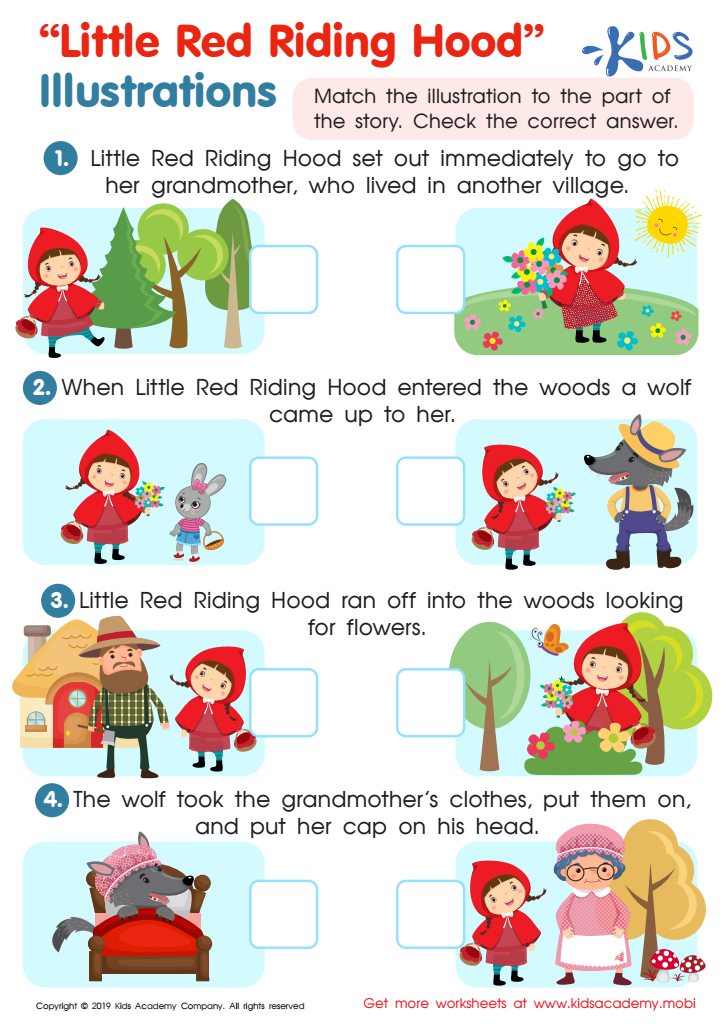
Little Red Riding Hood: Illustrations Worksheet
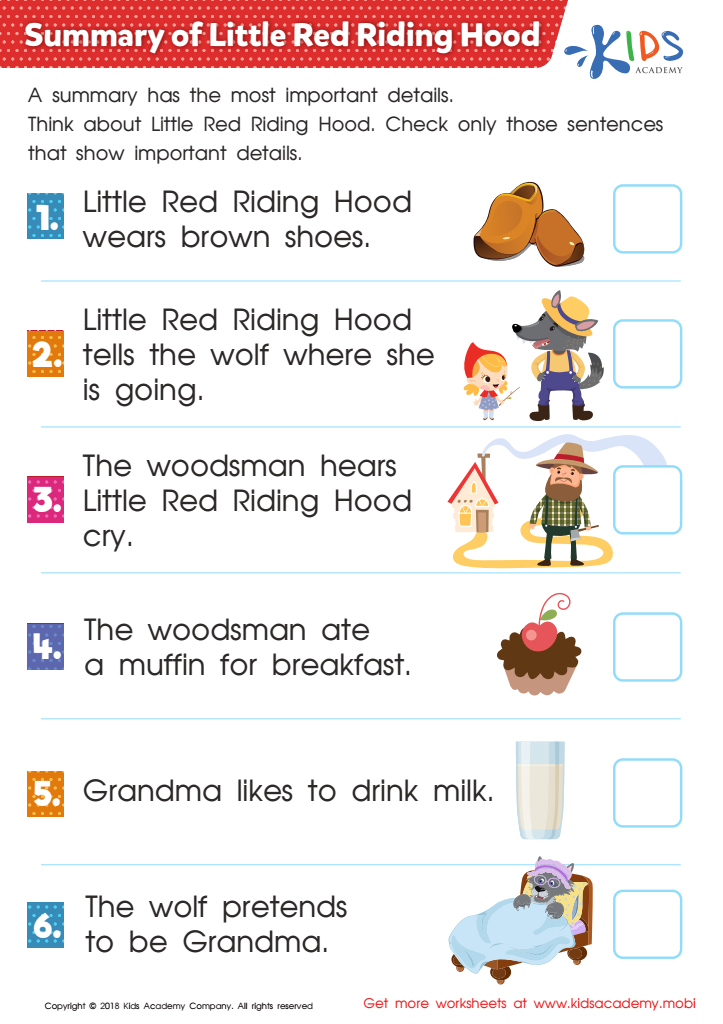
Summary of Little Red Riding Hood Worksheet
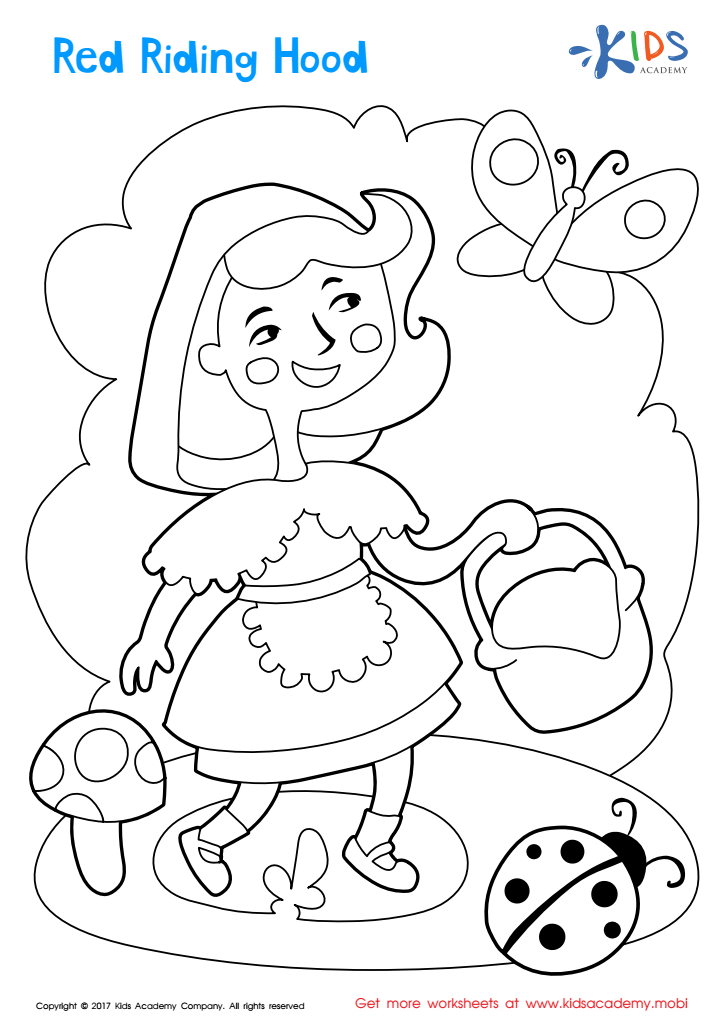
Red Riding Hood Coloring Page
 Assign to My Students
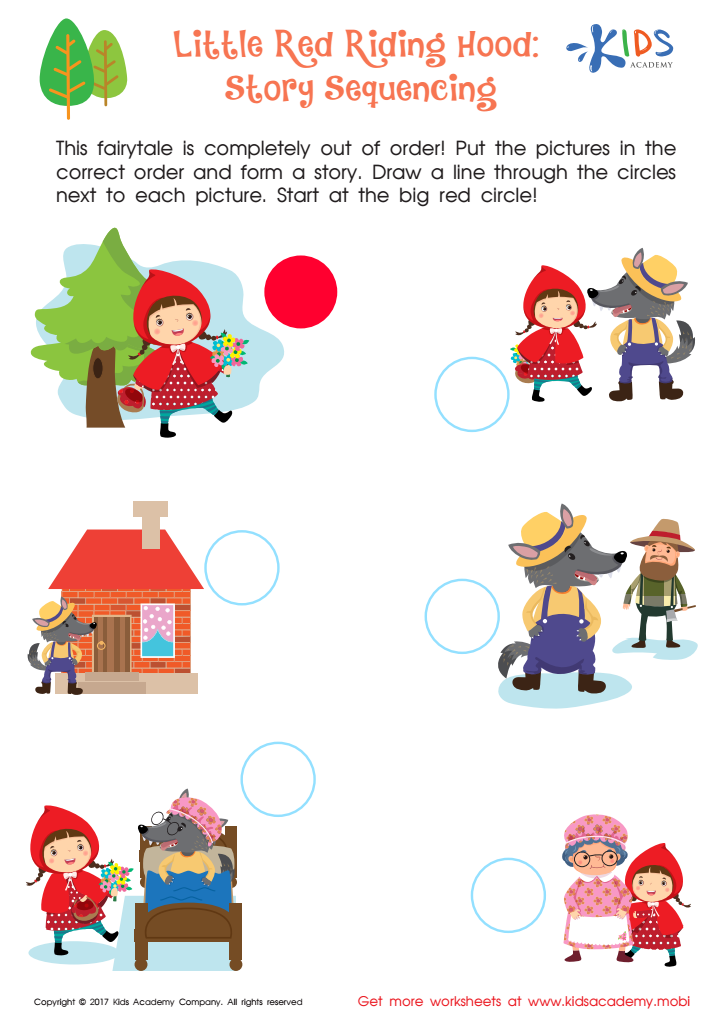
Story Sequencing Printable
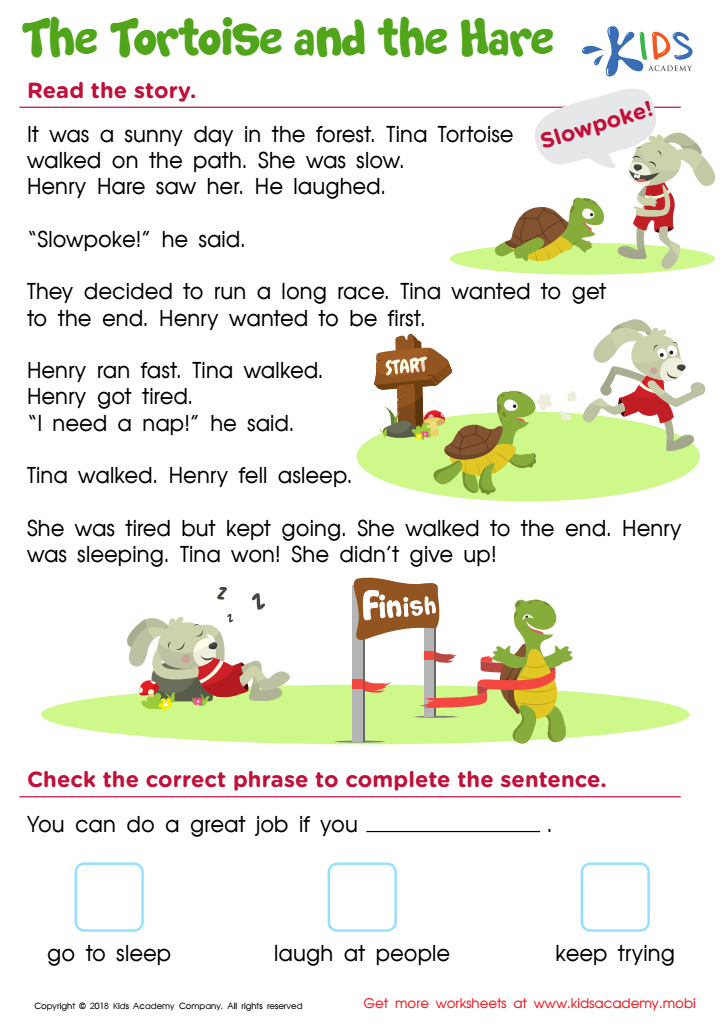
The Tortoise and the Hare Worksheet







Parents and teachers should prioritize story comprehension in children aged 3-6 because it lays the foundation for lifelong literacy skills. During early childhood, kids develop essential cognitive abilities, and comprehending stories enhances their vocabulary, critical thinking, and social understanding. When children engage with stories, they are encouraged to think about characters, settings, and plots, fostering their ability to make connections and understand different perspectives.
Furthermore, comprehending stories improves listening skills, which are vital for classroom success. It enables children to follow instructions, participate in discussions, and express their thoughts clearly. Early story comprehension also sparks imagination and creativity, as children learn to visualize different scenarios and outcomes.
Another important aspect is that story comprehension nurtures emotional intelligence by exposing children to various emotions and situations, helping them to empathize with others. This social-emotional development is crucial as children navigate their relationships with peers and adults.
Ultimately, strong story comprehension skills not only promote reading fluency but also build a love for reading that can last a lifetime. Investing in story comprehension at this formative stage is essential for fostering well-rounded, literate, and emotionally intelligent individuals.








