Understanding context Normal Reading Comprehension Worksheets for Ages 3-6
4 filtered results
-
From - To
Introduce your young learner to the world of reading with our "Understanding Context" Normal Reading Comprehension Worksheets for Ages 3-6 on Kids Academy. These engaging worksheets are designed to help budding readers grasp the importance of context in storytelling. Through simple texts and colorful illustrations, children will discover how to make connections between words and their meanings. These activities promote critical thinking, enhance vocabulary, and build a solid foundation for future reading success. Perfect for preschoolers and kindergarteners, our worksheets turn learning into a fun and interactive experience while fostering a lifelong love for reading.
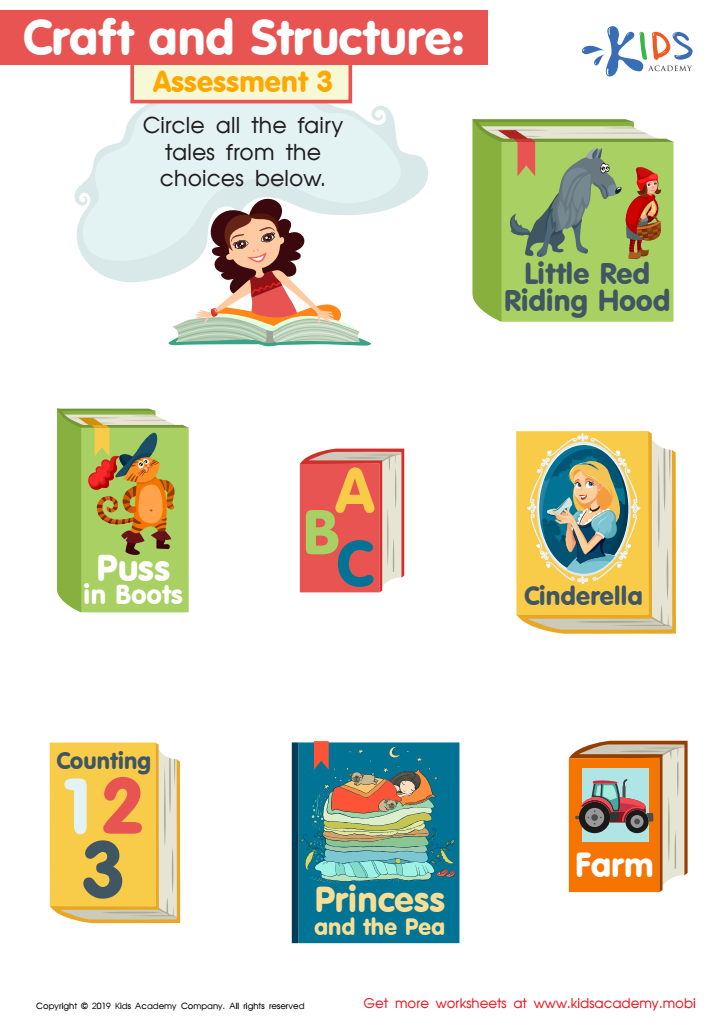
Craft and Structure: Assessment 3 Worksheet
 Assign to My Students
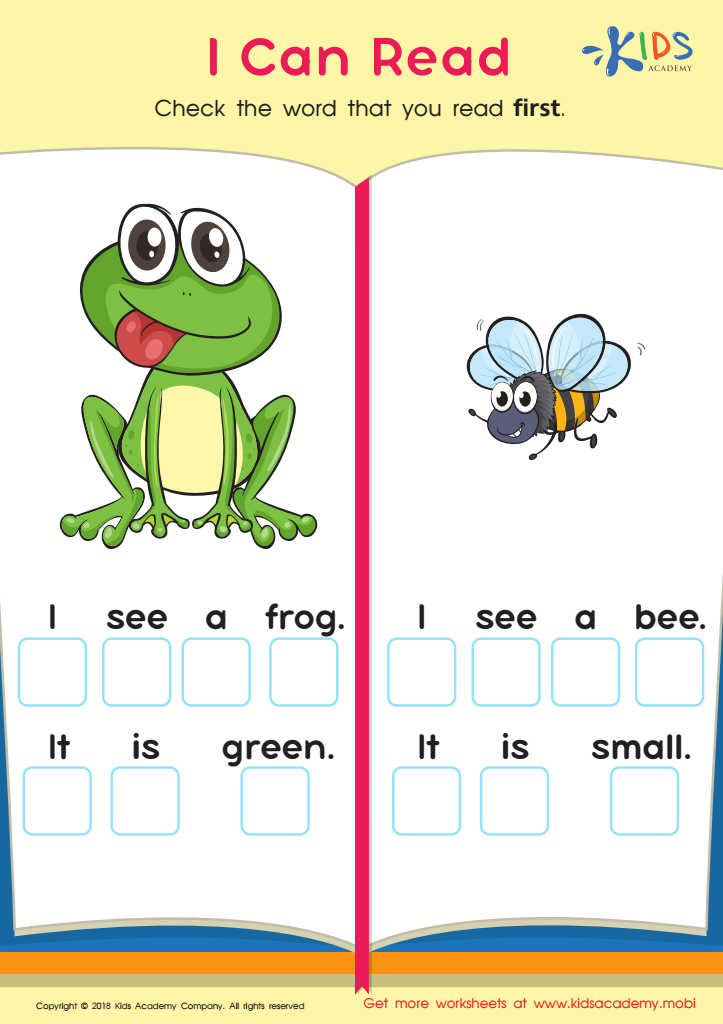
I Can Read Worksheet
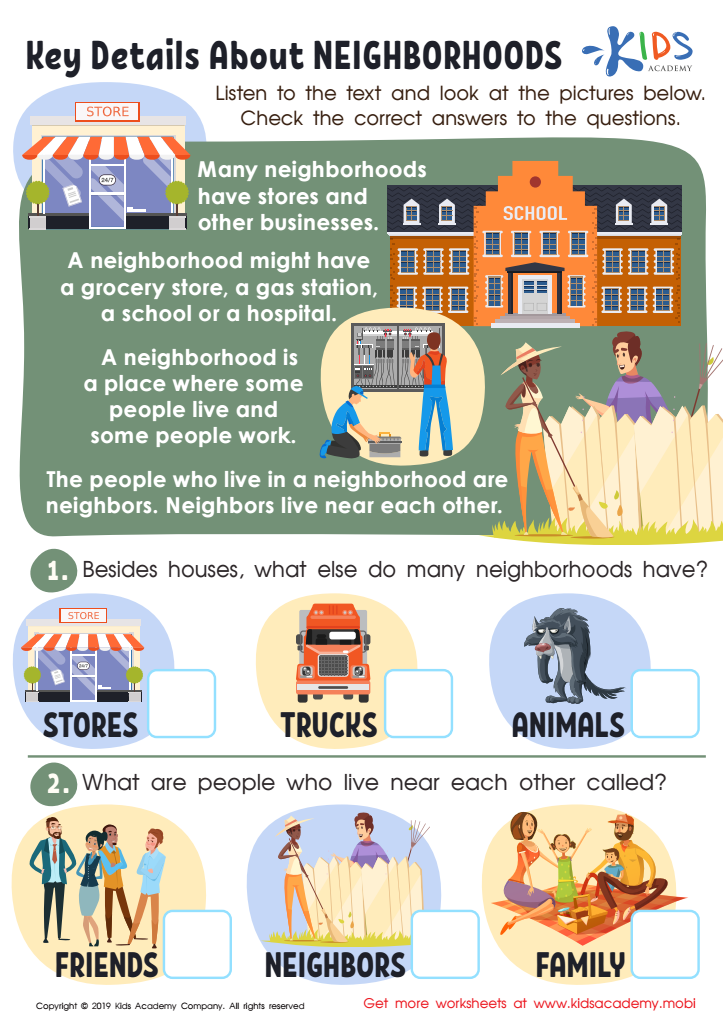
Key Details Neighborhoods Worksheet
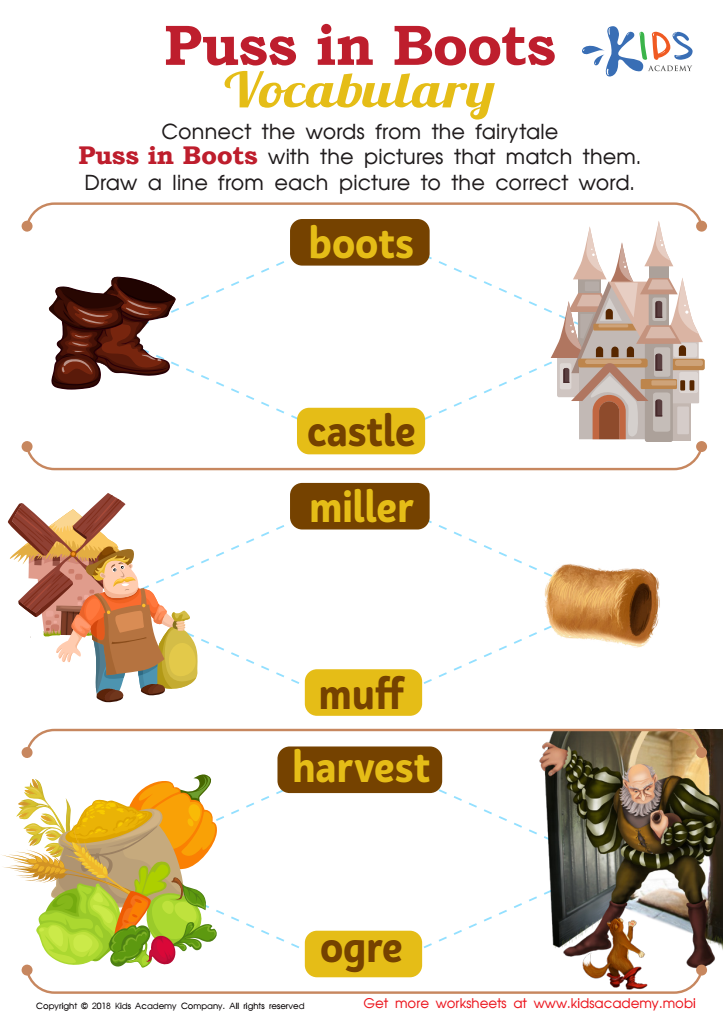
Puss in Boots Vocabulary Worksheet


.jpg)



.jpg)

Understanding context in normal reading comprehension is crucial for children aged 3-6 because it lays the foundation for successful lifelong reading and learning. During these formative years, children's brains are remarkably receptive to new information and skills. Encouraging comprehension helps them make sense of the stories and texts they encounter, transforming simple word recognition into meaningful understanding.
When parents and teachers prioritize contextual comprehension, children learn to connect words with their experiences and the wider world. This connection enhances vocabulary development, critical thinking, and emotional intelligence. Children learn to infer meaning from illustrations and stories, ask questions, and predict outcomes, all of which are essential components of deep comprehension.
Moreover, understanding context aids in the development of empathy. Through stories, young children can look at life through different perspectives, learning compassion and understanding in the process. This not only benefits their reading skills but also fosters social and emotional growth.
Early positive reading experiences also inspire a lifelong love of reading, encouraging curiosity and a quest for knowledge. By focusing on contextual comprehension, parents and teachers help children enjoy reading, feel confident in their abilities, and set a strong foundation for academic success. Thus, investing time and resources into developing context comprehension is a rewarding step towards nurturing well-rounded, literate individuals.








