Logical Reasoning Normal Reading Fiction Worksheets for Ages 3-6
3 filtered results
-
From - To
Enhance your child's cognitive skills with our "Logical Reasoning Normal Reading Fiction Worksheets" designed for ages 3-6. These engaging resources promote critical thinking and problem-solving through fun, age-appropriate stories. Each worksheet encourages young learners to make connections, infer meaning, and develop reasoning abilities in a playful context. By interacting with fiction, children will not only improve their reading skills but also cultivate their analytical thinking in a supportive environment. Perfect for both home learning and classroom settings, these worksheets are crafted to inspire a love for reading while honing essential reasoning skills. Start your child's learning journey today!
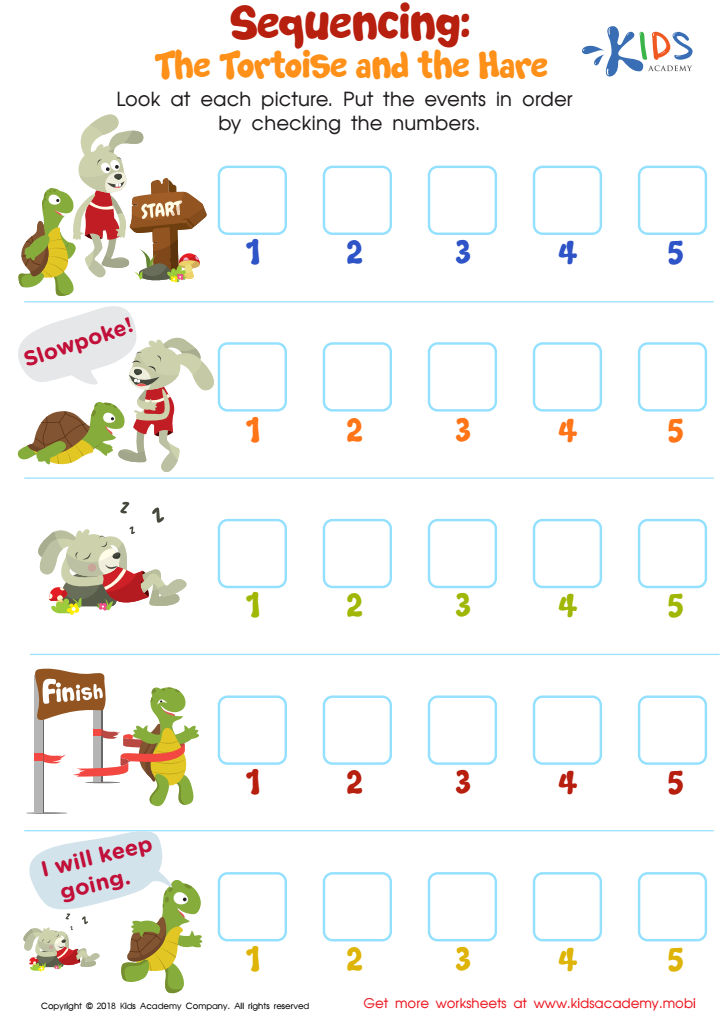
Sequencing: The Tortoise and the Hare Worksheet
 Assign to My Students
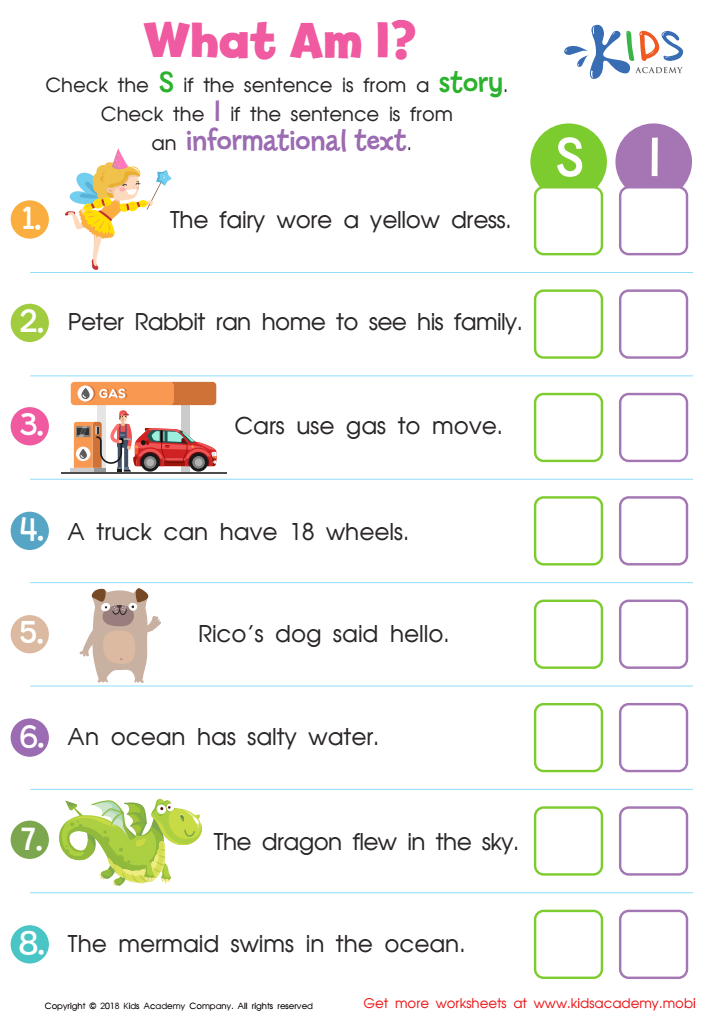
What Am I? Worksheet
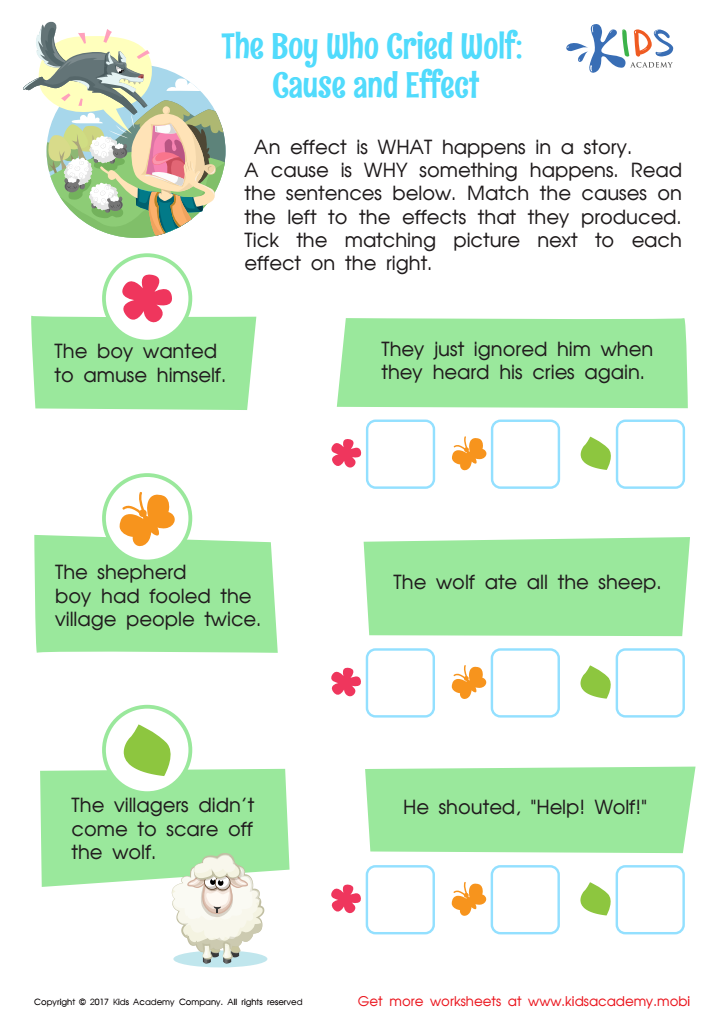
The Boy Who Cried Wolf: Cause and Effect Worksheet


.jpg)



.jpg)

Parents and teachers should care about Logical Reasoning Normal Reading Fiction for Ages 3-6 because this stage of early childhood is crucial for cognitive and language development. Engaging with fiction stories that incorporate logical reasoning helps children develop critical thinking skills, enabling them to analyze situations, draw conclusions, and understand cause-and-effect relationships. These skills are essential for problem-solving in both academic settings and daily life.
Moreover, reading fiction stimulates imagination and creativity, encouraging children to think outside the box. Through relatable characters and scenarios, young readers learn to empathize and comprehend diverse perspectives, which aids emotional intelligence and social skills.
Fictional stories often introduce mathematical and logical concepts in an entertaining manner, making learning enjoyable and approachable. This can foster a lifelong love for reading and learning, influencing academic success later on.
Additionally, shared reading experiences between parents, teachers, and children promote bonding and improve literacy skills. It creates a shared atmosphere for discussion, where questions can arise that challenge a child’s reasoning.
Ultimately, fostering logical reasoning through engaging literature lays a solid foundation for future learning, demonstrates the importance of literacy, and builds emotional bonds between children and adults.







