Story analysis Normal Reading Fiction Worksheets for Ages 3-6
3 filtered results
-
From - To
Enhance your young child's reading and comprehension skills with our Story Analysis Normal Reading Fiction Worksheets designed for ages 3-6. These thoughtfully crafted worksheets make reading an interactive and enjoyable experience, guiding young learners through key elements of storytelling such as character, plot, and setting. Each activity encourages critical thinking and helps to build early literacy skills, fostering a lifelong love for reading. Perfect for both classroom and at-home learning, our engaging and colorful worksheets support the development of attention to detail, sequential thinking, and the ability to analyze and understand simple narratives. Start exploring today!
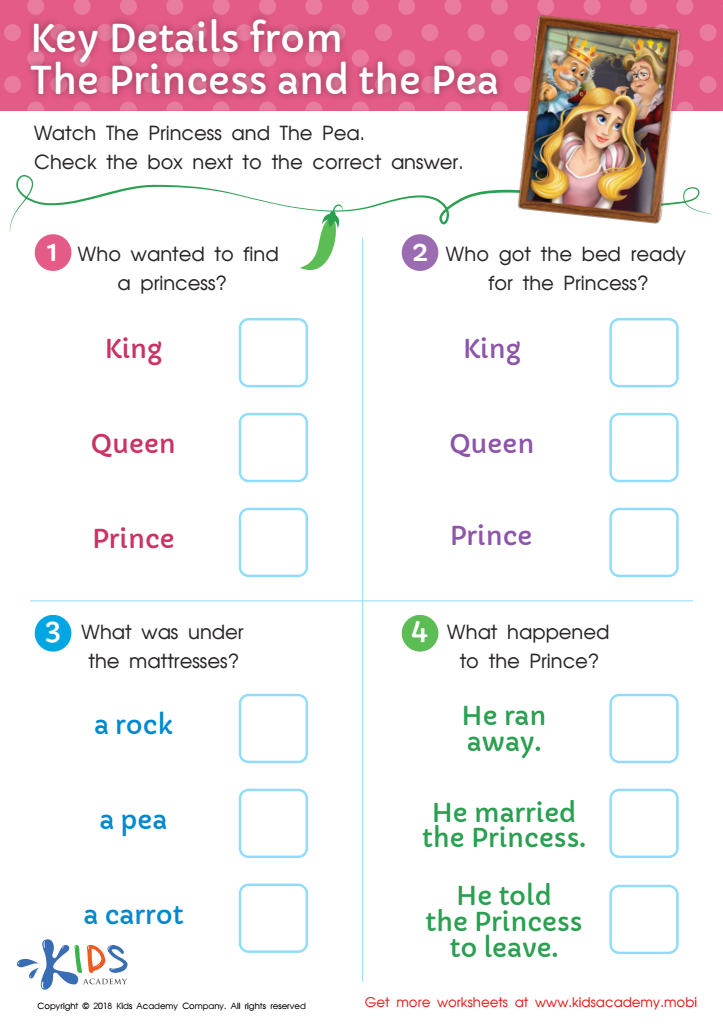
Key Details from the Princess and the Pea Worksheet
 Assign to My Students
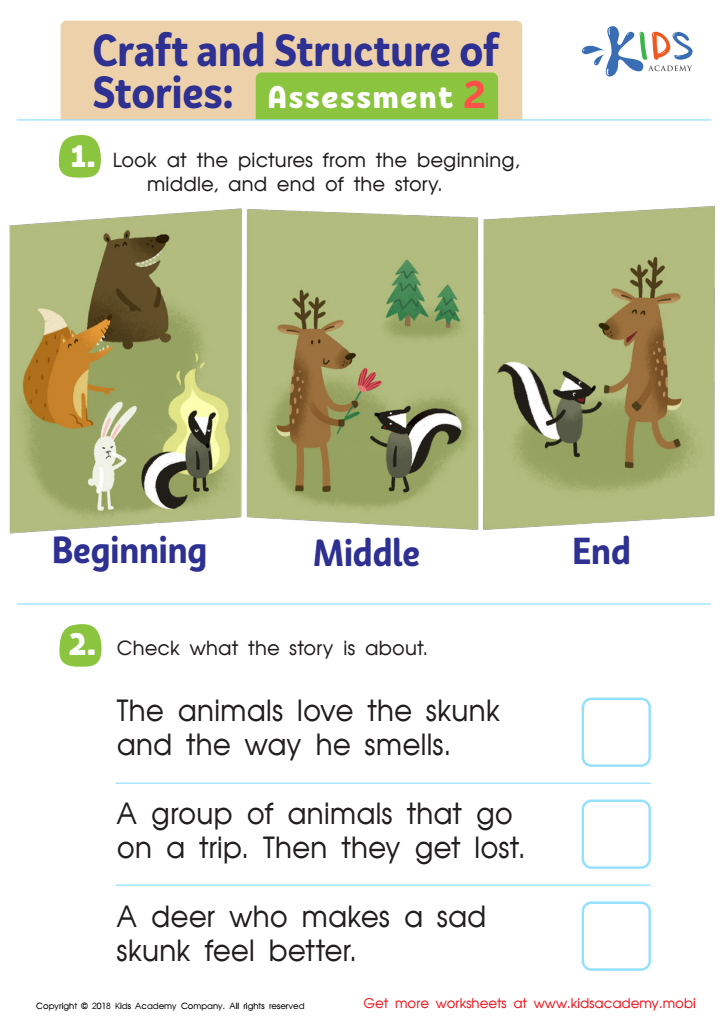
Craft and Structure of Stories: Assessment 2 Worksheet
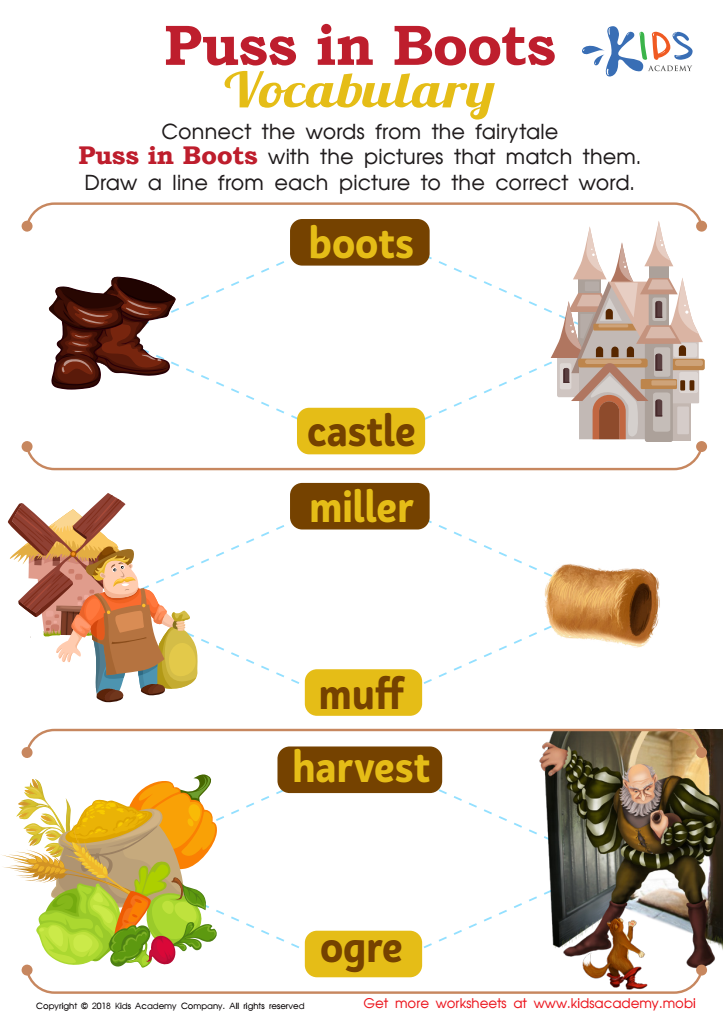
Puss in Boots Vocabulary Worksheet





.jpg)


Fostering story analysis and normal reading among children ages 3-6 is crucial because it lays the foundation for cognitive, language, and emotional development. At this formative stage, children's brains rapidly absorb new information, and their experiences with stories profoundly shape their understanding of the world. When children engage in story analysis, they learn to comprehend narrative structures, recognize characters and settings, and differentiate between cause and effect. This skill enhances their critical thinking and fosters a lifelong love for reading.
Moreover, reading fiction aloud introduces children to rich language patterns, diverse vocabularies, and the rhythm of sentences, which significantly fortifies their language acquisition. As they hear and discuss stories, children develop listening skills and the ability to express themselves clearly.
Emotionally, stories provide a safe space for children to navigate feelings and gain empathy. Characters’ experiences allow them to identify and articulate their emotions, reducing anxiety and promoting emotional intelligence. Including diverse stories helps children appreciate different cultures and perspectives, fostering inclusivity from an early age.
Therefore, parents and teachers should keenly encourage story analysis and regular reading. The practice nurtures children's intellectual growth, enhances linguistic abilities, bolsters emotional resilience, and ingrains a passion for stories and learning that can last a lifetime.







