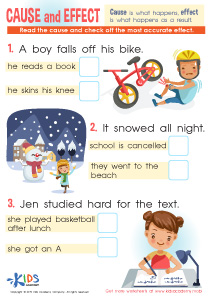
Vocabulary expansion Normal Reading Non-Fiction Worksheets for Ages 3-6
5 filtered results
Difficulty Level
Grade
Age
-
From - To
Subject
Activity
Standards
Boost your child's vocabulary with our engaging "Vocabulary Expansion Normal Reading Non-Fiction Worksheets" designed for ages 3-6! These educational worksheets feature fun activities and relatable non-fiction content that spark curiosity and enhance language skills. Each worksheet encourages young learners to explore new words through exciting themes and visuals, promoting comprehension and retention. Ideal for classrooms or at-home learning, these resources help children build a strong foundation in reading comprehension while making learning enjoyable. With vibrant illustrations and interactive tasks, our worksheets guide your child on an enriching vocabulary journey, setting them up for future success in language arts!
Favorites
With answer key
Interactive
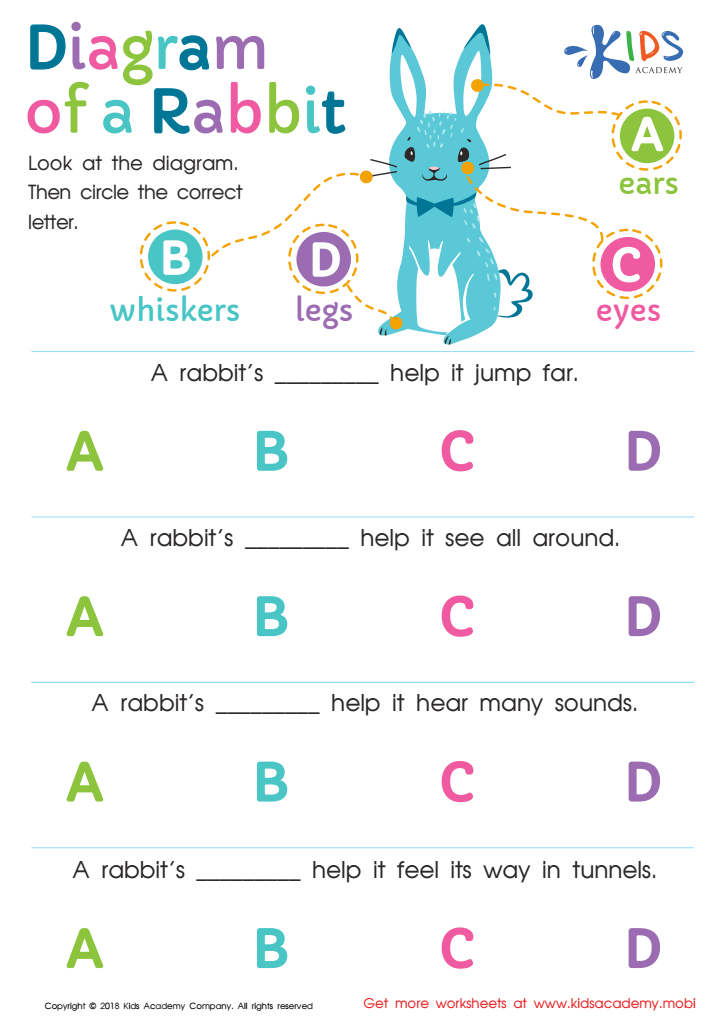
Diagram of a Rabbit Worksheet
Reading skills are essential for success in all subjects, from science and math to fiction. This worksheet helps kids learn to interpret diagrams by studying the rabbit illustration and then selecting the correct answer for each sentence. It's a fun way to build reading and comprehension skills!
 Assign to My Students
Diagram of a Rabbit Worksheet
Worksheet
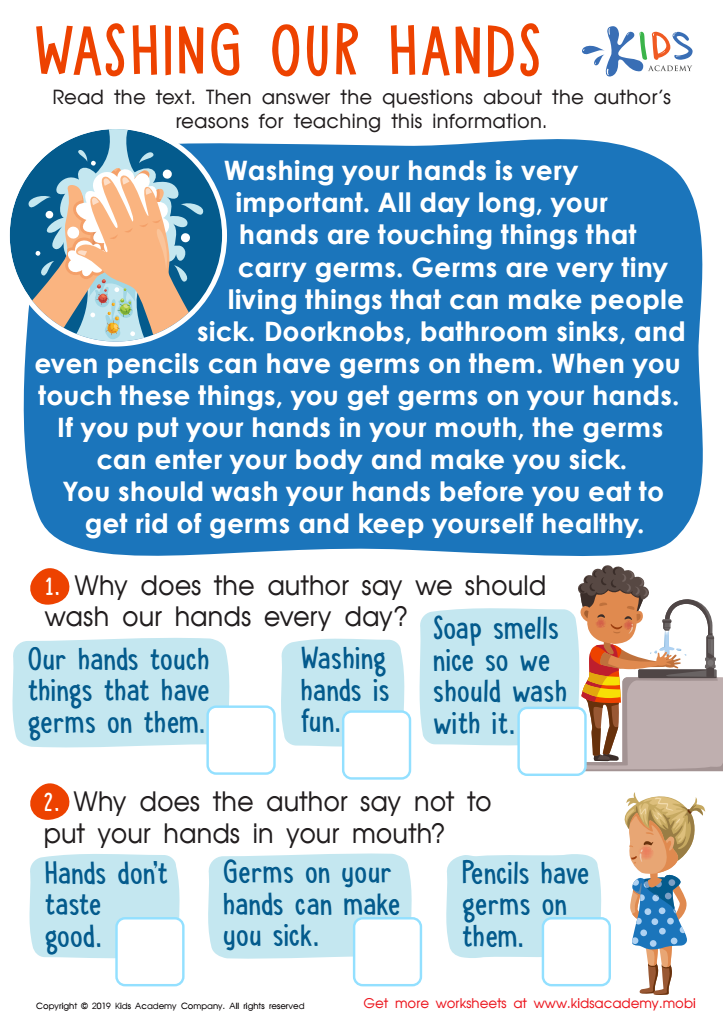
Washing Our Hands Worksheet
Reading allows us to gain knowledge. Informational texts provide essential facts which we need to be able to interpret and use. This PDF worksheet helps kids understand the importance of handwashing. It informs them of the germs they may come into contact with, before asking them to answer related comprehension questions.
Washing Our Hands Worksheet
Worksheet
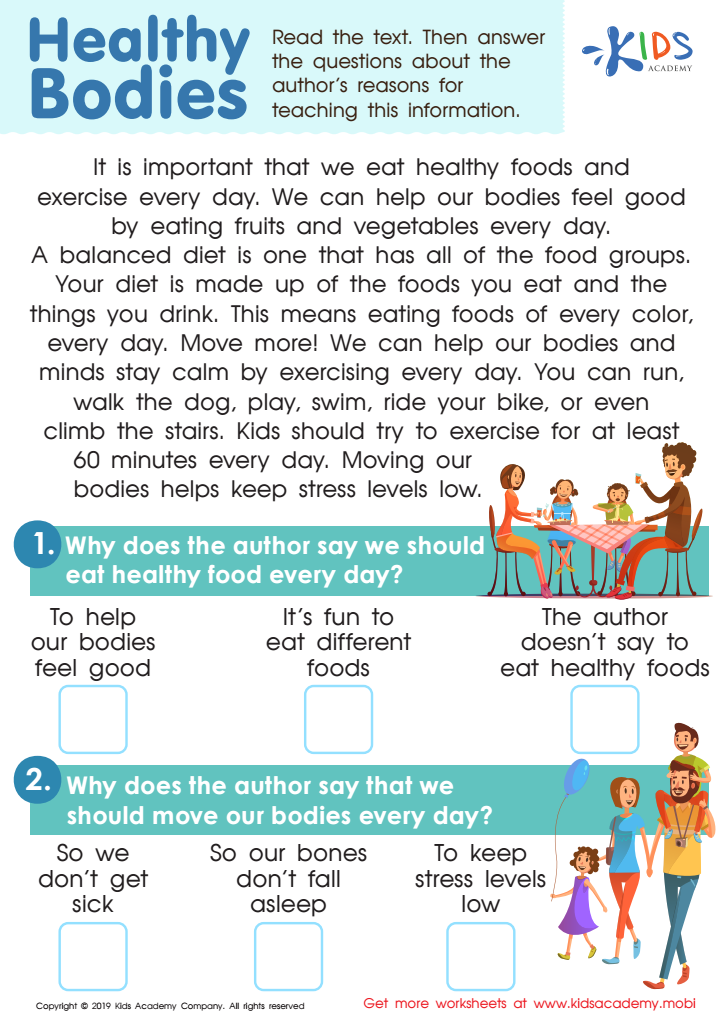
Healthy Bodies Worksheet
Taking care of our bodies is essential. To gain critical thinking skills, readers must understand an author's purpose. Our free worksheet is filled with facts about healthy bodies. After reading, your child can answer questions about the author's purpose.
Healthy Bodies Worksheet
Worksheet
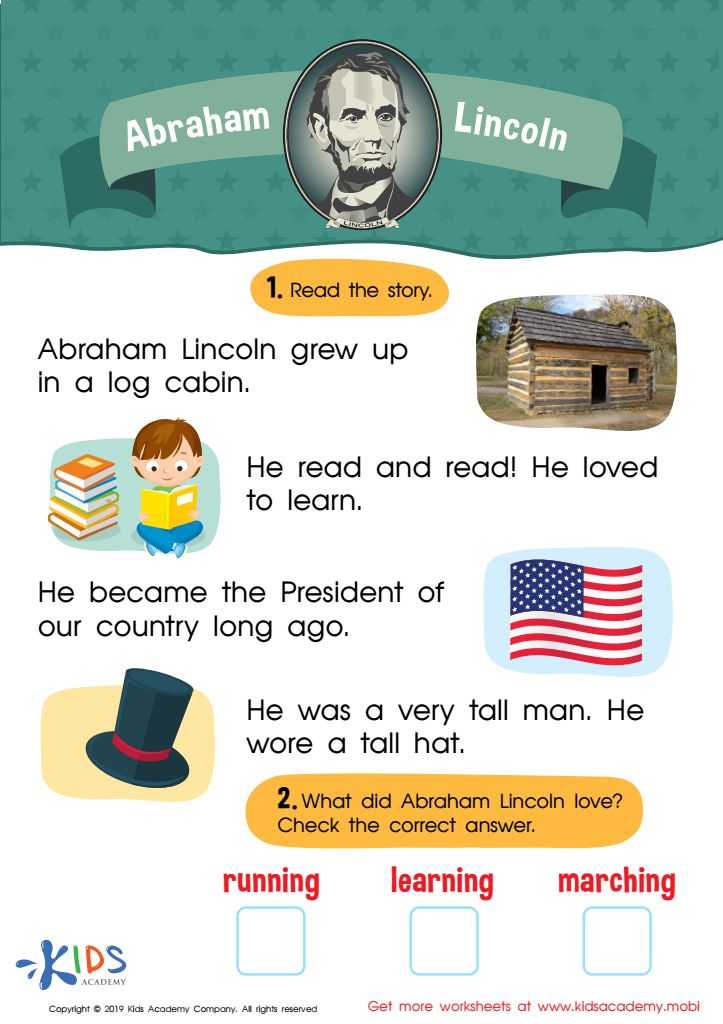
Abraham Lincoln Worksheet
Let your kids listen to interesting stories while having fun! Read the short story in this worksheet, point to the picture representing each sentence, then ask the questions and check the answers. Doing this will help your children learn new things and build their vocabulary.
Abraham Lincoln Worksheet
Worksheet
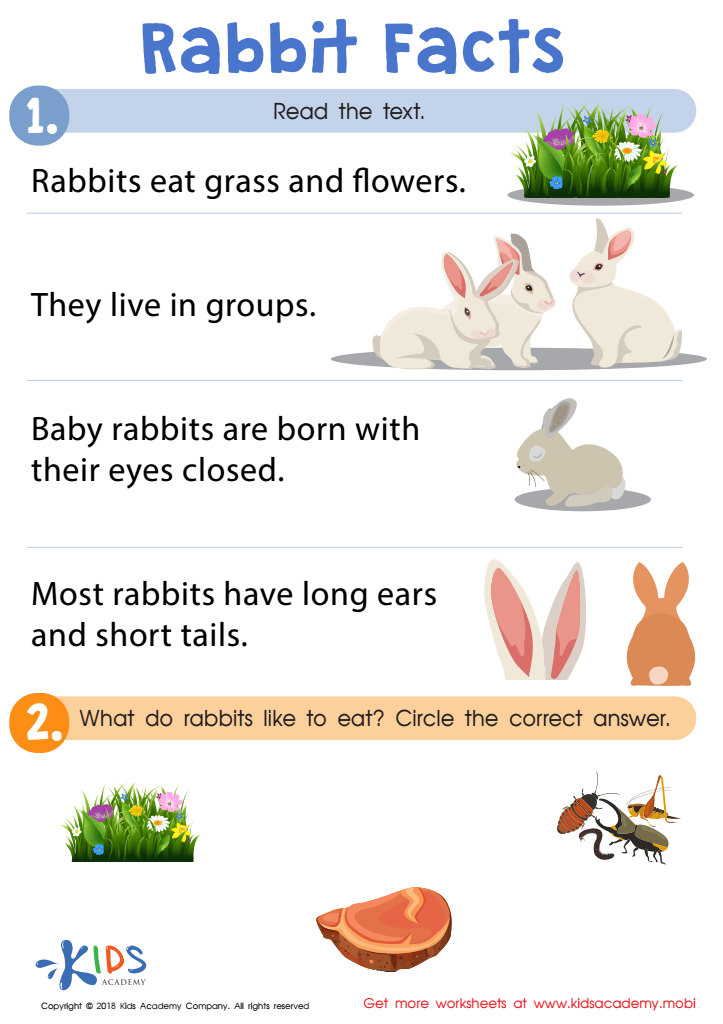
Rabbit Facts Worksheet
Informational texts offer great learning opportunities. Kids Academy's reading worksheet helps children read and recall important details from a text about bunnies. Kids will love it! Simply read the rabbit facts and circle the correct pictures to answer the questions.
Rabbit Facts Worksheet
Worksheet
Join Kids Academy for Free
Who is primarily going to use this learning content?








Vocabulary expansion is crucial for children aged 3-6, as it lays the foundation for their literacy skills and overall cognitive development. Engaging with non-fiction texts during this critical period fosters curiosity and an understanding of the world around them. Parents and teachers should prioritize vocabulary expansion because it not only enhances language skills but also promotes comprehension and critical thinking.
Non-fiction reading introduces children to new concepts and ideas, encouraging them to explore a variety of topics, from nature to technology. This exposure helps them build connections between words and their meanings, paving the way for effective communication. Moreover, a rich vocabulary enhances children’s ability to express themselves clearly and confidently.
Additionally, expanding vocabulary at this young age supports academic success in later years. Children with strong language skills tend to perform better in school as they can comprehend instructions, engage in discussions, and articulate their thoughts.
Parents and teachers play pivotal roles in this journey by choosing engaging non-fiction texts, discussing new words, and encouraging exploration of diverse subjects. By fostering vocabulary expansion in early literacy, we prepare children not just for academic achievement but also for informed and engaged citizenship.