Vocabulary enhancement Normal Rhyming Words Worksheets for Ages 3-6
6 filtered results
-
From - To
Our Vocabulary Enhancement Normal Rhyming Words Worksheets are designed for children ages 3-6, providing a fun and engaging way to expand their vocabulary and phonics skills. These worksheets incorporate colorful illustrations and interactive rhyming activities to help young learners recognize and produce rhyming words. By completing these exercises, kids will improve their reading readiness and language development. Perfect for both classroom and at-home use, our rhyming words worksheets offer a playful yet educational approach to early literacy, ensuring foundational skills are built in an enjoyable and effective manner. Discover the joy of learning with Kids Academy today!
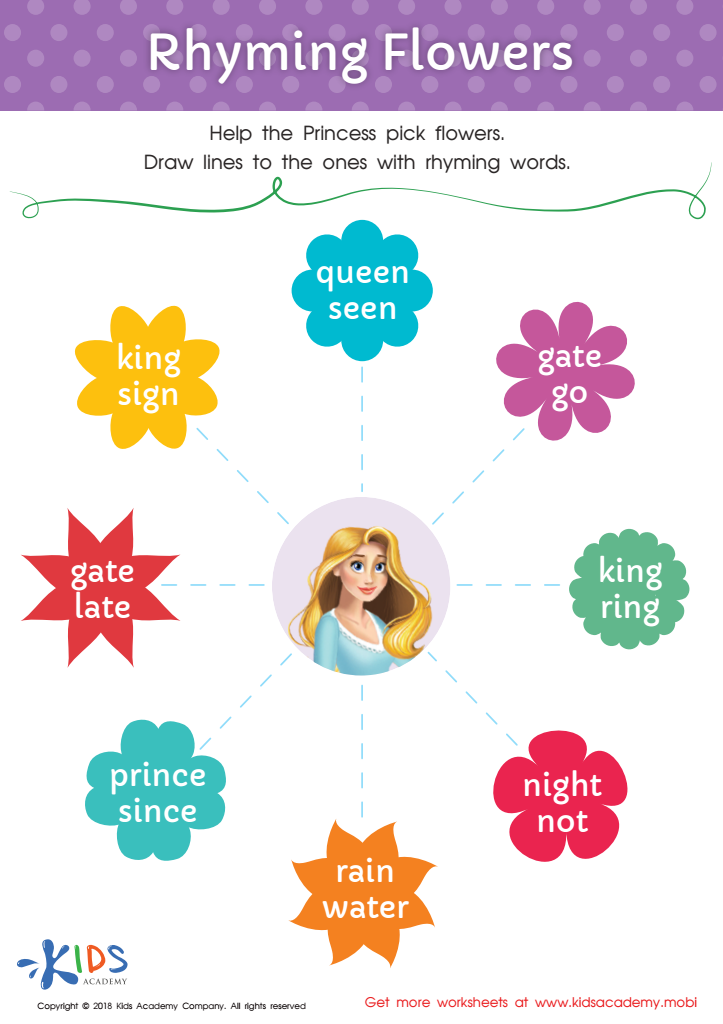
Rhyming Flowers Worksheet
 Assign to My Students
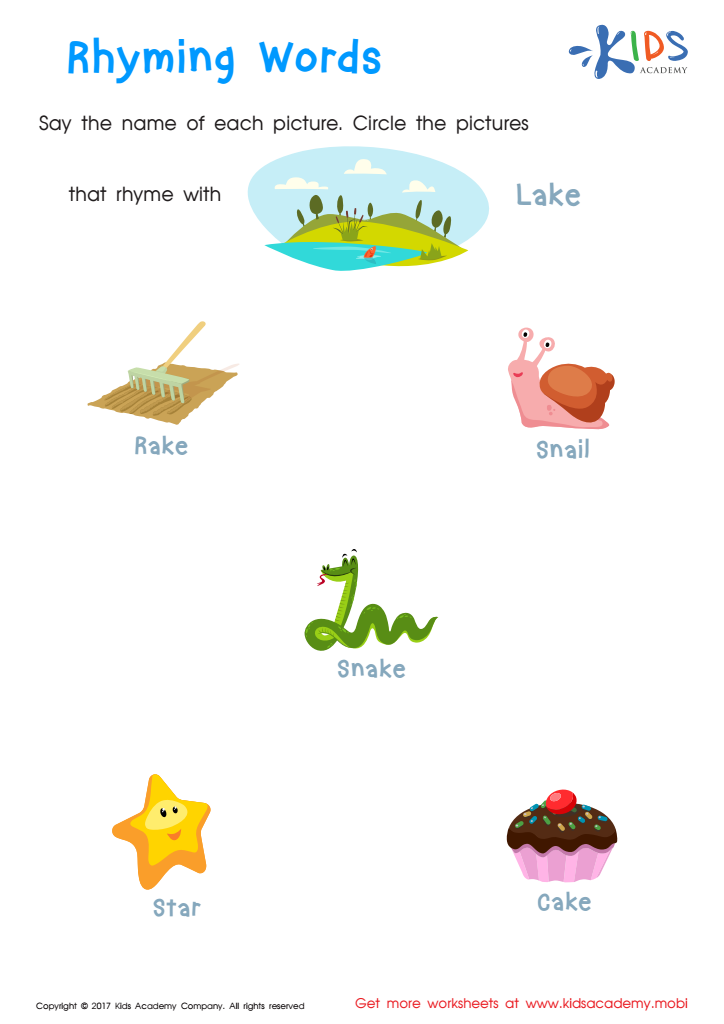
Rhyming Words Rhyming Worksheet
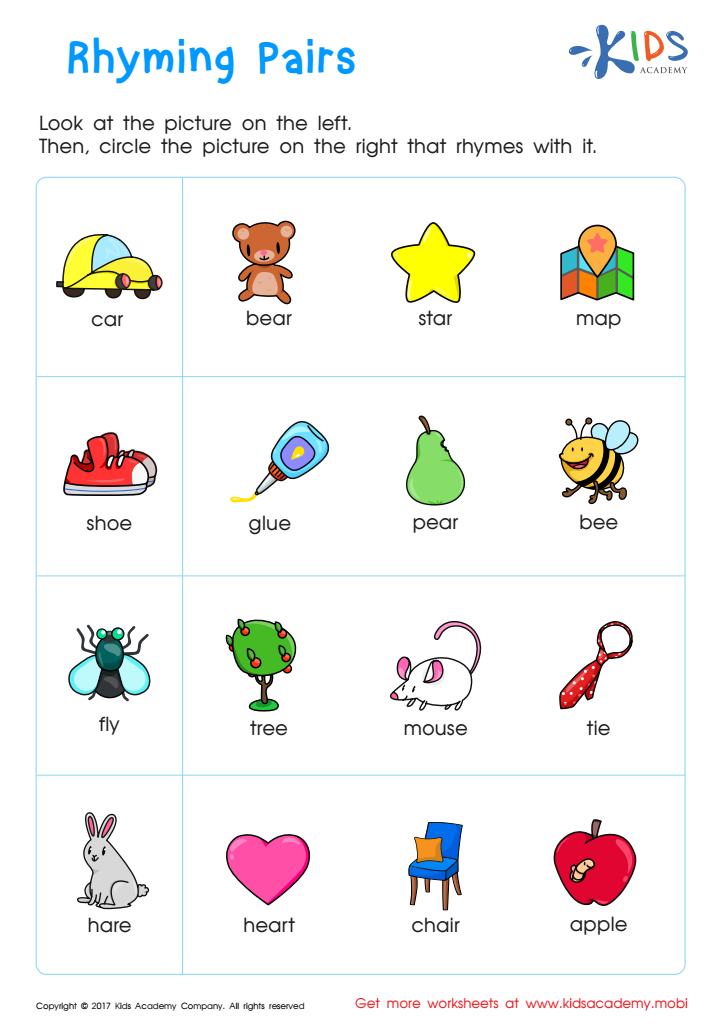
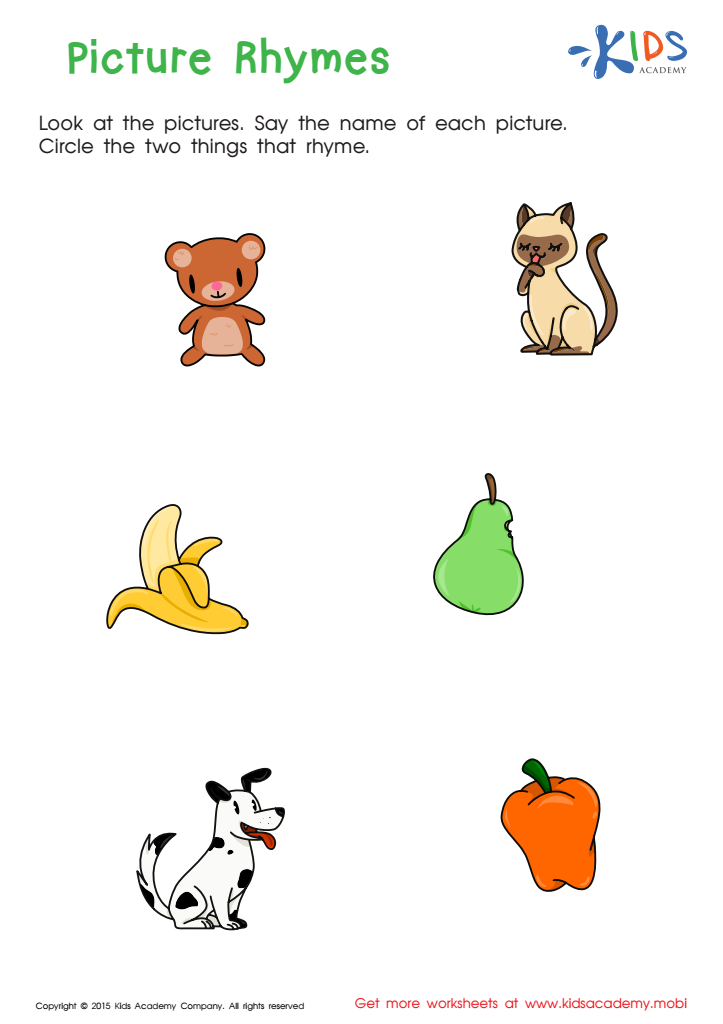
First Words: Picture Rhymes Worksheet
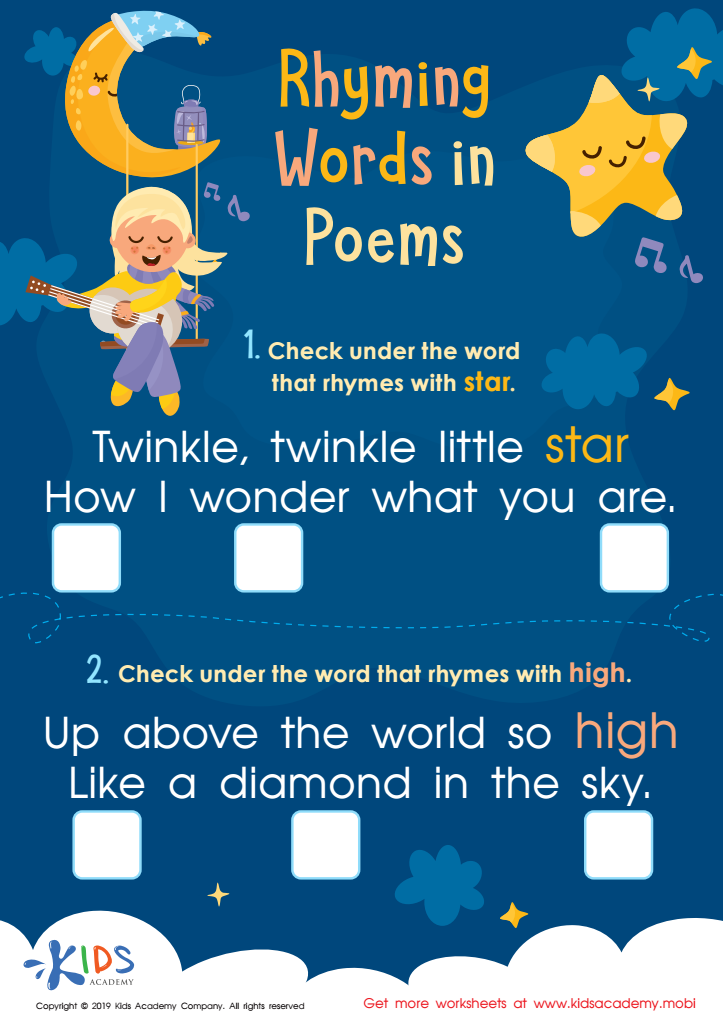
Rhyming Words in Poems Worksheet
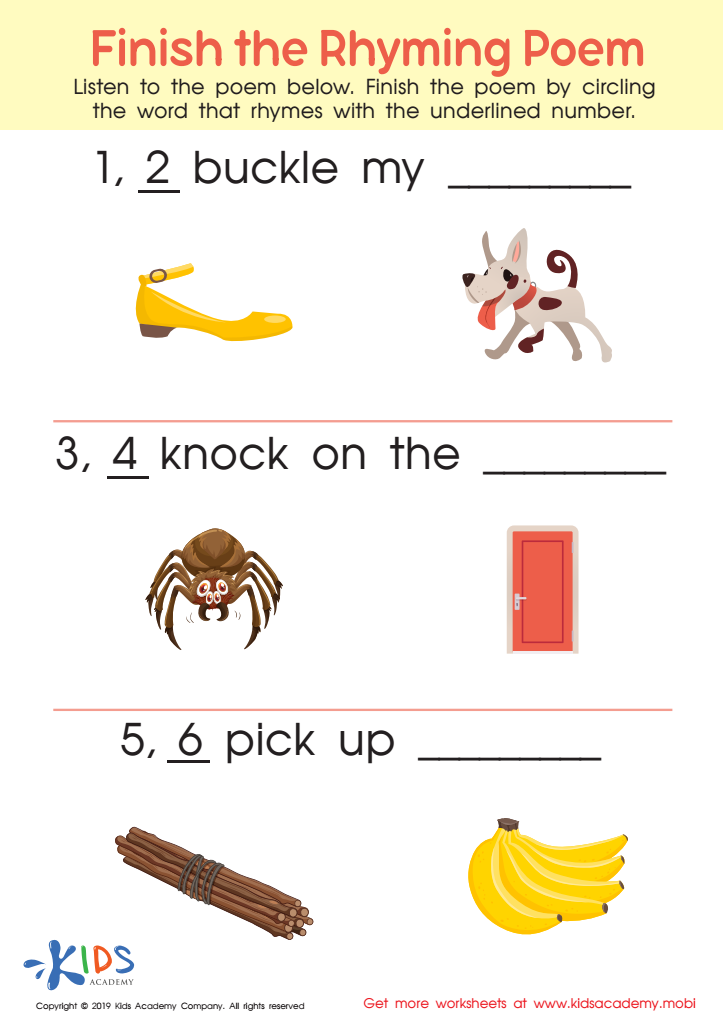
Finish Rhyming Poem Worksheet








Vocabulary enhancement through normal rhyming words is crucial for young children aged 3-6 because it lays the foundation for their overall language development and literacy skills. At this formative stage, children's brains are like sponges, absorbing new information rapidly. Rhyming words not only help in building a robust vocabulary but also make learning fun and engaging.
First, rhyming words enhance phonemic awareness, which is the ability to recognize and manipulate the sounds in spoken language. This skill is a critical precursor to reading, as it helps children understand how sounds form words. By hearing and practicing rhyming patterns, children learn to discern sounds more clearly and strengthen their auditory discrimination.
Second, using rhymes makes learning more enjoyable and memorable. Nursery rhymes and simple poems capture children's attention through rhythm and repetition, key elements that make recalling words easier. When children enjoy the learning process, they are more motivated to engage, practice, and retain new vocabulary.
Additionally, rhyming helps with social and emotional development. When children participate in rhyming activities with peers or family members, they are building social bonds and developing confidence in their conversational skills. Enhanced vocabulary through rhyming can open doors to more expressive communication, aiding children in expressing their emotions and thoughts more clearly.
Overall, vocabulary enhancement via rhyming not only assists in language development but also nurtures a child's cognitive, social, and emotional growth, making it an indispensable tool in early childhood education.








