Enhancing observational skills Normal Science Worksheets for Ages 3-6
3 filtered results
-
From - To
Explore our "Enhancing Observational Skills Normal Science Worksheets" designed for children ages 3-6. These engaging resources foster curiosity and critical thinking by encouraging young learners to observe, compare, and analyze their surroundings. Through fun and interactive activities, children will practice their observational skills, laying the groundwork for future scientific inquiry. Our worksheets include colorful illustrations and straightforward instructions that make learning enjoyable. Ideal for both classroom settings and at-home learning, these worksheets help nurture a love for science in early childhood. Let your child's observational abilities flourish while they embark on exciting learning adventures with our thoughtfully crafted materials!
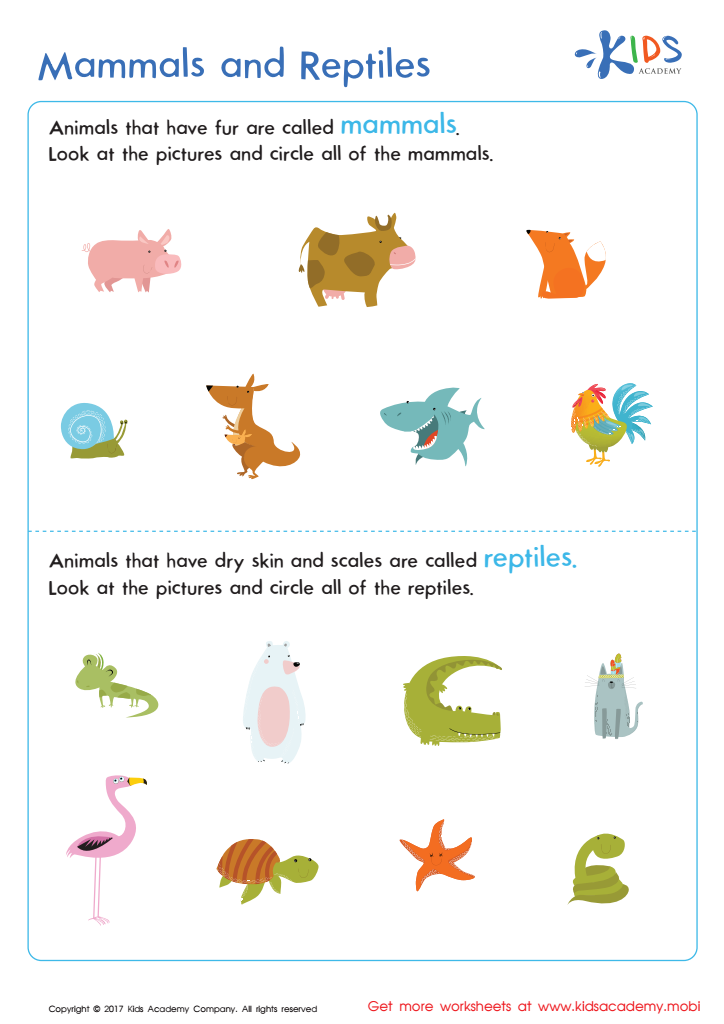
Mammals and Reptiles Worksheet
 Assign to My Students
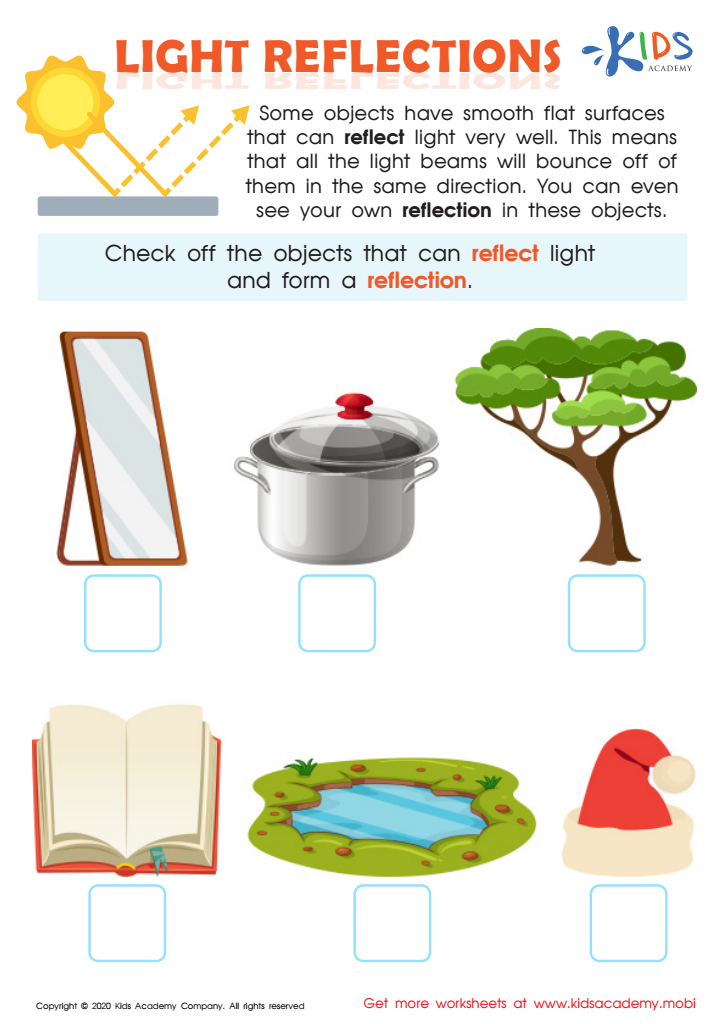
Light Reflections Worksheet
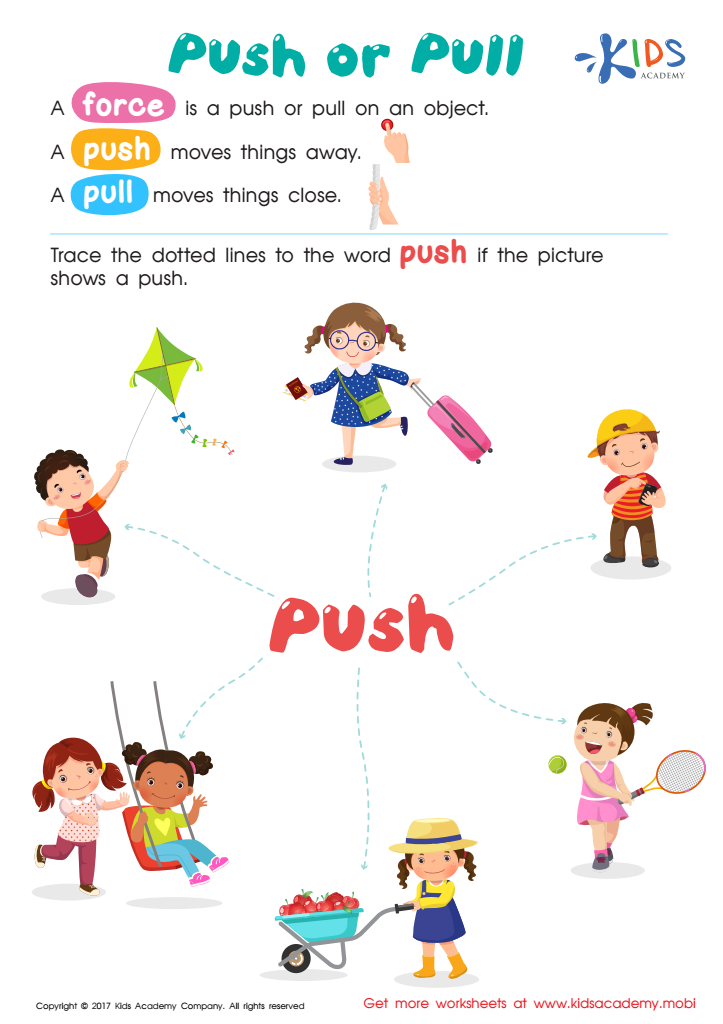
Push or Pull Worksheet


.jpg)




Enhancing observational skills in early childhood education, particularly for children ages 3-6, is vital for both parents and teachers. At this developmental stage, children are naturally curious, exploring their surroundings and asking questions. By focusing on observational skills, adults can nurture this innate curiosity, encouraging children to engage more deeply with their environment.
Observational skills allow children to notice details, recognize patterns, and make connections, which are foundational for scientific thinking. Engaging in activities that promote observation—such as nature walks, simple experiments, and interactive play—can lead to a greater understanding of the world around them. This early engagement with science fosters critical thinking and problem-solving abilities that will benefit children in all academic areas, laying the groundwork for future learning.
Moreover, as parents and teachers enhance these skills, they contribute to developing children's attention spans and focus, making learning more effective. Children who learn to observe keenly also become effective communicators, sharing their findings and expressing their thoughts clearly. Ultimately, prioritizing observational skills helps create a solid foundation for lifelong learning, inquiry, and a deeper appreciation for the sciences, empowering children to become informed and curious individuals.







