Recognizing Patterns Normal Science Worksheets for Ages 3-6
3 filtered results
-
From - To
Introduce your little learners to the fascinating world of patterns with our "Recognizing Patterns Normal Science Worksheets" designed specifically for ages 3-6! These engaging worksheets encourage young children to observe, identify, and understand patterns in their environment, nurturing critical thinking and cognitive skills. Through colorful visuals and interactive activities, kids will develop their ability to recognize sequences, promote mathematical understanding, and enhance their problem-solving capabilities. Perfect for home or classroom use, these worksheets provide a fun way to reinforce essential early science and math concepts while fostering a love for learning. Explore the joy of patterns today!
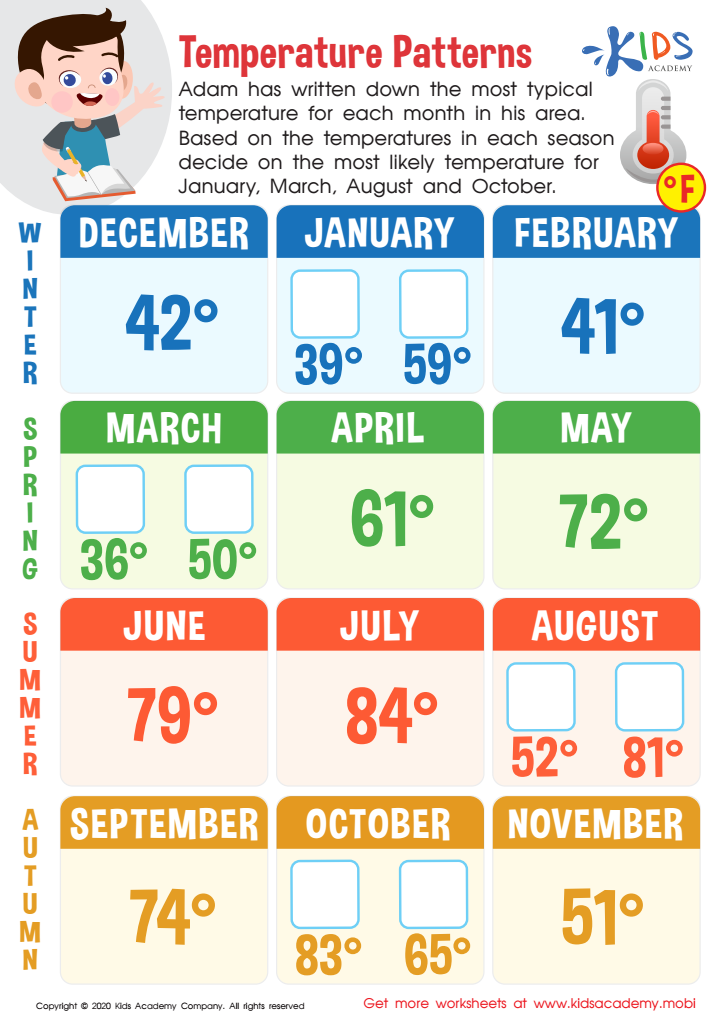
Temperature Patterns Worksheet
 Assign to My Students
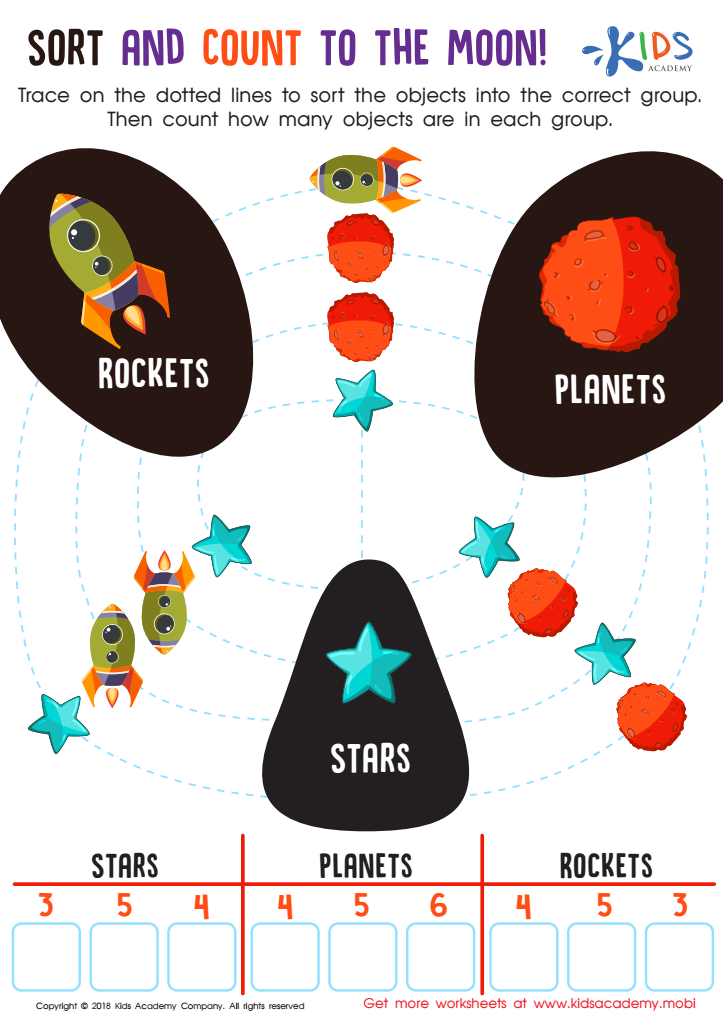
Sort and Count to the Moon Worksheet
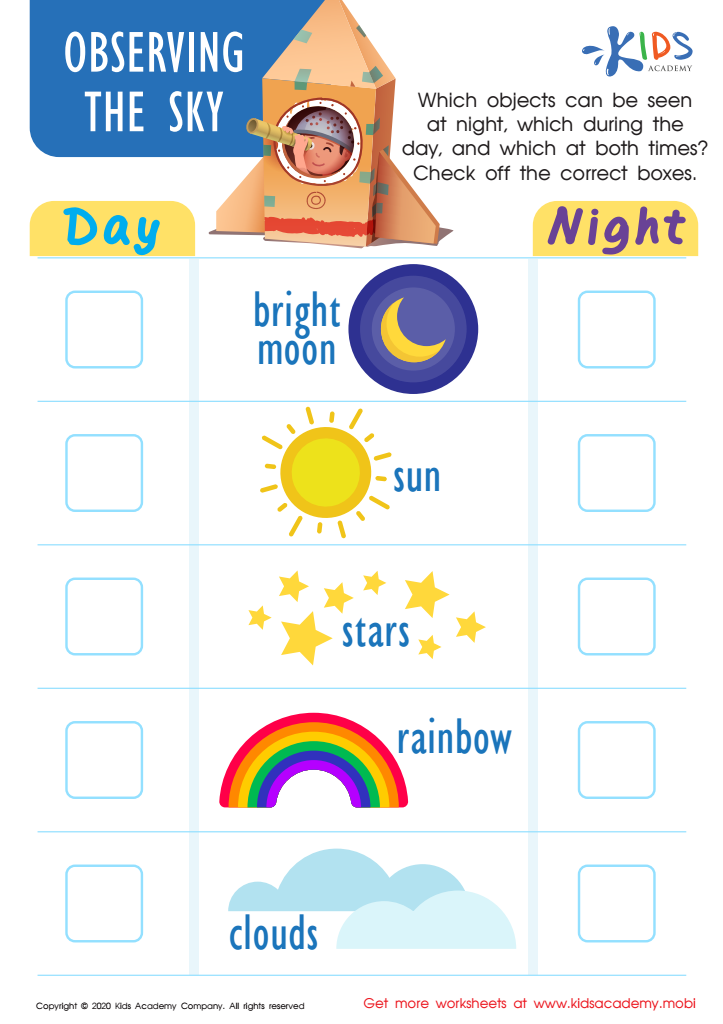
Observing the Sky Worksheet








Recognizing patterns is a fundamental skill that significantly impacts early cognitive development in children ages 3-6. Parents and teachers should prioritize this skill for several reasons. First, it lays the groundwork for mathematical understanding. By identifying shapes, colors, and sequences, children develop critical thinking and problem-solving abilities essential for future math concepts like addition, subtraction, and patterns in algebra.
Moreover, pattern recognition enhances observational skills and helps foster creativity and curiosity. Children begin to see relationships in their environment, a crucial step in scientific thinking. Engaging in activities that promote this skill encourages exploration, leading children to ask questions and think more deeply about the world around them.
Additionally, pattern recognition aids in language development. Children who identify and articulate patterns learn to communicate effectively, using descriptive language that enriches their vocabulary. Moreover, engaging in pattern-related activities fosters social skills through collaborative play, where children learn to share strategies and support one another’s learning.
In summary, recognizing patterns is not just a precursor to academic learning; it shapes a child’s development intellectually, socially, and emotionally. Thus, both parents and teachers play a vital role in guiding and supporting children as they develop this essential skill.







