
Space knowledge Normal Science Worksheets for Ages 3-6
3 filtered results
Difficulty Level
Grade
Age
-
From - To
Subject
Activity
Standards
Discover an exciting collection of Space Knowledge Normal Science Worksheets designed specifically for young learners aged 3-6. These engaging and colorful worksheets introduce children to the wonders of outer space, including planets, stars, and galaxies. Each activity aims to spark curiosity and foster a love of learning through interactive exercises that encourage exploration and creativity. Perfect for classroom use or at-home learning, these worksheets help develop essential skills while making science fun and accessible. Watch as your little astronomer embarks on a journey through the cosmos, all while enhancing their cognitive abilities and understanding of the universe. Explore our worksheets today!
Favorites
With answer key
Interactive
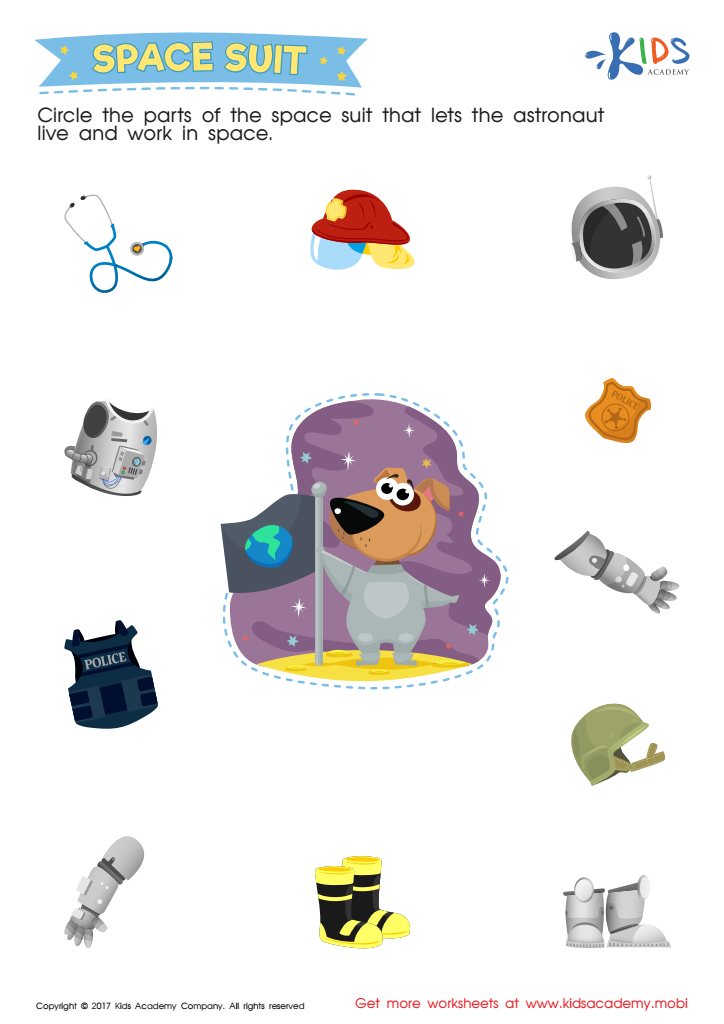
 Assign to My Students
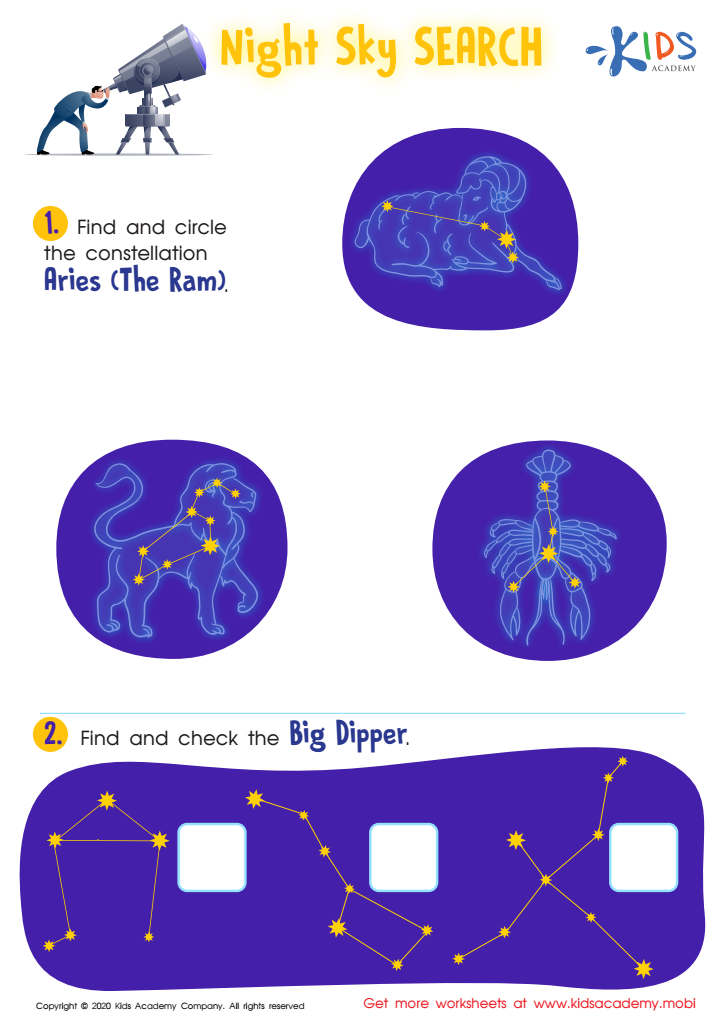
Night Sky Search Worksheet
Gaze up into the night sky and spot the stars! Your little astronomer can learn about Aries and Big Dipper constellations with this science worksheet. Simply find the ram for Aries and check the box for Big Dipper. Then, when the weather is right, go outside and look for them in the night sky!
Night Sky Search Worksheet
Worksheet
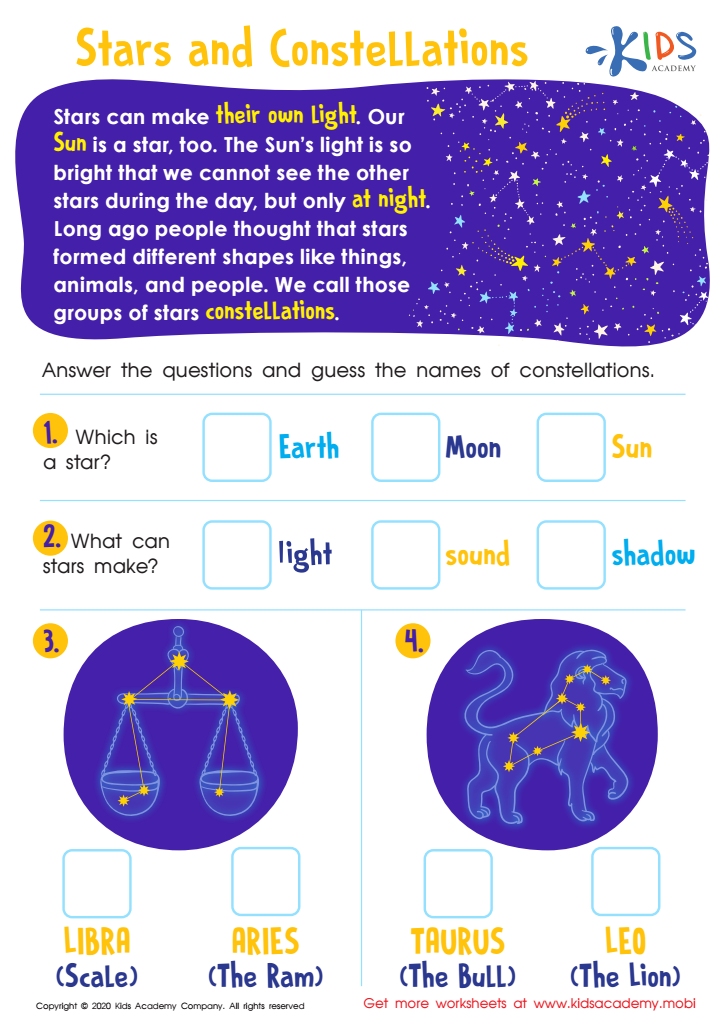
Stars and Constellations Worksheet
Learn about stars and constellations with this entertaining worksheet! Read the passage at the top of the page to gain an understanding of stars, then test your child's knowledge with the questions below. Check the right answers and finish this science worksheet with your child - they'll be amazed that stars can make their own light, just like the sun!
Stars and Constellations Worksheet
Worksheet
Join Kids Academy for Free
Who is primarily going to use this learning content?








Space knowledge is paramount for children aged 3-6, and both parents and teachers should actively foster this understanding for several reasons. Firstly, early exposure to space science ignites curiosity and wonder about the universe, encouraging a natural desire to explore and learn. This curiosity can form the foundation for critical thinking and problem-solving skills as children seek to understand their place in the cosmos.
Additionally, integrating space knowledge into lessons aligns with scientific literacy, a crucial component of modern education. Teaching young children about space helps them grasp fundamental concepts such as gravity, the sun, and the moon, while also introducing them to exciting phenomena like stars and planets. These initial lessons serve as building blocks for future learning in sciences.
Furthermore, exploring space topics promotes socio-emotional development by fostering creativity and imagination. Engaging with themes related to space can enhance storytelling, art, and play, further enriching the learning environment.
Lastly, as society faces significant challenges related to space exploration and environmental stewardship, instilling an appreciation for space informs responsible citizenship. Overall, nurturing early space knowledge lays a vital groundwork for lifelong learning, creativity, and a sense of wonder about the universe.







