Weather identification Normal Science Worksheets for Ages 3-6
4 filtered results
-
From - To
Discover our engaging Weather Identification Normal Science Worksheets, specially designed for children ages 3-6! These printable resources introduce young learners to the fascinating world of weather through enjoyable activities and vibrant visuals. Kids will explore different weather types, such as sunny, rainy, cloudy, and snowy, while developing essential observation and identification skills. Each worksheet encourages creativity and critical thinking, making science fun and accessible for early learners. Perfect for at-home learning or classroom use, these worksheets foster curiosity, enhance vocabulary, and lay the foundation for a lifelong love of science! Dive into the exciting exploration of weather today!
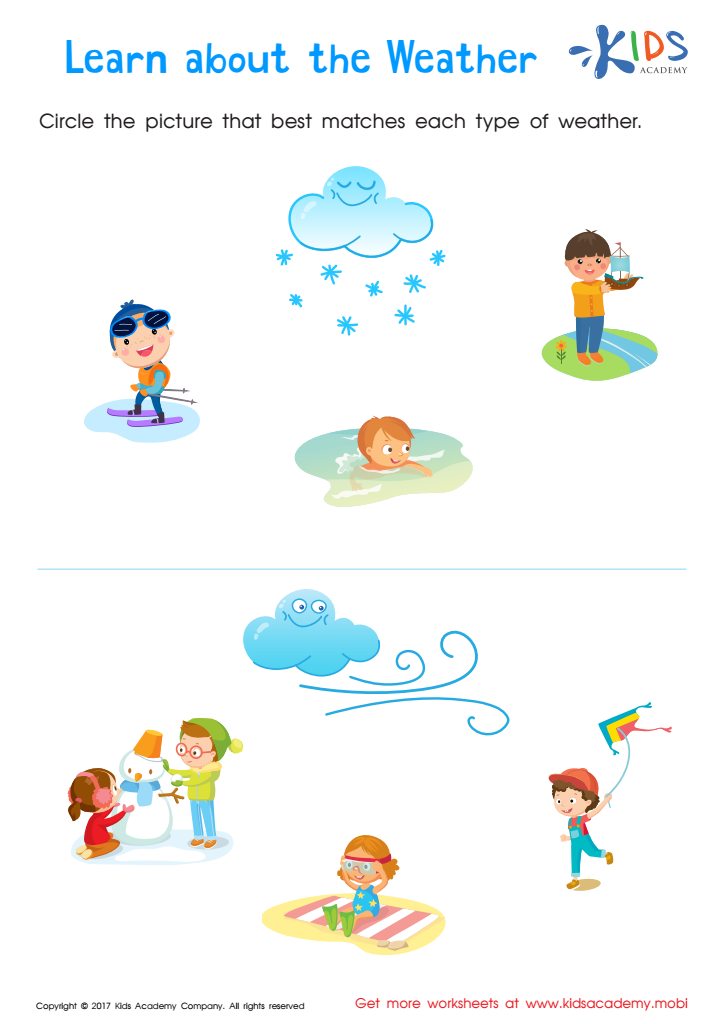
About the Weather Printable
 Assign to My Students
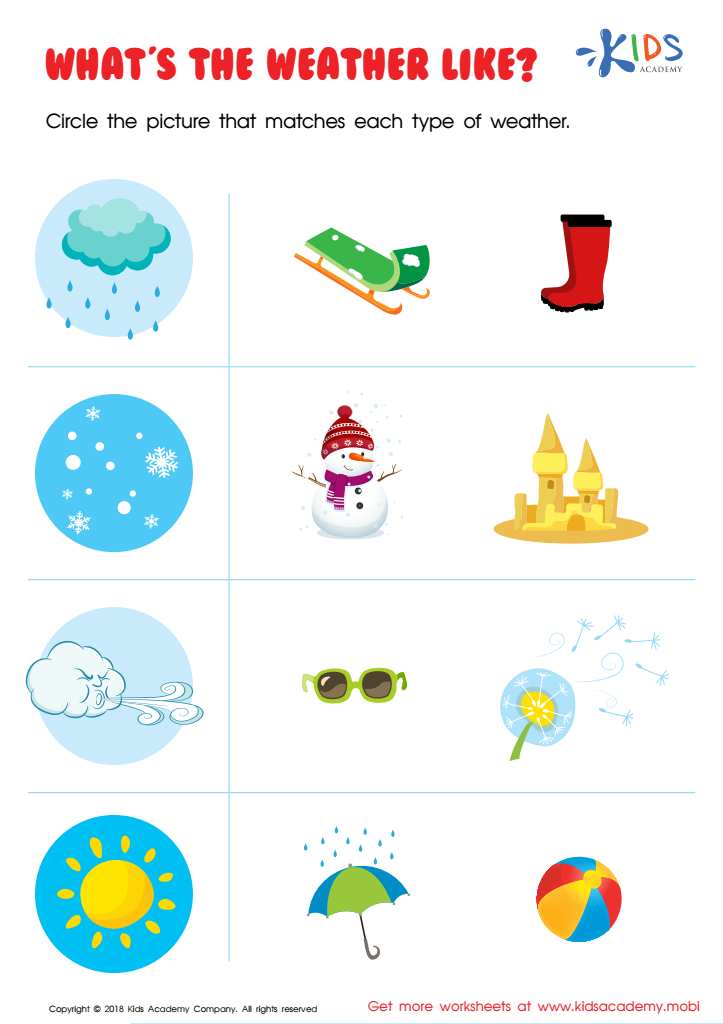
What's the Weather Like? Worksheet
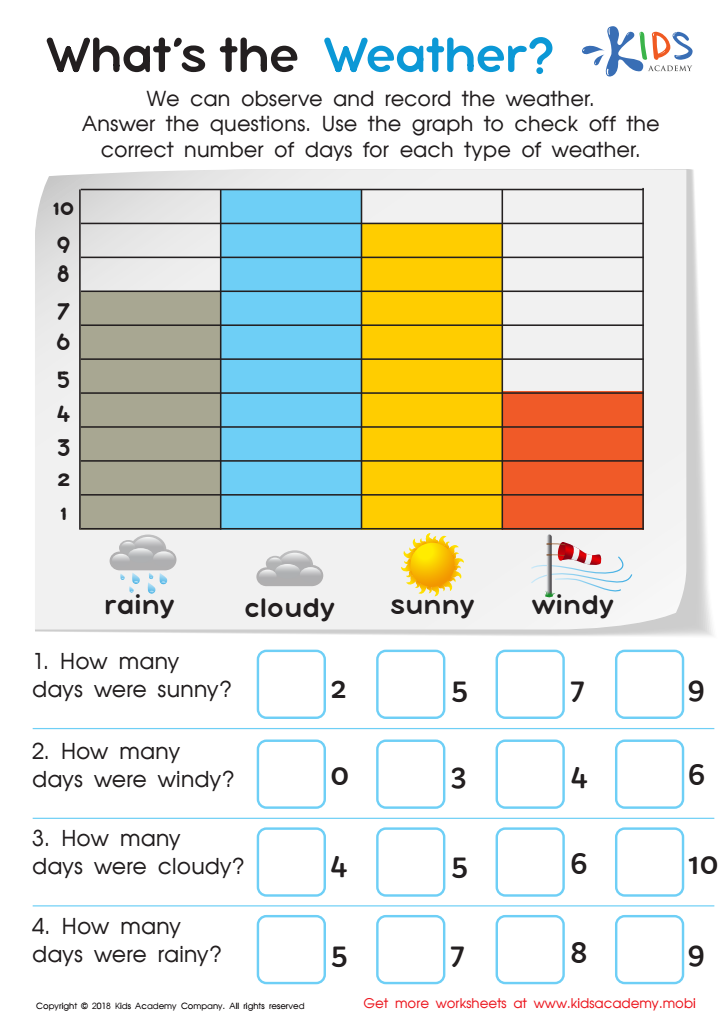
What's the Weather? Worksheet







Understanding weather is essential for children aged 3-6 as it lays the foundation for their scientific inquiry and critical thinking. At this age, children are naturally curious, and introducing them to weather identification nurtures their desire to explore and understand the world around them.
Parents and teachers should care about this topic because weather plays a significant role in daily life. Recognizing different weather conditions, such as sunny, rainy, or windy, helps children make sense of their environment. This knowledge promotes safety and informs choices—like dressing appropriately for the weather.
Moreover, weather identification encourages observation skills, which are critical components of scientific learning. When children learn to observe and describe weather patterns, they practice communication skills and enhance vocabulary. Activities that engage them in weather identification—like drawing clouds or discussing how rain feels—activate their creativity and foster a love for learning.
Teaching children about weather also helps promote emotional awareness. Weather can influence feelings; discussing this can lead to better emotional regulation and social interactions. Overall, effectively introducing weather concepts at an early age fosters curiosity, safety, and emotional intelligence, making it a vital aspect of early childhood education.







