Understanding light sources Normal Physical Science Worksheets for Ages 3-6
3 filtered results
-
From - To
Explore “Understanding Light Sources” with our physical science worksheets designed for children aged 3-6. These engaging activities help young learners discover the magic behind light in an accessible and fun way. Kids will learn to identify various light sources, fostering important early science skills. Our expertly crafted worksheets make learning enjoyable, blending education with hands-on discovery. Perfect for preschoolers and kindergartners, these resources aim to enhance observation and critical thinking abilities. Dive into the wonders of light and shadow with vibrant illustrations and practical exercises. Illuminate young minds today with our interactive learning tools!
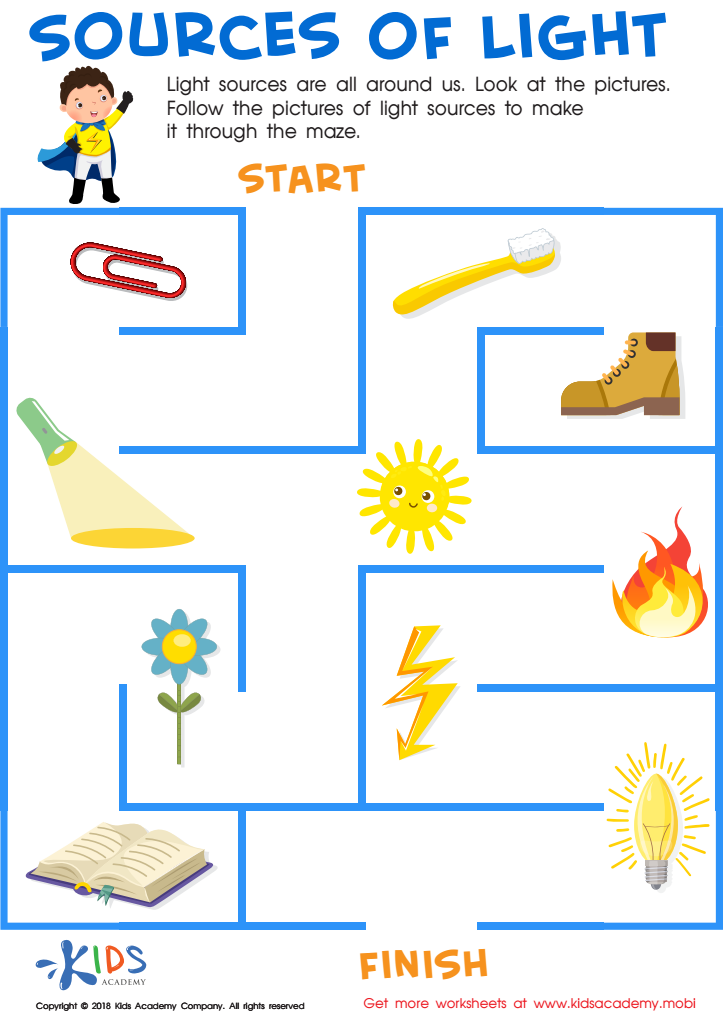
Sources of Light Worksheet
 Assign to My Students
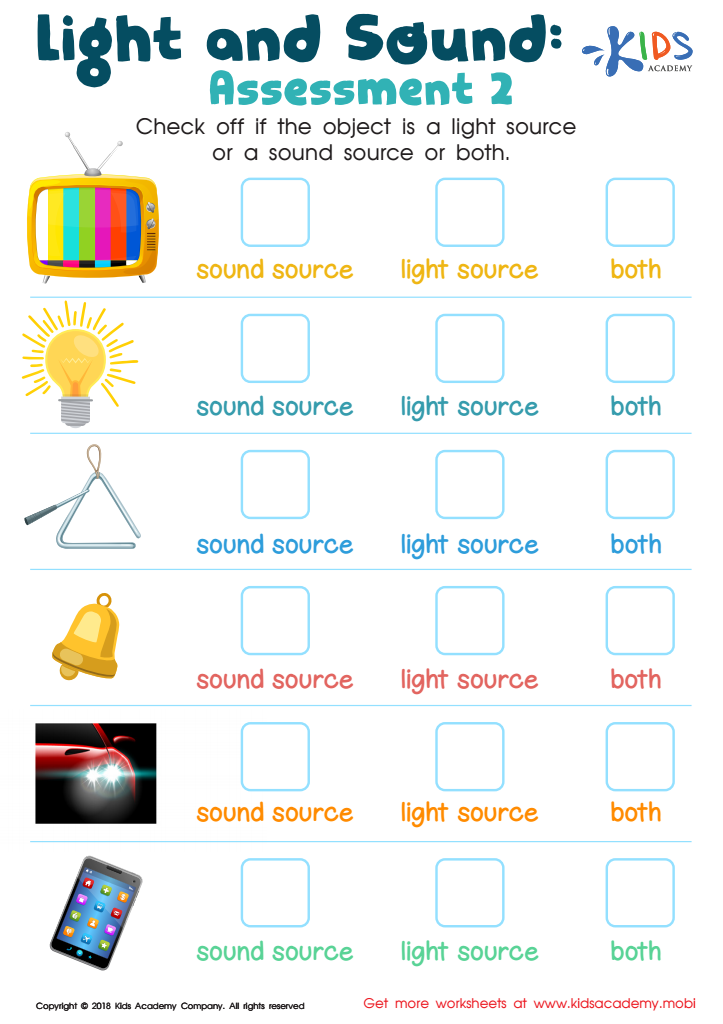
Light and Sound: Assessment 2 Worksheet
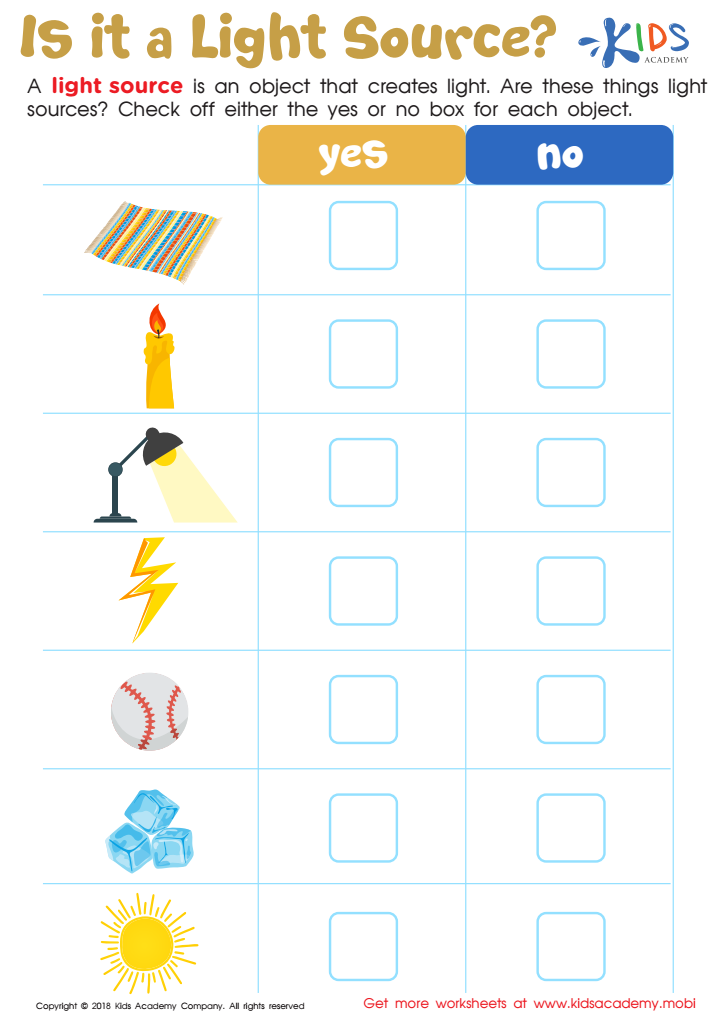
Is It a Light Source? Worksheet



.jpg)



Understanding light sources is crucial for parents and teachers of children ages 3-6 because it significantly contributes to the developmental process of inquiry, discovery, and learning. At this tender age, children are naturally curious and eager to understand the world around them. By introducing concepts of light sources, parents and teachers help spark that curiosity and lay a foundation for scientific thinking.
Learning about light sources helps children differentiate between natural sources, like the sun, and artificial sources, such as lamps and flashlights. This understanding is pivotal as it introduces basic distinctions in science, fostering critical thinking skills from a young age. For example, children learn that the sun provides daylight, helping them comprehend time and daily cycles' significance.
Additionally, experiments with light (like observing shadows or discovering what happens when you cover a light source) make learning tactile and interactive, which is ideal for young children who thrive on hands-on experiences.
Lastly, comprehending light and its properties can be integrated into safety lessons, such as understanding why we shouldn’t look directly at the sun or the importance of visible light at night for safety. These lessons merge scientific understanding with essential practical knowledge, supporting holistic development. This foundational knowledge benefits their understanding across various future academic subjects and everyday life tasks.







