Categorization skills Normal Plants and Animals Worksheets for Ages 3-6
4 filtered results
-
From - To
Enhance young learners’ understanding of the natural world with our engaging "Categorization Skills Normal Plants and Animals Worksheets" tailored for ages 3-6. These worksheets provide a fun and interactive way for children to explore and classify different plants and animals, fostering essential critical thinking and observation skills. Featuring vibrant images and simple activities, kids can easily identify similarities and differences among various species, promoting a love for science and nature. Our resources are designed to support early education objectives, helping teachers and parents guide children in their developmental journey through playful learning. Download today and inspire curiosity in the great outdoors!
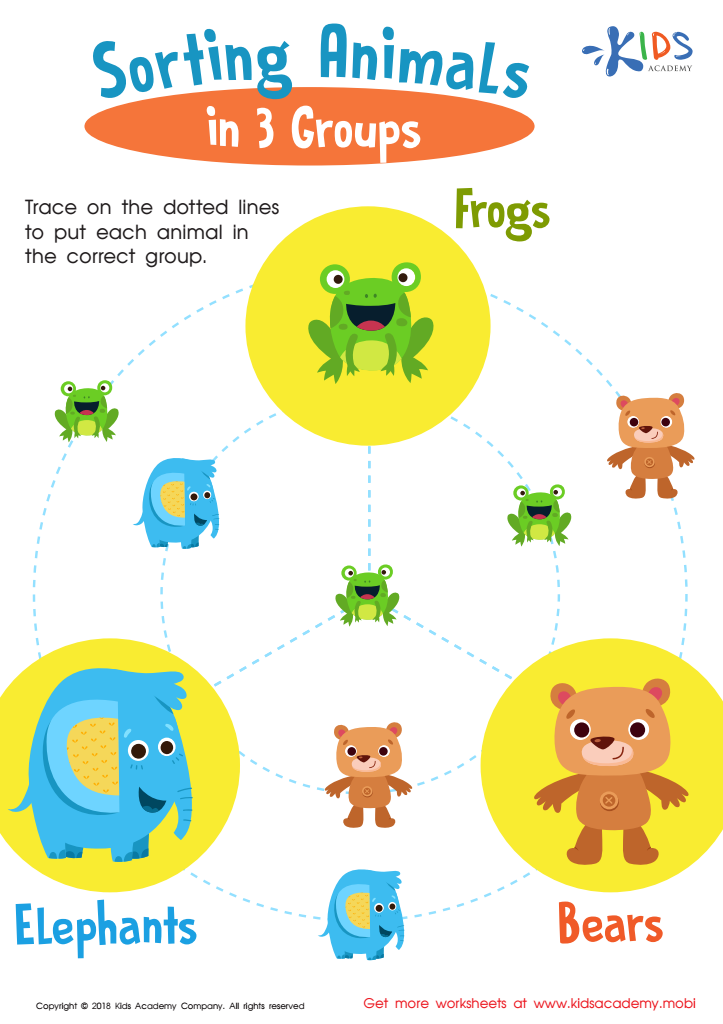
Sorting Animals in 3 Groups Worksheet
 Assign to My Students











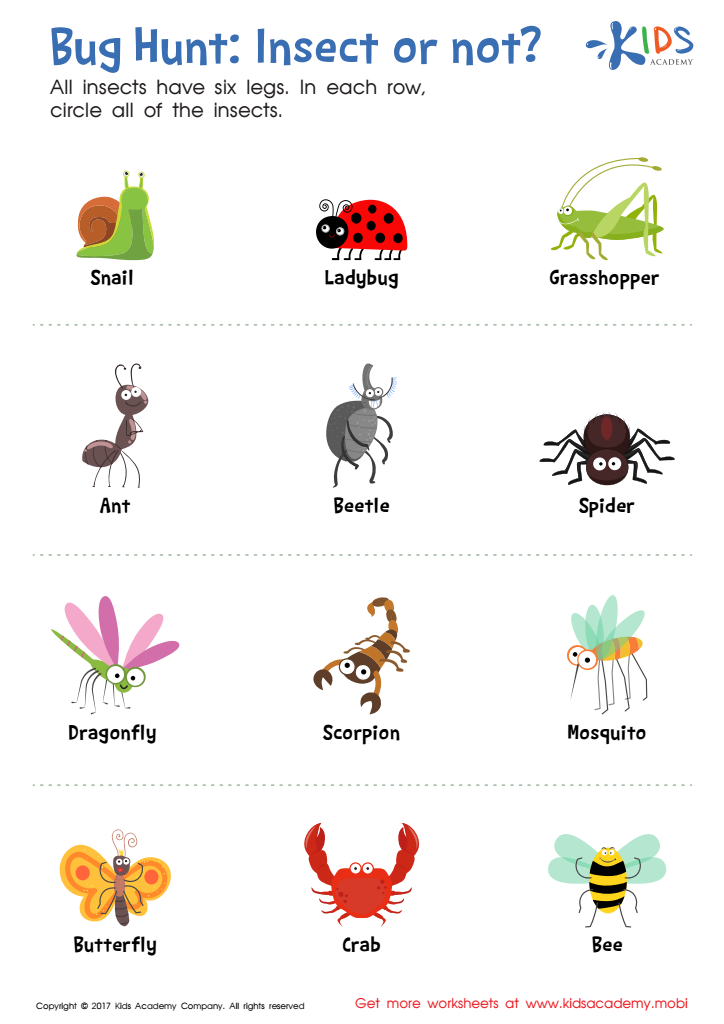
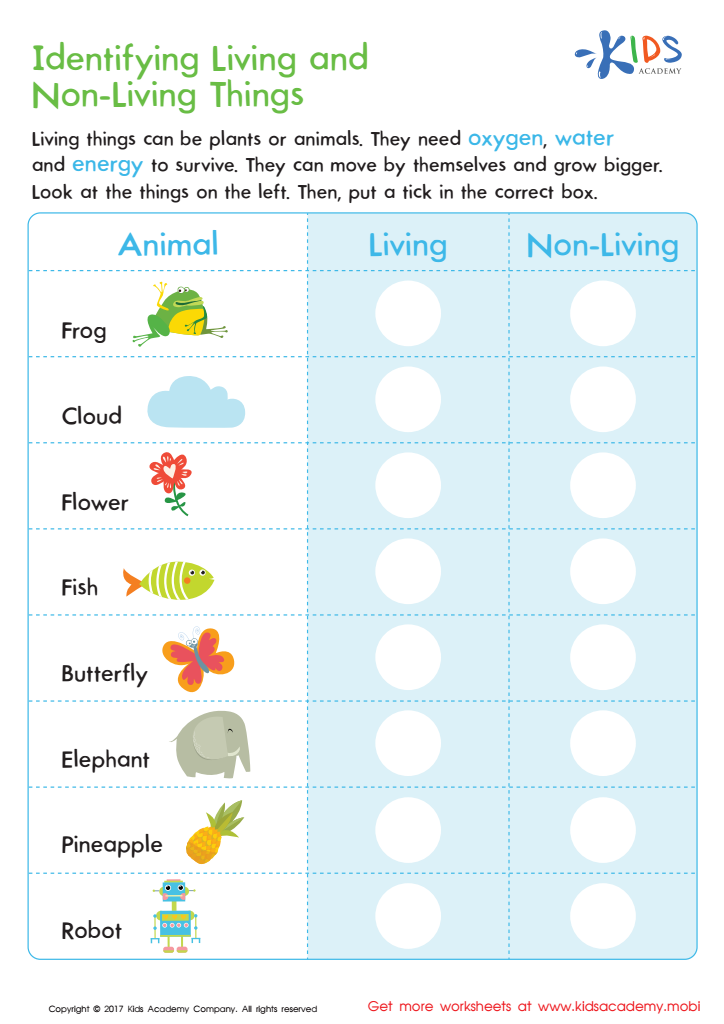
Identifying Living or Non–living Worksheet
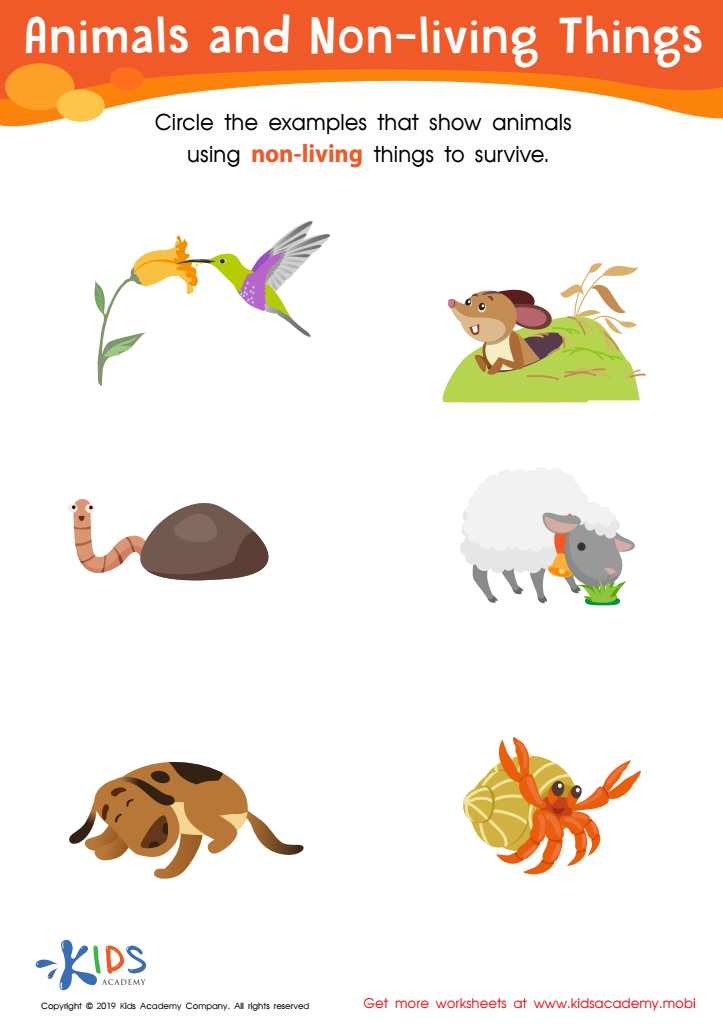
Animals and Non-Living Things Worksheet







Categorization skills, especially regarding normal plants and animals, are crucial for children ages 3-6 as they lay the foundational building blocks of learning and cognitive development. At this developmental stage, children are naturally curious and eager to understand their surroundings. By teaching kids to categorize plants and animals, we help them organize their thoughts and make sense of the world around them. This skill fosters critical thinking, enabling children to identify similarities and differences, which improves their reasoning capabilities.
Furthermore, categorization promotes language development as children learn new vocabulary associated with different species and ecosystems. By recognizing and naming various plants and animals, children enrich their communication skills, fostering better social interactions.
Additionally, understanding nature instills environmental awareness from an early age, nurturing a sense of responsibility for the world they inhabit. Engaging activities like sorting pictures of plants and animals or exploring nature can also support emotional and social development, as children work collaboratively.
By emphasizing categorization skills in a playful context, parents and teachers can enhance children’s learning experiences, ignite their interest in science, and prepare them for more complex concepts as they progress in school. Engaging with these foundational skills cultivates lifelong learners and environmentally conscious individuals.







