Observational skills Normal Space Worksheets for Ages 3-6
3 filtered results
-
From - To
Enhance your child's observational skills with our engaging Normal Space Worksheets tailored for ages 3-6! Designed to spark curiosity about the universe, these worksheets encourage young learners to explore and interact with space-related concepts in a fun and educational way. Children will engage in activities that promote critical thinking and imagination, while honing their ability to observe, compare, and analyze. From identifying celestial objects to understanding day and night cycles, these expertly crafted worksheets provide a solid foundation for scientific inquiry. Perfect for use at home or in the classroom, these resources make learning about space an enjoyable adventure!
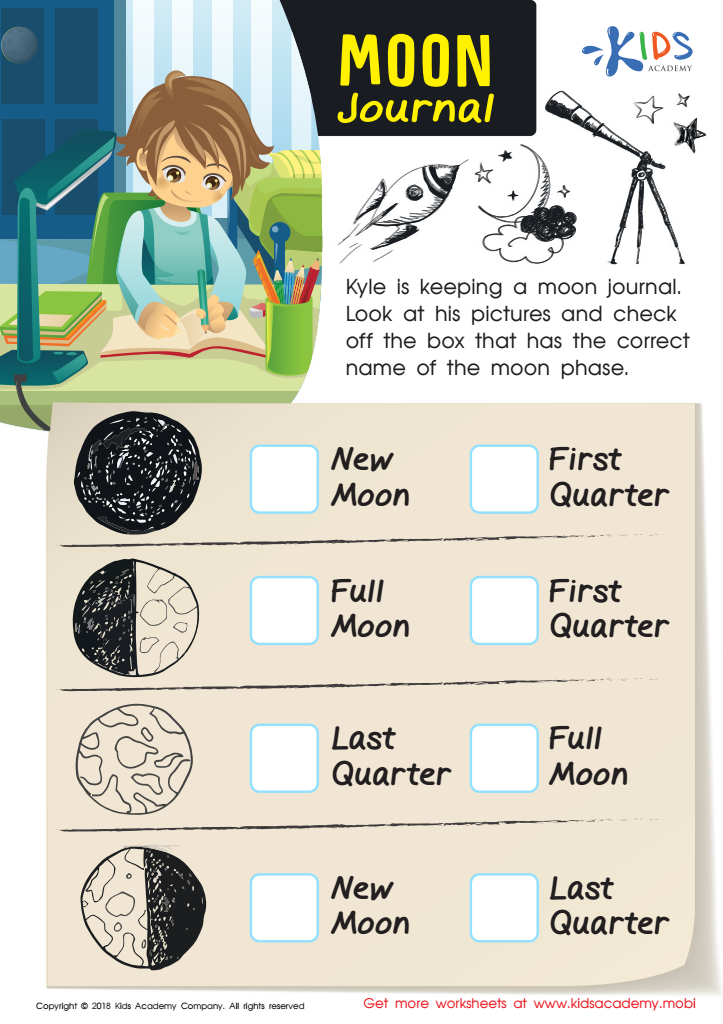
Moon Journal Worksheet
 Assign to My Students
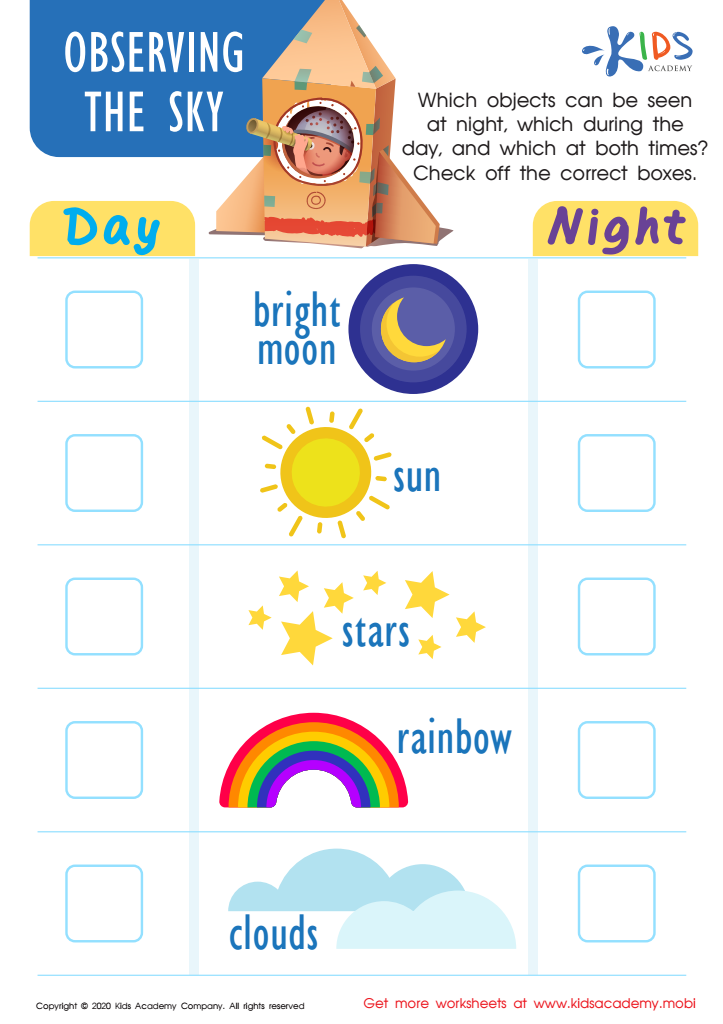
Observing the Sky Worksheet
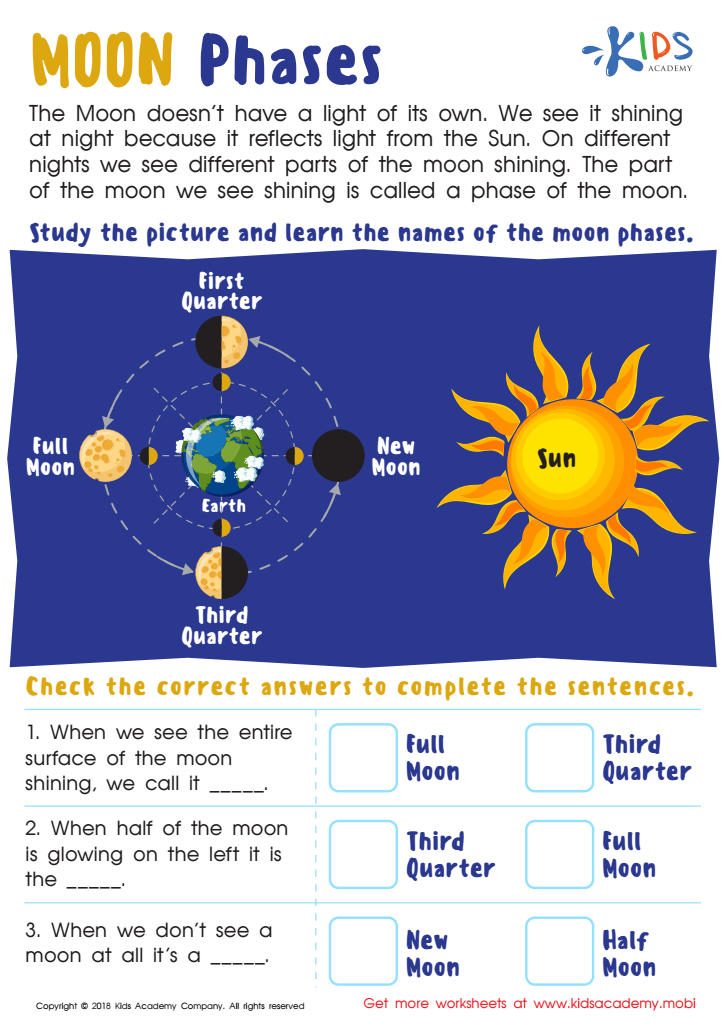
Moon Phases Worksheet







Observational skills development in the normal space for children ages 3-6 is crucial for various reasons. First and foremost, enhancing observational skills lays the foundation for critical thinking and problem-solving. When children learn to observe their environment, they begin to analyze, make connections, and draw conclusions about the world around them. This early exposure fosters scientific inquiry and curiosity, encouraging them to ask questions and seek answers.
Additionally, strong observational skills are linked to improved communication abilities. As children observe, they learn to articulate their thoughts and feelings effectively, leading to better social interactions with peers and adults. This is essential for emotional intelligence, allowing them to understand and empathize with others.
Moreover, honing these skills can boost children's creativity and imagination. Engaging with their surroundings invites exploration and innovation through play, art, and storytelling.
Parents and teachers play a pivotal role in nurturing these skills by providing varied environments and experiences. Through observation-based activities, educators and caregivers can support children in developing the ability to notice details, patterns, and changes in their surroundings. Ultimately, fostering observational skills equips young learners with tools necessary for lifelong learning and adaptability.







