Understanding seasons Normal Geography Worksheets for Ages 3-6
4 filtered results
-
From - To
Discover the joys of learning about seasons with our "Understanding Seasons" Geography Worksheets, designed specifically for ages 3-6. These engaging, interactive activities help young learners explore the four seasons—spring, summer, fall, and winter—through vibrant illustrations and relatable examples. Your child will enhance essential skills, such as observation and critical thinking, as they complete fun tasks like sorting seasonal items, matching pictures, and coloring. Each worksheet is crafted to promote early learning while fostering a love for nature. Perfect for home or classroom use, these worksheets will ignite curiosity and understanding of the changing seasons in a playful, educational way!
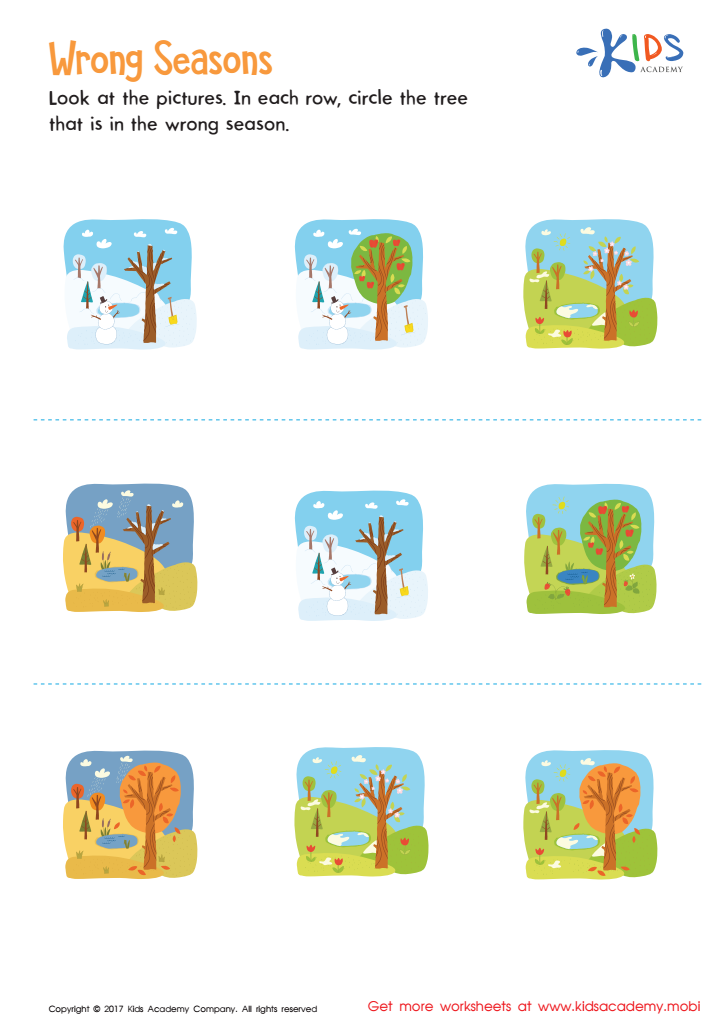
Wrong Seasons Worksheet
 Assign to My Students
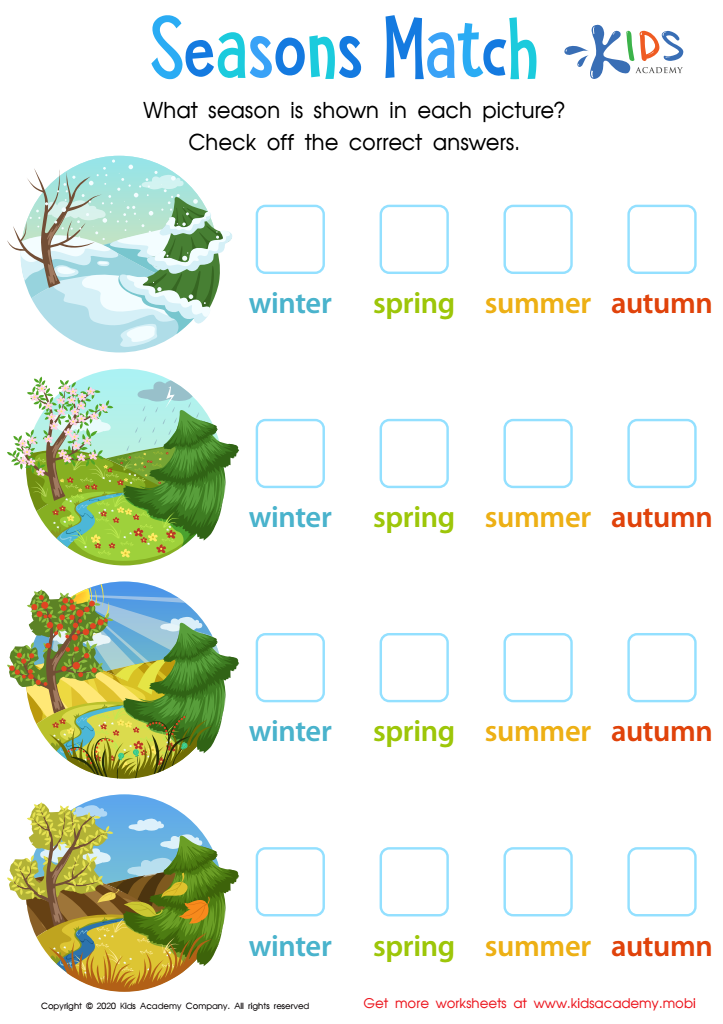
Seasons Match Worksheet
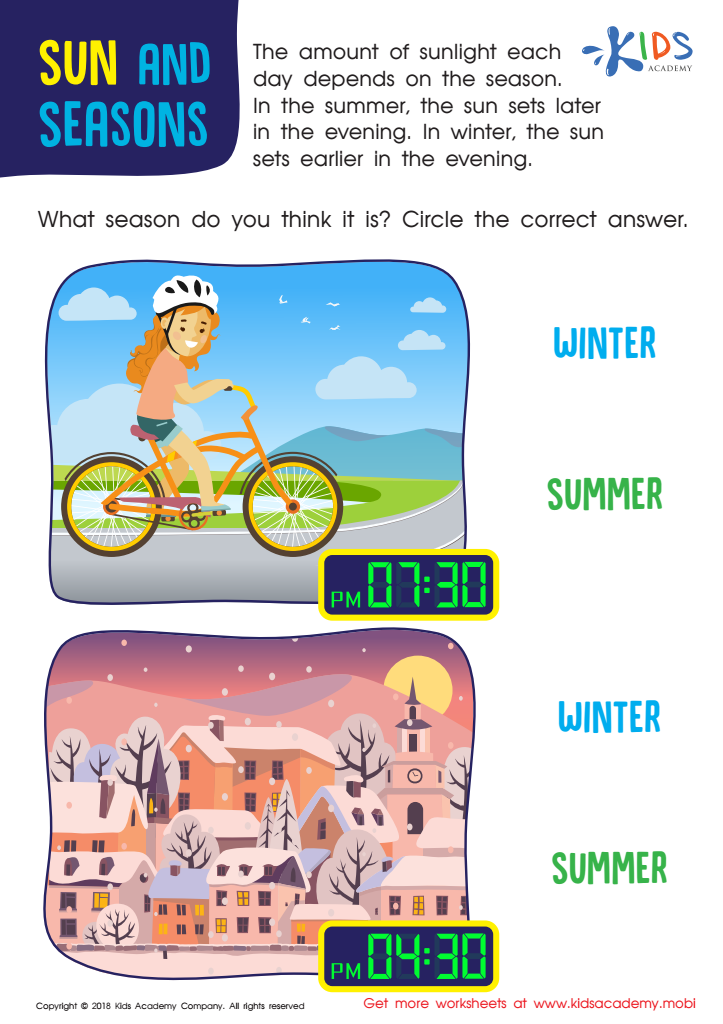
Sun and Seasons Worksheet
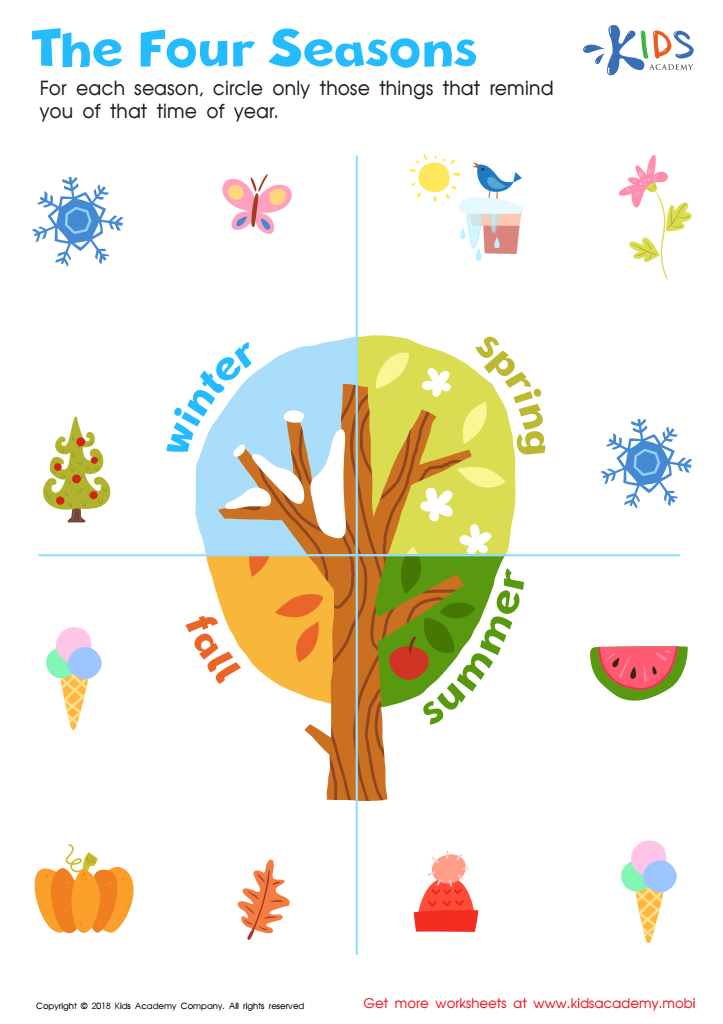
The Four Seasons Worksheet






Understanding seasons and basic geography is essential for children ages 3-6, as it plays a significant role in their cognitive and social development. During these early years, children are naturally curious about the world around them. Teaching them about the four seasons—spring, summer, autumn, and winter—helps them recognize patterns in nature, understand changes in their environment, and observe how animals and plants adapt accordingly.
Incorporating geography concepts at this age fosters spatial awareness, helping children learn about their immediate surroundings, community, and beyond. This not only enriches their vocabulary, as they learn terms like "mountain," "river," and "desert," but also nurtures critical thinking by encouraging them to ask questions about where they live and how it connects to other places.
Moreover, recognizing seasonal changes allows children to engage in hands-on activities like nature walks, gardening, and seasonal crafts, promoting experiential learning. When parents and teachers cultivate this understanding, they instill a sense of environmental stewardship and curiosity about the world in young learners, laying the groundwork for lifelong learning and appreciation of our planet. This foundational knowledge enhances their ability to articulate observations, engage in discussions, and connect with both nature and their peers effectively.