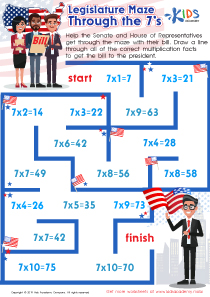
Understanding communities Normal Social Studies Worksheets for Ages 3-6
3 filtered results
-
From - To
Explore "Understanding Communities" Social Studies worksheets designed specifically for ages 3-6. These engaging and interactive resources help young learners grasp the concept of community through fun activities tailored to their developmental stages. Kids will discover the roles of various community members, such as police officers, doctors, and teachers, while enhancing their social awareness. Our worksheets promote critical thinking and vocabulary building, making learning about the world around them enjoyable and effective. Foster a sense of belonging and understanding within your child's community by utilizing these valuable tools that combine education with creativity. Perfect for parents and teachers alike!
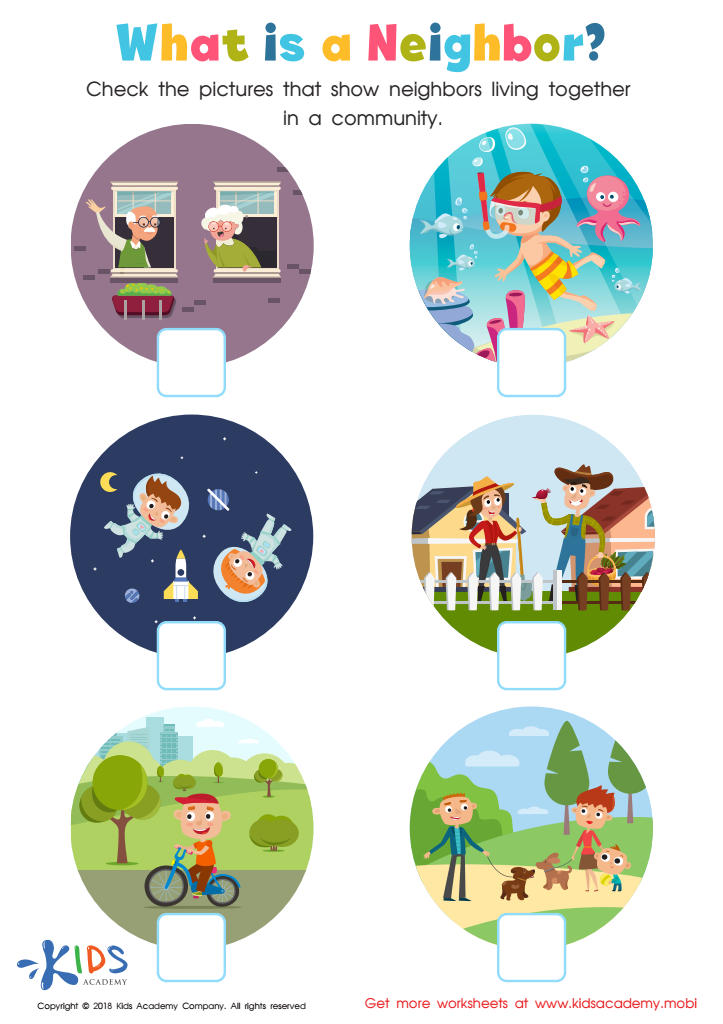
What is a neighbor Worksheet
 Assign to My Students
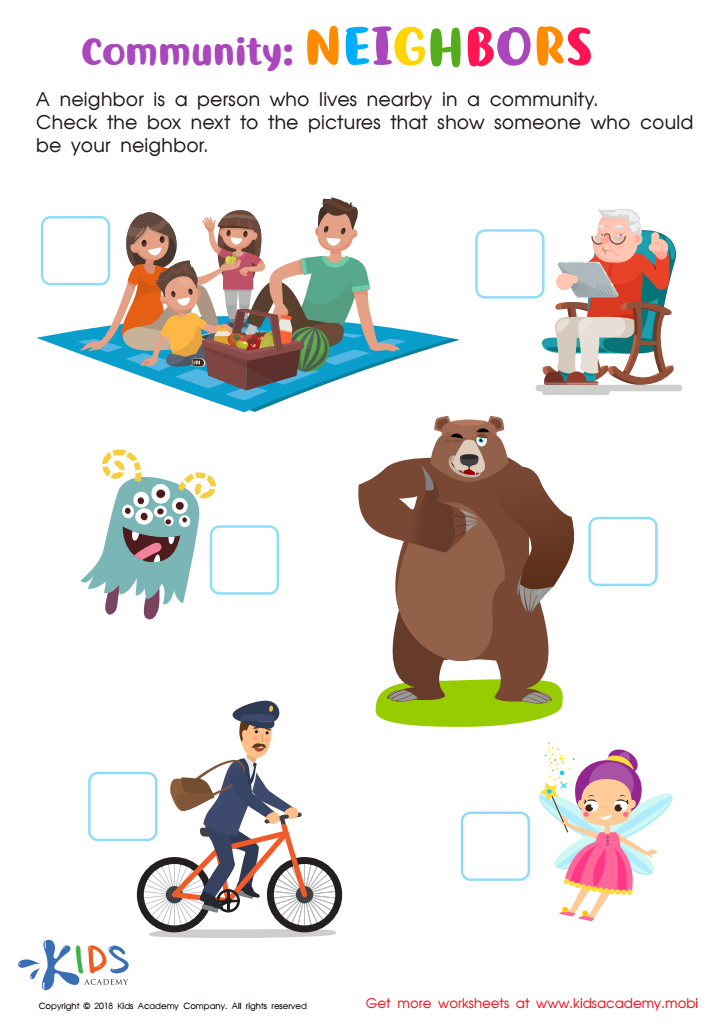
Community: Neighbors Worksheet
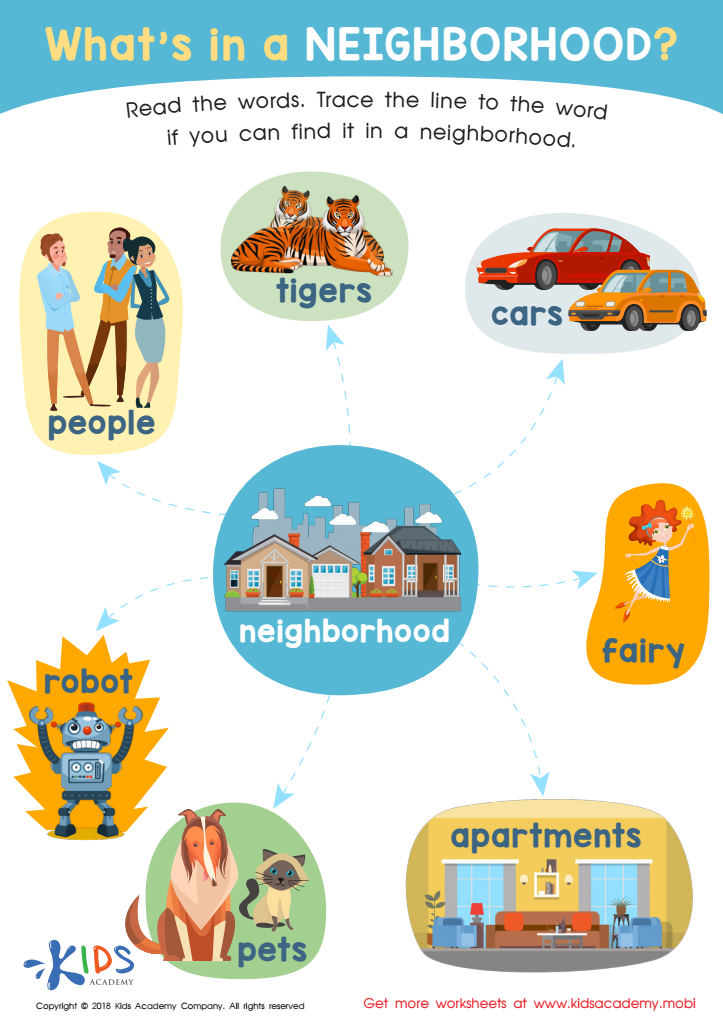
What's in a Neighborhood? Worksheet






Understanding communities through social studies is crucial for children aged 3-6, as it lays the foundation for their social, emotional, and cognitive development. At this age, children become increasingly aware of their surroundings and the people in them. Teaching them about communities helps them recognize different roles, values, and cultures, fostering empathy and respect for diversity.
Parents and teachers play a vital role in guiding this understanding, as they can introduce children to local norms, traditions, and social structures. Exposure to these concepts at an early age develops critical thinking skills and encourages curiosity about the world. It also helps children adapt to various social settings, enhancing their ability to interact positively with peers and adults.
Moreover, integrating community understanding into early education supports key developmental milestones, including language acquisition and problem-solving abilities. It also promotes a sense of belonging and connection, which is essential for emotional well-being. By nurturing an understanding of communities, parents and teachers equip children with the tools they need for effective communication, collaboration, and positive citizenship in an increasingly interconnected world. Ultimately, this knowledge empowers young learners to engage thoughtfully and constructively within their communities.