Weather Vocabulary Normal Weather Worksheets for Ages 3-6
3 filtered results
-
From - To
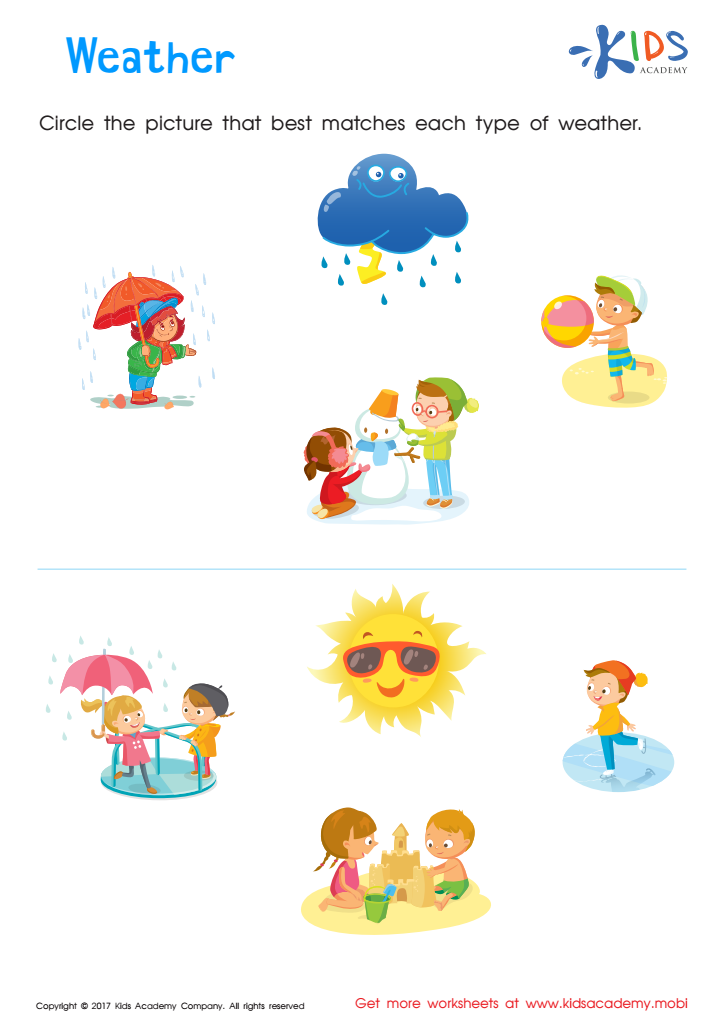
Discover our engaging Weather Vocabulary Normal Weather Worksheets designed specifically for children ages 3-6! These interactive worksheets introduce young learners to essential weather terms, enhancing their language skills and comprehension of the world around them. With vibrant illustrations and fun activities, kids will explore concepts like sunny, rainy, cloudy, and snowy while developing their vocabulary. Perfect for early education settings or at-home learning, our worksheets foster excitement for learning through play. Encourage curiosity about weather patterns and nurture a love for knowledge with our easy-to-use resources! Start your child's weather adventure today and watch them flourish in their understanding of the environment.
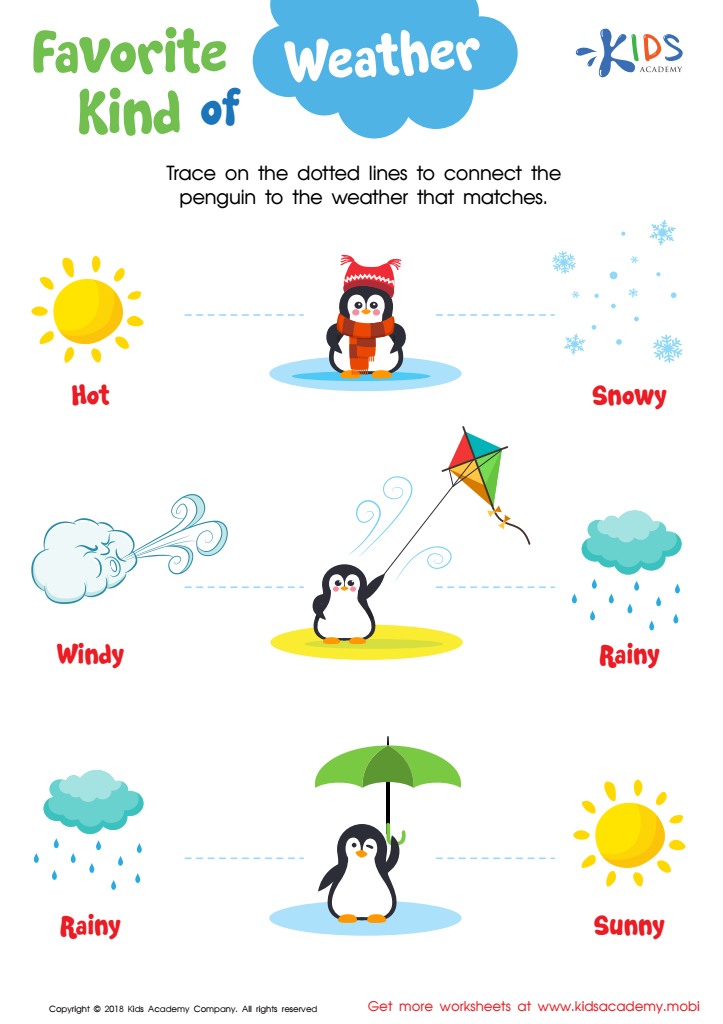
Favorite Kind of Weather Worksheet
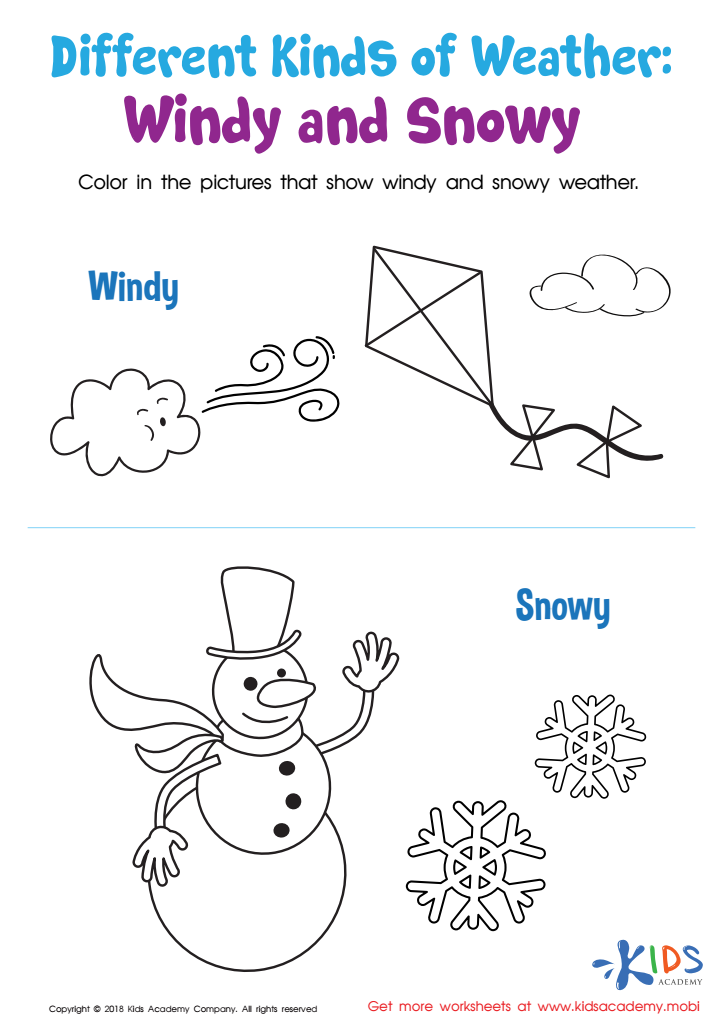
Different Kinds of Weather: Windy and Snowy Worksheet
 Assign to My Students


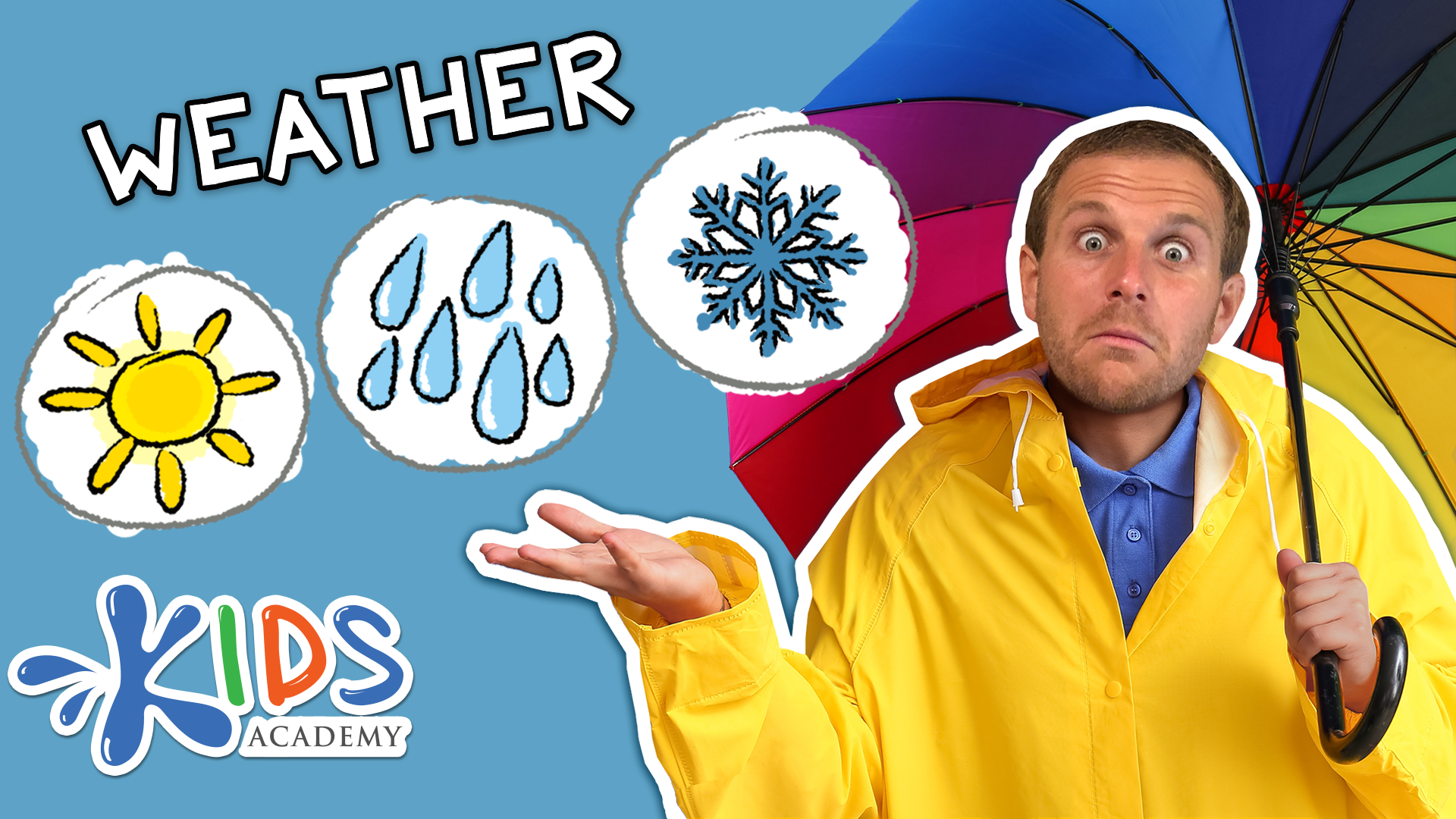





Weather vocabulary is an essential component of early education, particularly for children aged 3-6, as it lays a foundation for language development, literacy, and environmental awareness. For parents and teachers, introducing weather terms helps children articulate and comprehend their daily experiences, enabling them to describe the world around them with precision. This vocabulary encompasses words related to different weather conditions, such as sunny, rainy, cloudy, and windy, which are pivotal for storytelling and conversations.
Moreover, understanding weather vocabulary promotes cognitive skills. It encourages observation and critical thinking, as children learn to link words with the changes they encounter outdoors. Engaging in discussions about the weather also nurtures curiosity and a love for learning, which are vital traits for lifelong education.
Additionally, weather vocabulary fosters social skills. When children can express thoughts about the weather, they can effectively communicate with peers and adults, making play and interactions more meaningful. Overall, investing time and resources into teaching weather vocabulary not only enriches a child’s language and comprehension skills but also enhances their ability to engage with and understand their environment, laying the groundwork for scientific inquiry in the future.