Sentence construction Normal Writing Worksheets for Ages 3-6
6 filtered results
-
From - To
Enhance your child's writing skills with our engaging Sentence Construction Normal Writing Worksheets, designed specifically for ages 3-6. These worksheets provide a fun and interactive way for young learners to develop essential language and comprehension abilities. With age-appropriate exercises, children will explore sentence formation, word order, and vocabulary expansion, fostering a strong foundation for effective communication. Each activity encourages creativity and critical thinking, helping your little ones gain confidence in their writing. Perfect for home or classroom use, our worksheets are a valuable resource for early literacy development. Discover the joy of learning through writing with Kids Academy!
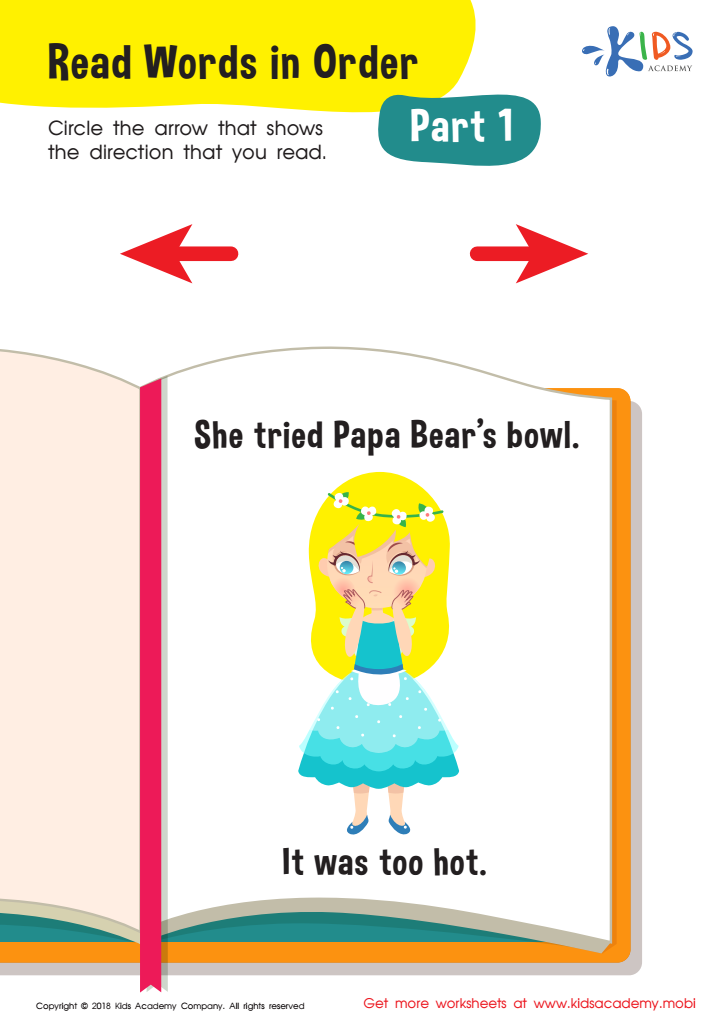
Read Words Order Part 1 Worksheet
 Assign to My Students
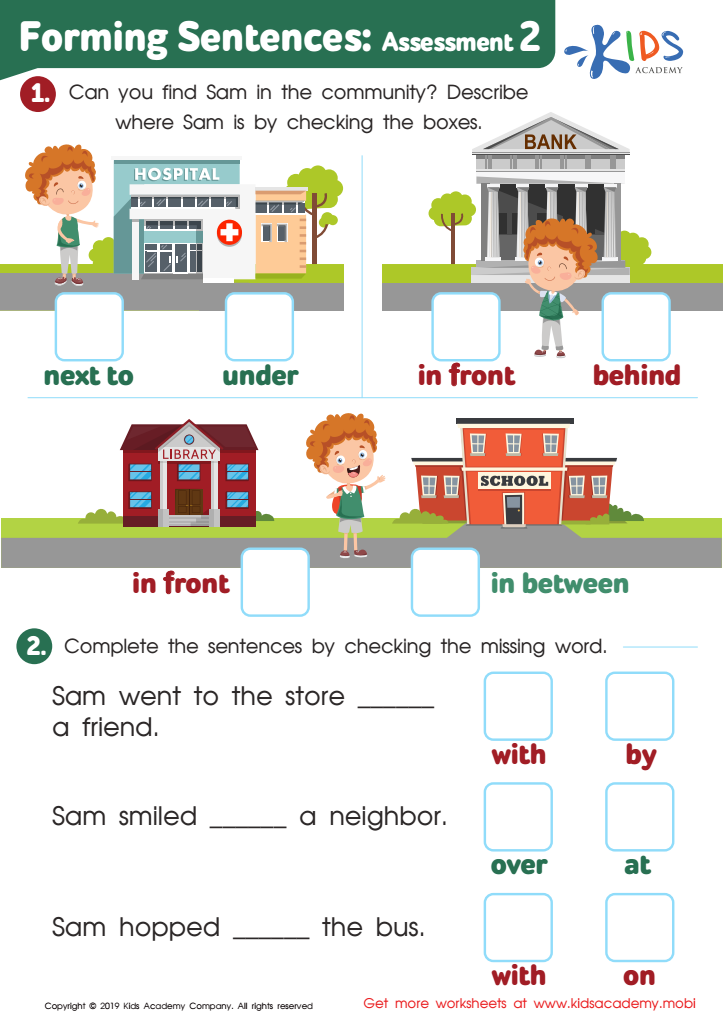
Forming Sentences: Assessment 2 Worksheet
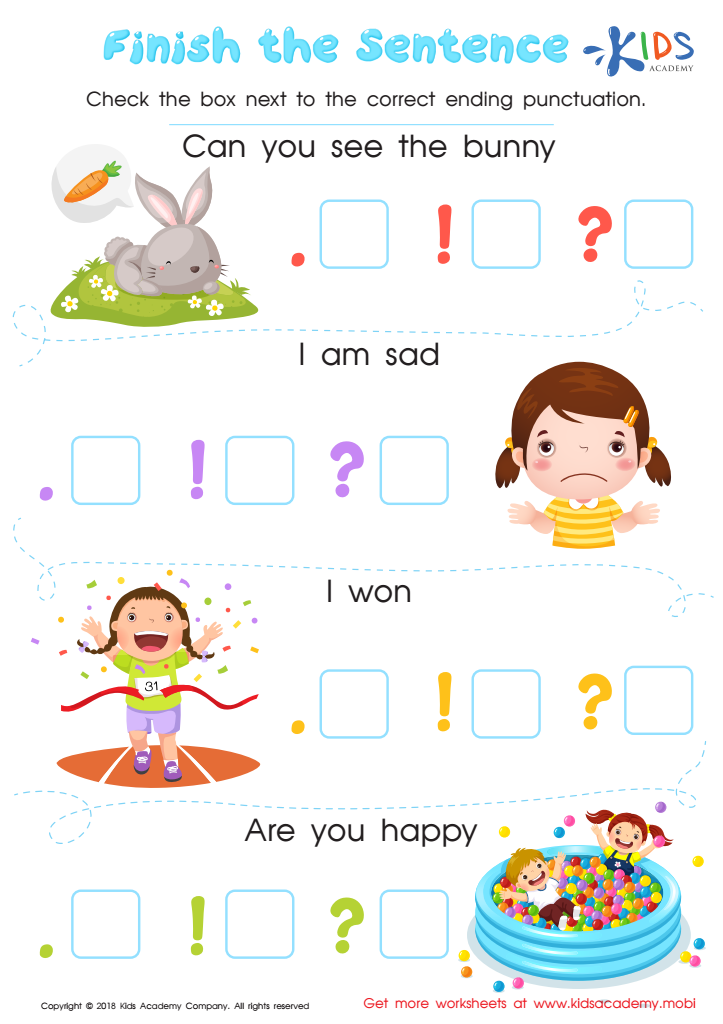
Finish the Sentence Worksheet
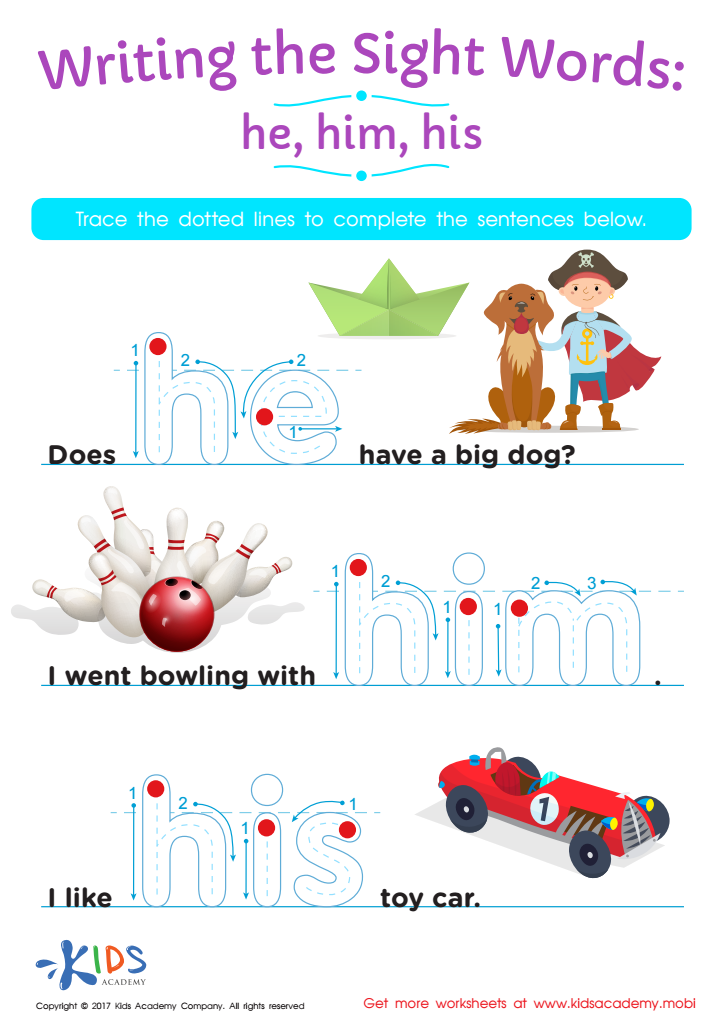
He, Him, His Printable Sight Words Worksheet
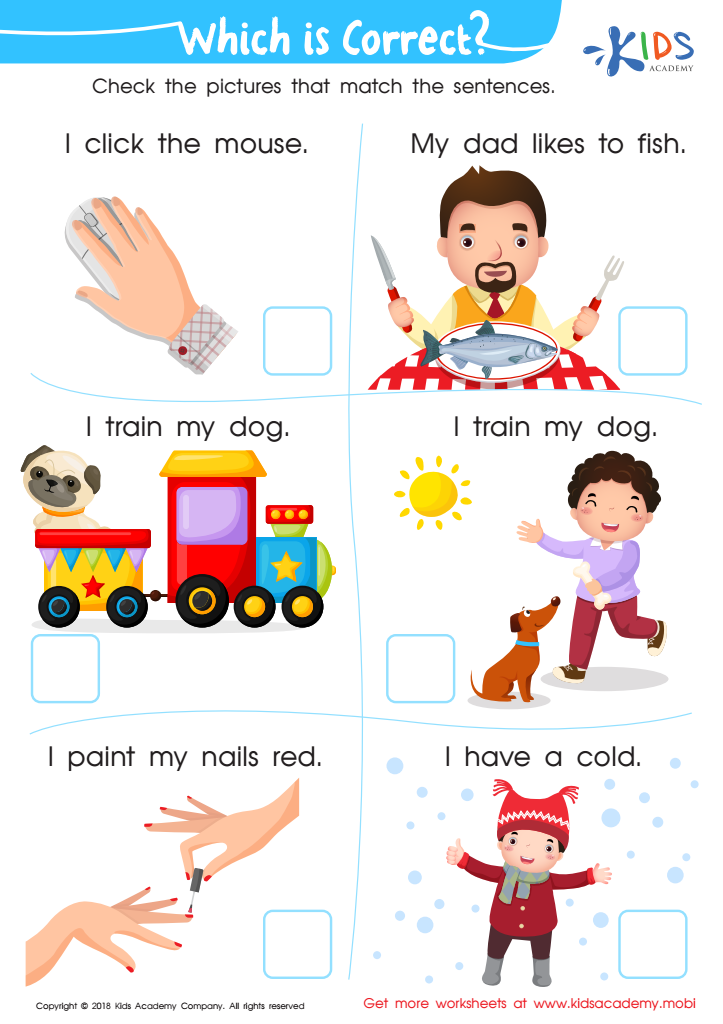
Which Is Correct? Worksheet
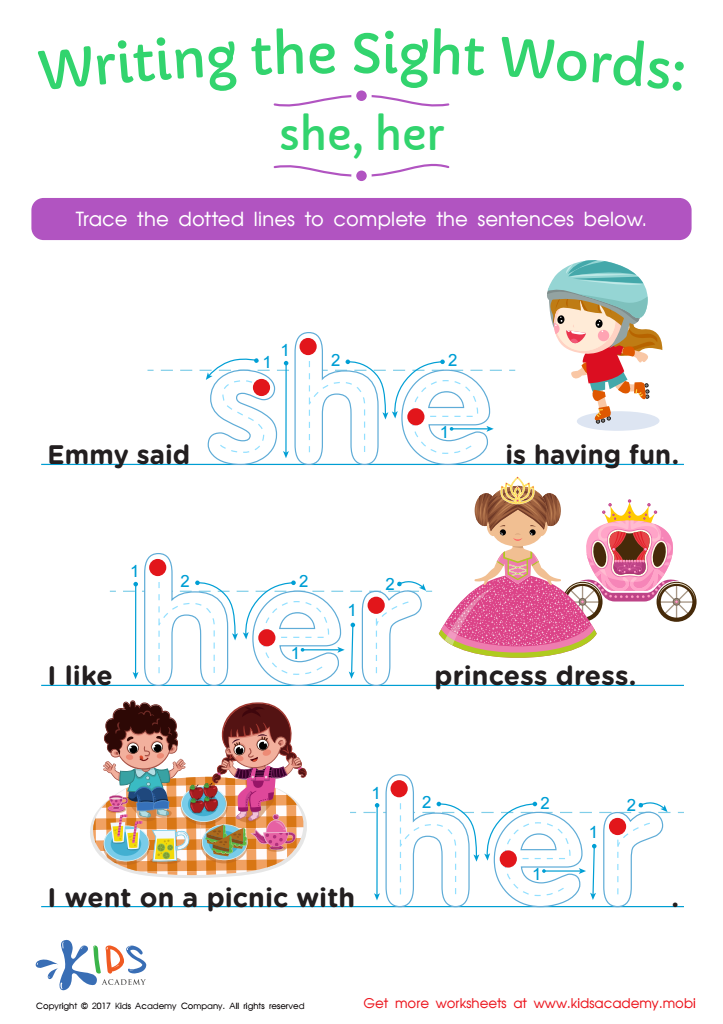
She, Her Printable Sight Words Worksheet








Understanding sentence construction is vital for children's early language development, especially for ages 3-6. During this stage, children are rapidly acquiring language skills and learning to express their thoughts more clearly. Parents and teachers should care about sentence construction because it lays the foundation for effective communication, which is essential for academic success and social interaction.
When children practice forming sentences, they not only learn how to express ideas but also how to listen and understand others. Mastery of sentence construction enhances vocabulary, encourages creativity, and fosters critical thinking, enabling children to convey subtleties in their thoughts and feelings. Moreover, engaging with language at this stage boosts literacy skills vital for future reading and writing proficiency.
Parents and teachers play a pivotal role in guiding children through this developmental milestone. By providing opportunities for open-ended conversations, storytelling, and interactive activities, caregivers can promote an environment conducive to learning. The skills gained from practicing sentence construction at such an early age impact various aspects of a child's life, making it crucial for adults to prioritize and foster this development. In short, a strong grasp of sentence construction shapes confident communicators and empowered learners for years to come.