
Phonics Skills Normal Beginning Sounds Worksheets for Ages 3-7
3 filtered results
Difficulty Level
Grade
Age
-
From - To
Subject
Activity
Standards
Discover our "Phonics Skills Normal Beginning Sounds Worksheets for Ages 3-7" designed to make learning fun and effective. These engaging printable worksheets help young learners identify and practice initial sounds in words, building essential early reading skills. Tailored for ages 3-7, our worksheets incorporate vibrant illustrations and joyful activities that propel your child's phonics understanding. Perfect for classroom use or home practice, these resources enhance phonemic awareness and support smoother transitions into reading fluency. Boost your child's literacy foundation with our expertly created phonics worksheets – the cornerstone for confident, enthusiastic readers. Let's start the journey of phonics fun today!
Favorites
With answer key
Interactive
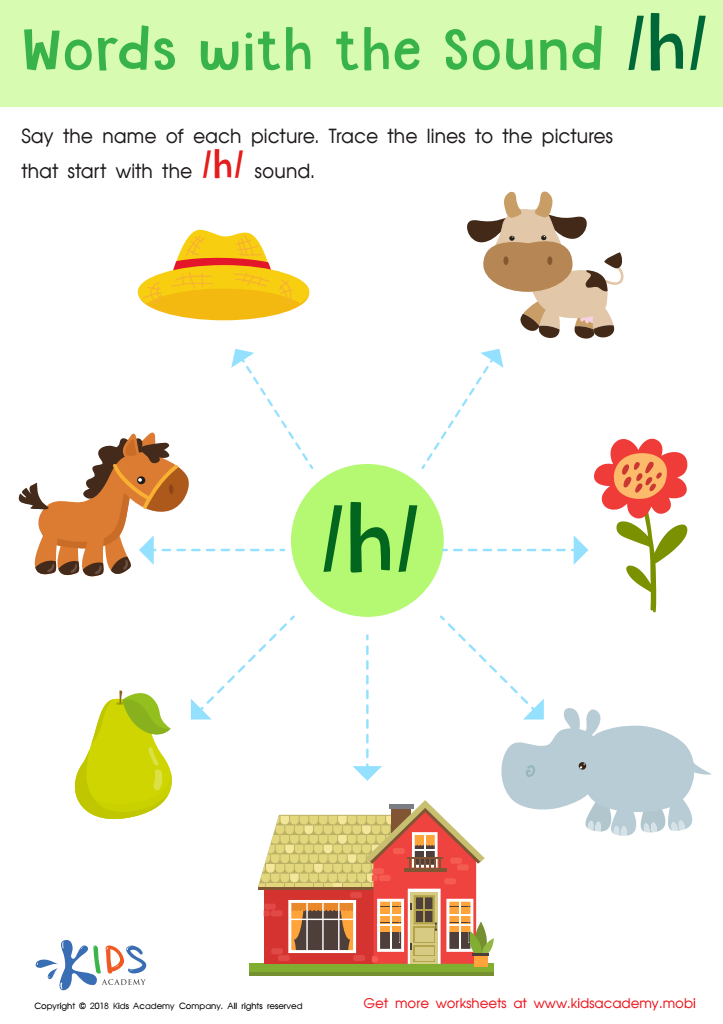
Words with sound h Reading Worksheet
The letter H can often be heard in words! Check your child's knowledge with an engaging worksheet from Kids Academy. Ask them to go around a circle and name each image aloud. Listen for the starting sound and trace the line from the middle letter to the images with the sound. This is a great way to practice phonics!
 Assign to My Students
Words with sound h Reading Worksheet
Worksheet
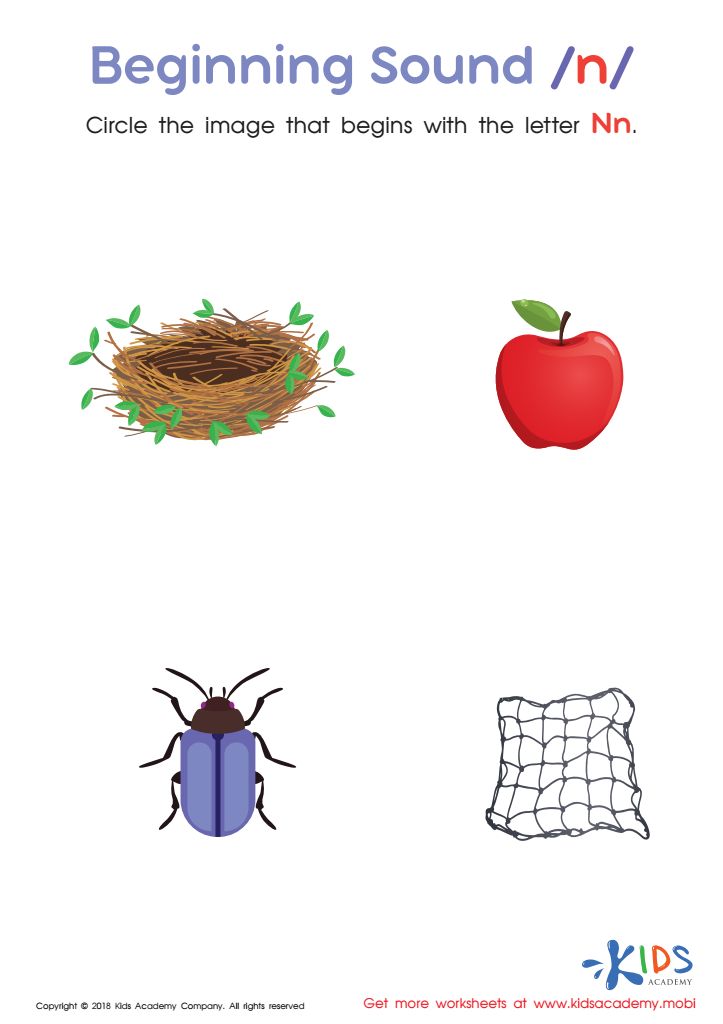
Beginning Sound «n» Worksheet
Help your emerging reader learn the initial «n» sound with this free PDF worksheet! Strengthen fine motor skills by tracing circles around words beginning with «n». Pictures are clear and engaging, giving beginning Phonics learners the right amount of practice and the confidence to succeed.
Beginning Sound «n» Worksheet
Worksheet
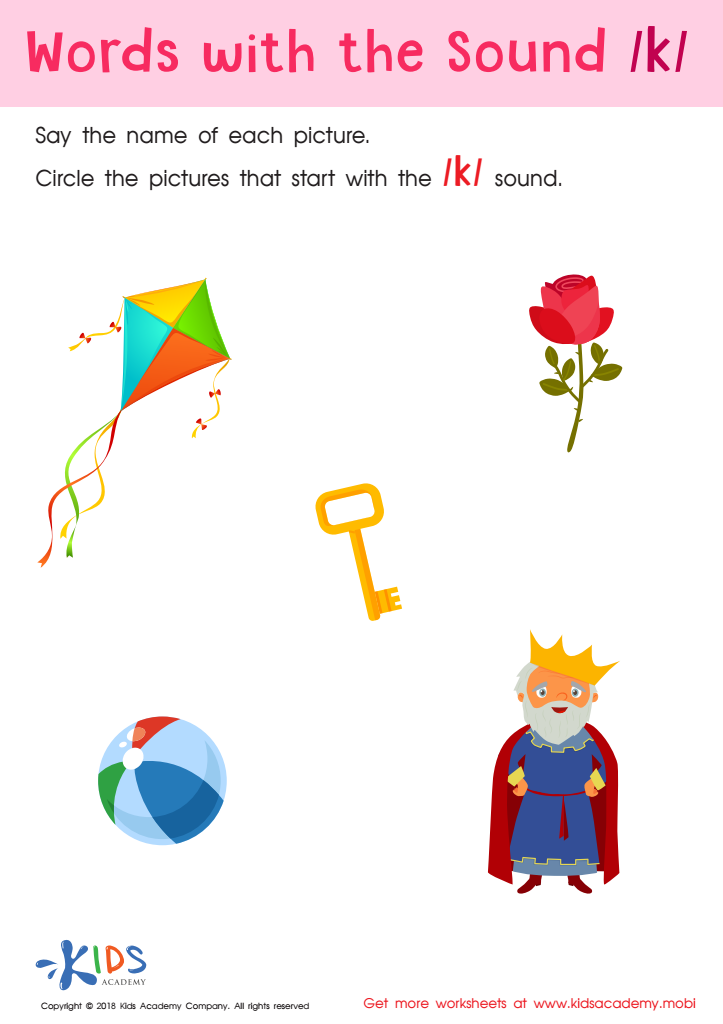
Words with sound k Reading Worksheet
Help your preschooler master the hard "k" sound with this fun worksheet from Kids Academy! Ask your child to say each picture aloud and circle only the pictures that start with "k". This early reading exercise will boost phonics skills and is sure to be loved by your little learner!
Words with sound k Reading Worksheet
Worksheet
Join Kids Academy for Free
Who is primarily going to use this learning content?








Phonics skills are essential for children, particularly in the age range of 3-7, as they lay the foundation for successful reading and writing. Understanding normal beginning sounds is a crucial part of phonics that aids children in recognizing that letters correlate with specific sounds. This knowledge is foundational as it helps kids decode written language, making it easier for them to sound out words while reading and spell words correctly when writing.
Early phonics instruction boosts phonemic awareness, which is the ability to hear, identify, and manipulate sounds in words. This skill is a strong predictor of reading success. When children grasp beginning sounds, they start to build a larger repertoire of words they can recognize and use.
Moreover, proficiency in phonics not only enhances literacy but also bolsters confidence and a positive attitude toward learning. Feeling successful in reading and writing activities encourages children to engage more with these tasks, fostering a lifelong love for reading.
Parents and teachers should prioritize phonics skills for these reasons, providing fun, interactive activities that make learning sounds enjoyable. Doing so supports the child’s overall language development and equips them with essential tools for academic growth, ultimately ensuring a smoother transition to more complex literacy skills.







