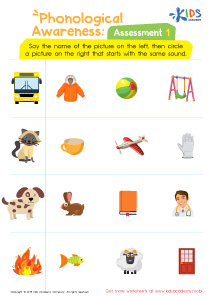
Sound Association Normal Beginning Sounds Worksheets for Ages 3-7
3 filtered results
-
From - To
Help your child master early reading skills with our "Sound Association Normal Beginning Sounds Worksheets for Ages 3-7." Designed to develop phonemic awareness, these engaging and interactive worksheets assist young learners in recognizing and matching beginning sounds with corresponding pictures and letters. Ideal for preschool, kindergarten, and first-grade students, our worksheets are easy to follow and filled with fun activities to reinforce sound-letter connections. Foster your child's confidence in phonics and prepare them for successful reading experiences. Download today to make learning playful and effective!
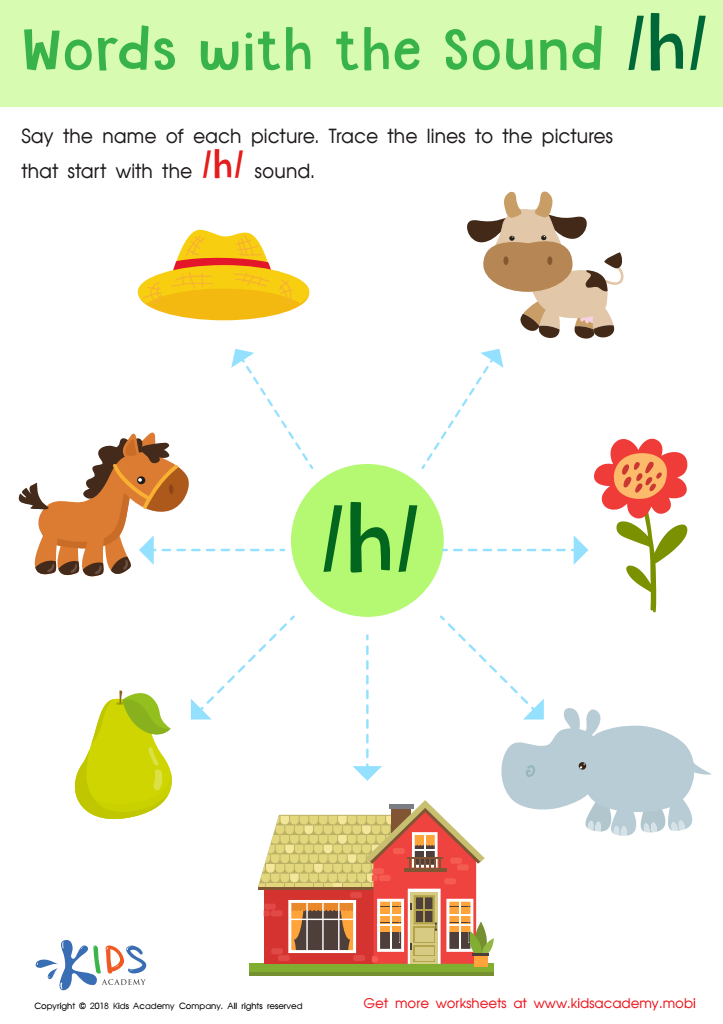
Words with sound h Reading Worksheet
 Assign to My Students
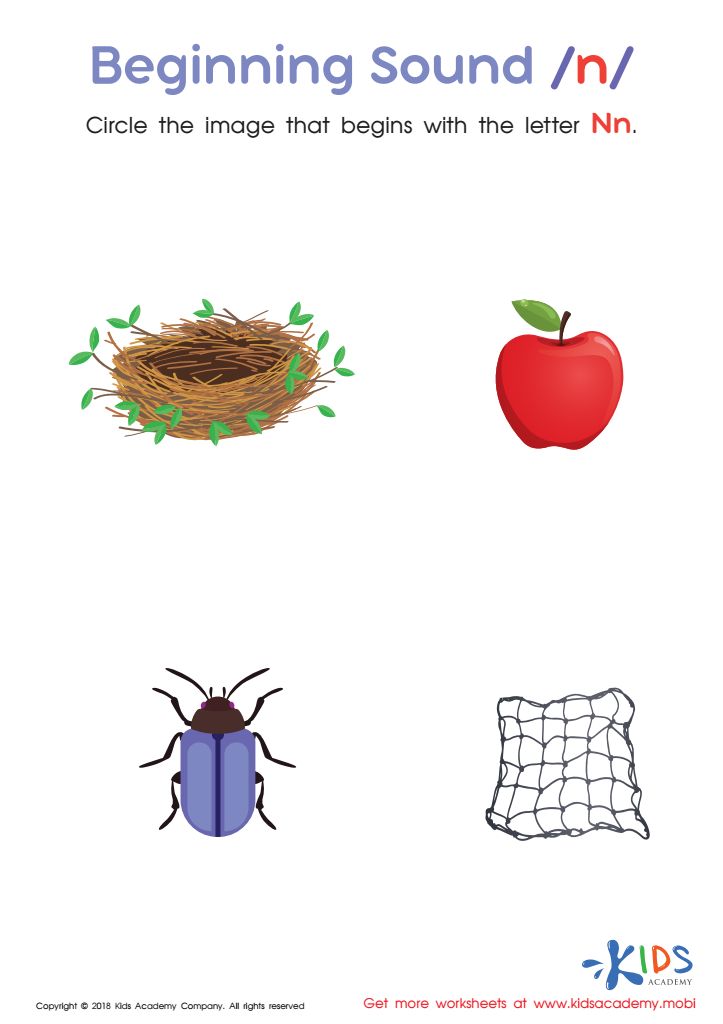
Beginning Sound «n» Worksheet
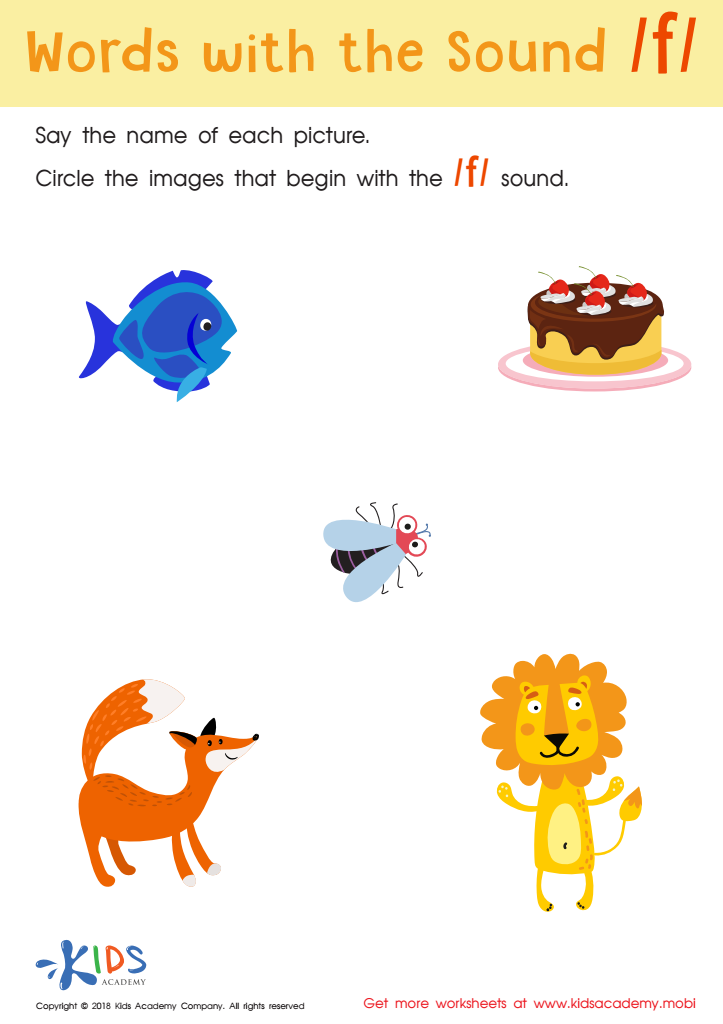
Words with sound f Reading Worksheet








Parents and teachers should pay special attention to the development of sound association and recognizing normal beginning sounds for children aged 3-7 because it is fundamental to early literacy skills. At this critical stage, children are like sponges, rapidly absorbing and learning new information. Understanding and identifying beginning sounds in words helps children develop phonemic awareness, which is a crucial building block for reading.
Phonemic awareness is the ability to hear, identify, and manipulate individual sounds in words. This skill is directly linked to later reading success; children who can recognize and differentiate sounds are more likely to decode new words. They also become more adept in their spelling abilities, facilitating clearer written communication.
Early engagement with sound associations makes learning to read an enjoyable and confidence-building activity. Activities such as matching pictures with beginning sounds (e.g., identifying that 'cat' starts with a 'c' sound) can turn phonemic lessons into fun and interactive experiences.
Furthermore, sound association skills aid in speech development. Children learn to enunciate correctly, leading to clearer communication and less frustration for both the child and listener. This not only supports academic learning but also social interaction.
Therefore, fostering sound association and phonemic awareness prepares children for future academic success and encourages lifelong learning habits.