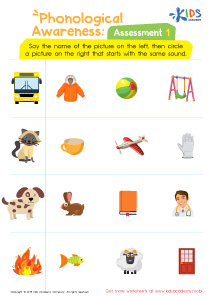
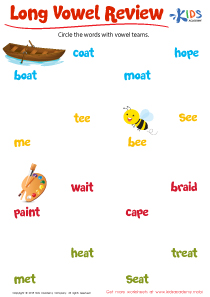
Vocabulary expansion Normal Beginning Sounds Worksheets for Ages 3-7
5 filtered results
-
From - To
Boost your child’s vocabulary and phonemic awareness with our Vocabulary Expansion Normal Beginning Sounds worksheets designed for ages 3-7. These engaging worksheets feature a variety of fun activities that encourage young learners to explore and identify beginning sounds, enhancing their language skills along the way. Through colorful illustrations and interactive tasks, children will develop essential phonetic skills while expanding their word knowledge. Perfect for at home or in the classroom, these resources provide a solid foundation in early literacy. Help your little ones soar in their reading journey with our exciting Beginning Sounds worksheets tailored for curious minds!
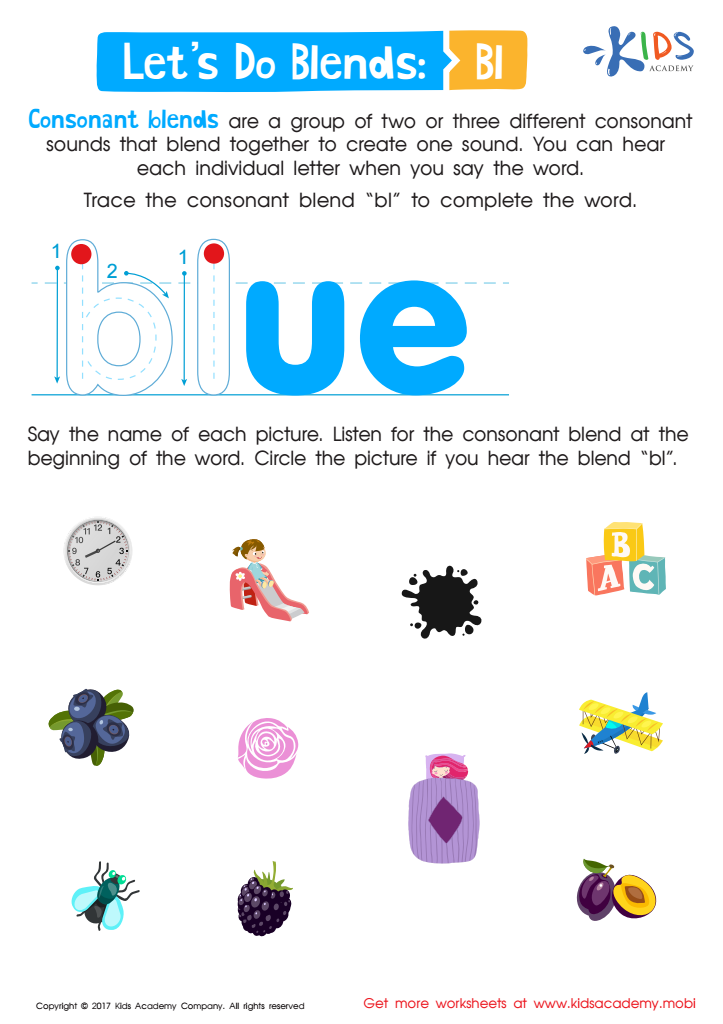
Beginning Blends: "Bl" Words Worksheet
 Assign to My Students
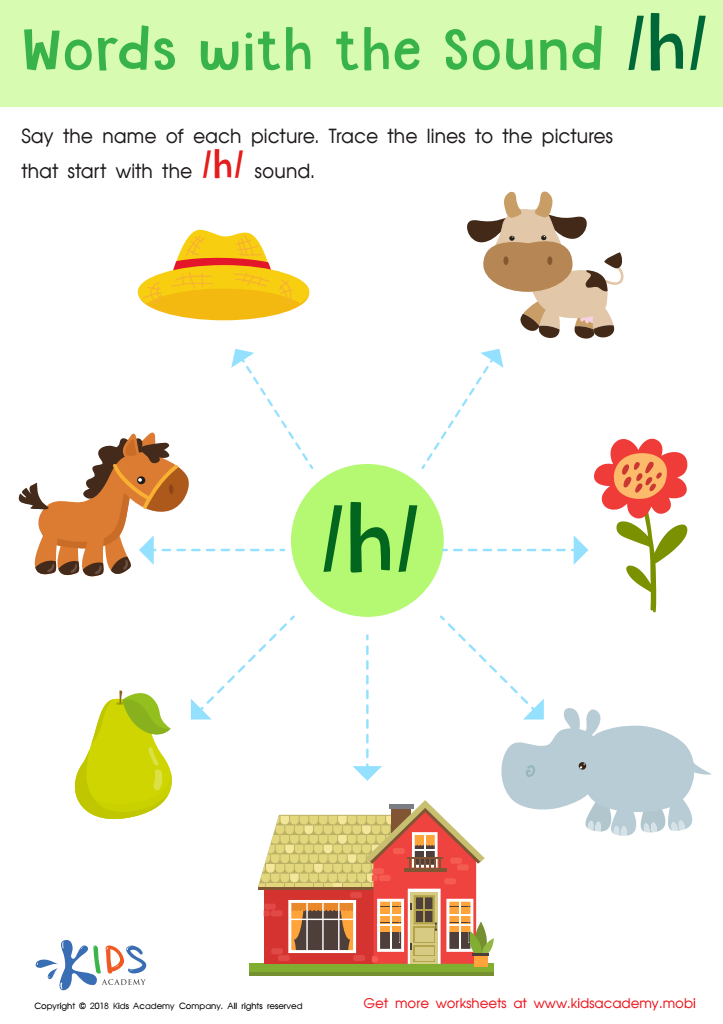
Words with sound h Reading Worksheet
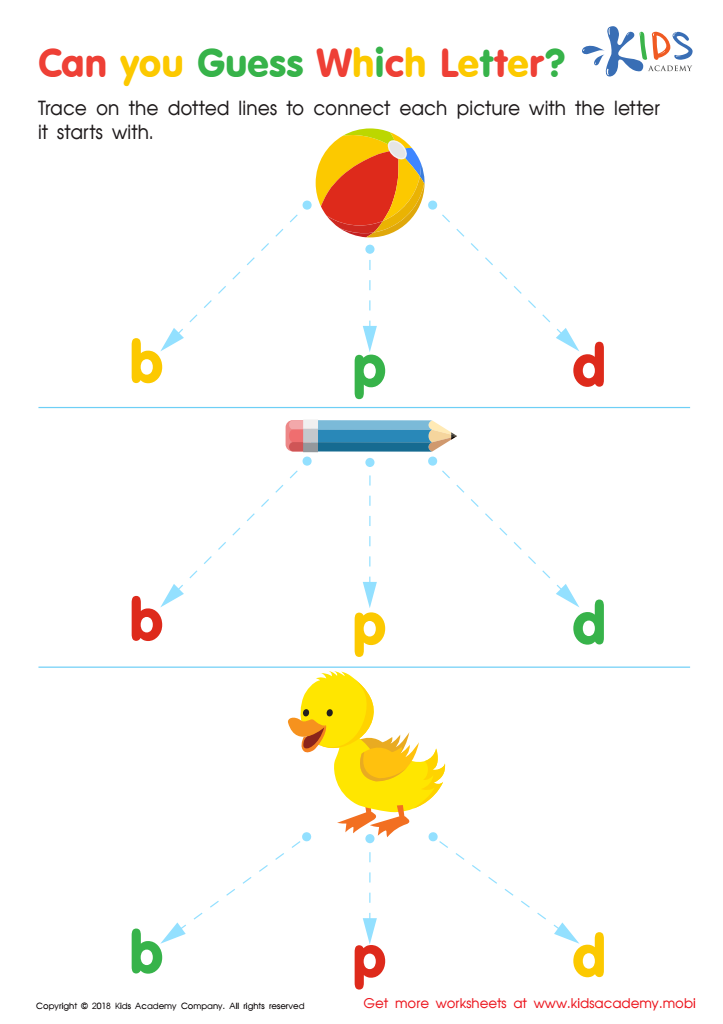
Can you Guess Which Letter? Worksheet
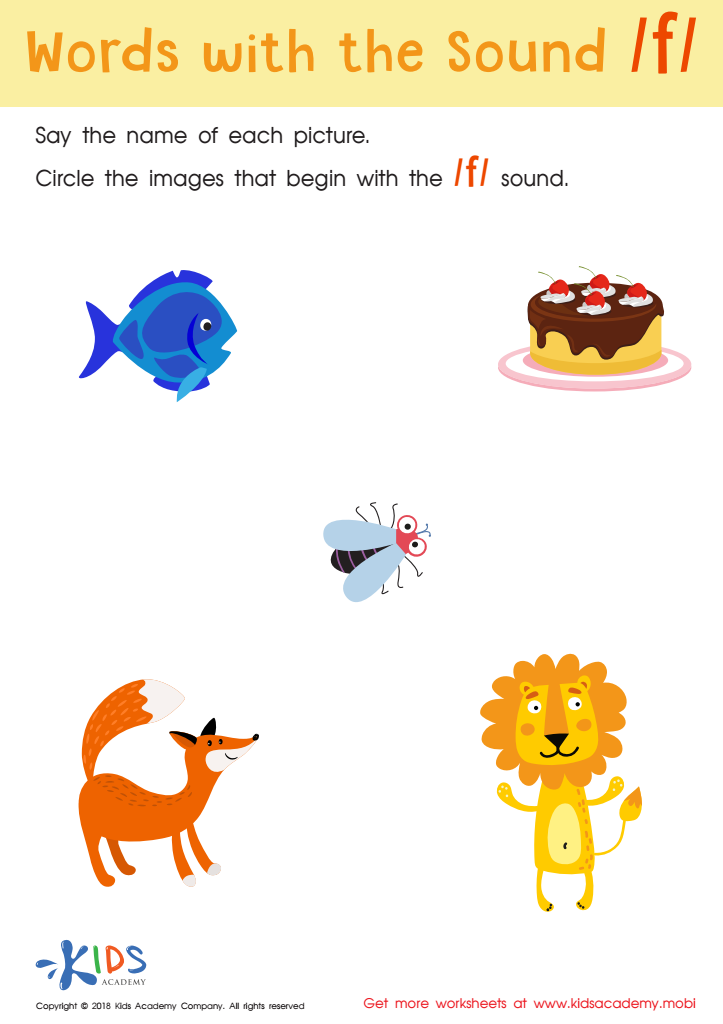
Words with sound f Reading Worksheet
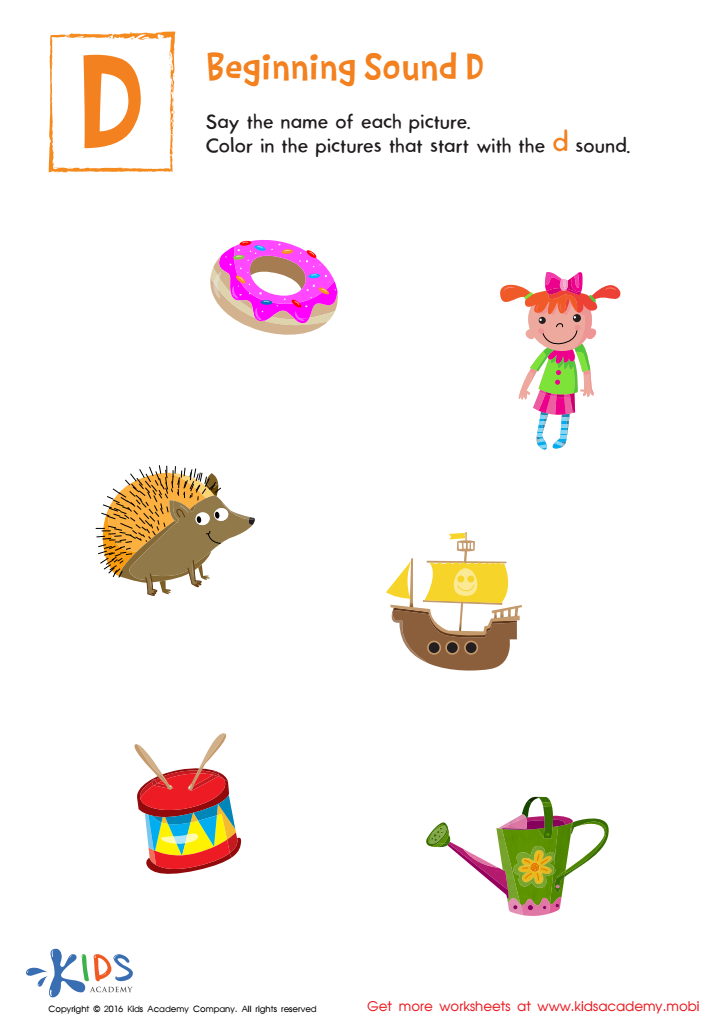
Beginning Sound D Worksheet








Vocabulary expansion, particularly focused on normal beginning sounds, is crucial for children ages 3-7 as it lays a solid foundation for literacy development. During these formative years, children are rapidly acquiring language skills that serve as the building blocks for reading and writing. Understanding and recognizing beginning sounds can significantly enhance phonemic awareness, which is essential for decoding words.
Parents and teachers should care about this because a robust vocabulary enriches communication skills, enabling children to express themselves effectively. Engaging in activities that emphasize beginning sounds helps children to differentiate between letters and their corresponding sounds, making it easier for them to grasp more complex language concepts later.
Moreover, a rich vocabulary correlates with academic success. Children who master beginning sounds often excel in reading and comprehension, leading to improved performance across subjects.
Additionally, vocabulary development fosters cognitive growth, enhances critical thinking, and cultivates a love for language and storytelling. Empowering young learners with strong phonemic skills will also instill confidence in their abilities, encouraging lifelong learning habits. Therefore, prioritizing vocabulary expansion is not just an academic task but a pivotal aspect of holistic development for children in their early years.