
Number Recognition Normal Alphabet Worksheets for Ages 3-7
3 filtered results
Difficulty Level
Grade
Age
-
From - To
Subject
Activity
Standards
Enhance your child's early learning journey with our "Number Recognition Normal Alphabet Worksheets" designed for ages 3-7. These engaging worksheets help kids recognize numbers and connect them with the alphabet, fostering essential pre-math skills. With fun illustrations and age-appropriate activities, children will enjoy counting, tracing, and identifying numbers in an interactive way. Our worksheets promote cognitive development and strengthen fine motor skills, making learning both effective and enjoyable. Perfect for home or classroom use, these resources encourage a love for numbers and lay a strong foundation for future math success. Start your child's educational adventure today with our beautifully designed worksheets!
Favorites
With answer key
Interactive
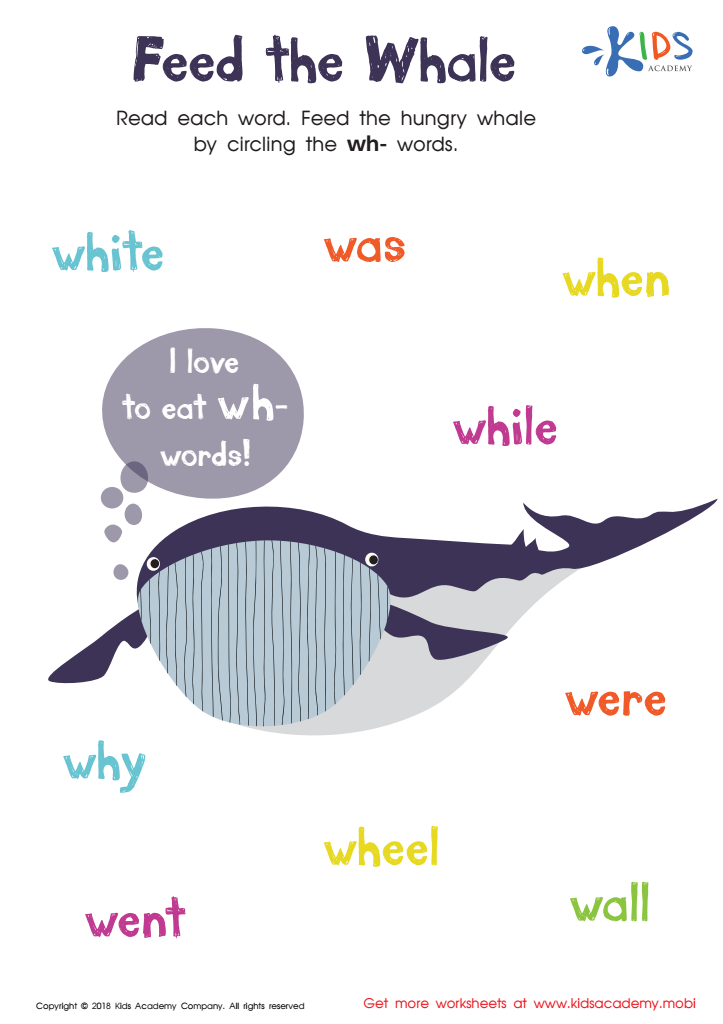
Feed the Whale Worksheet
Help your early reader build beginning consonant and blend recognition with this fun whale worksheet! They'll feed the whale wh- words, circle sight words, and build fine motor skills—all while discriminating between differently colored words.
 Assign to My Students
Feed the Whale Worksheet
Worksheet
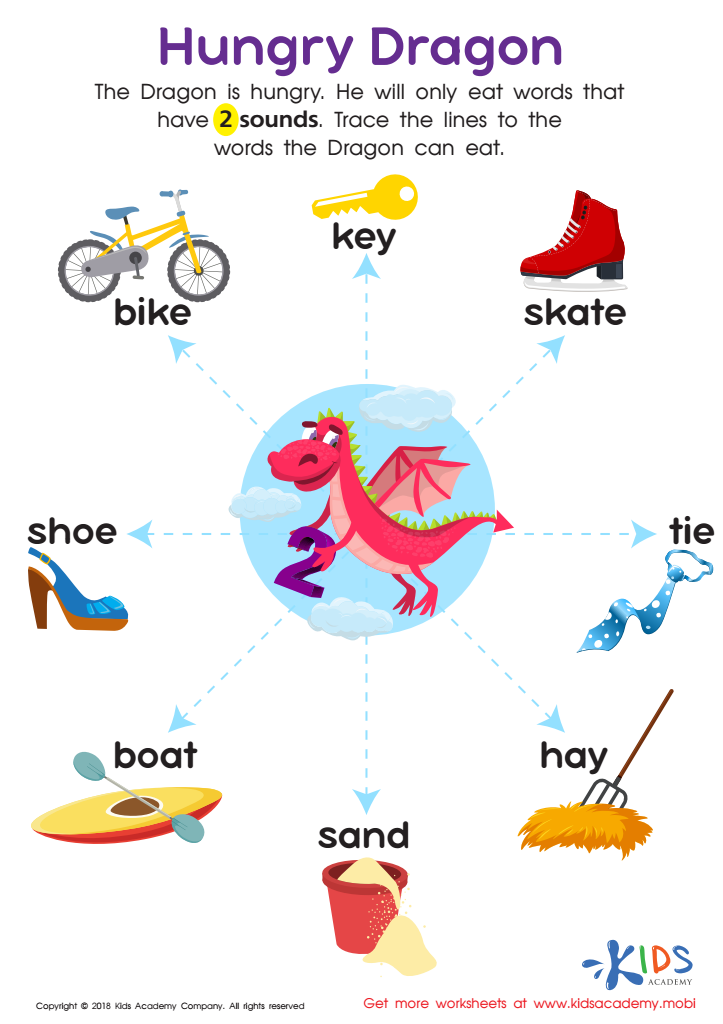
Hungry Dragon Worksheet
Feed the dragon words and watch your child strengthen their phonological awareness and auditory discrimination skills! Download this free PDF for tracing exercises that build their fine motor skills too. Kids will love spending time with the cute dragon while they unwittingly learn reading skills!
Hungry Dragon Worksheet
Worksheet
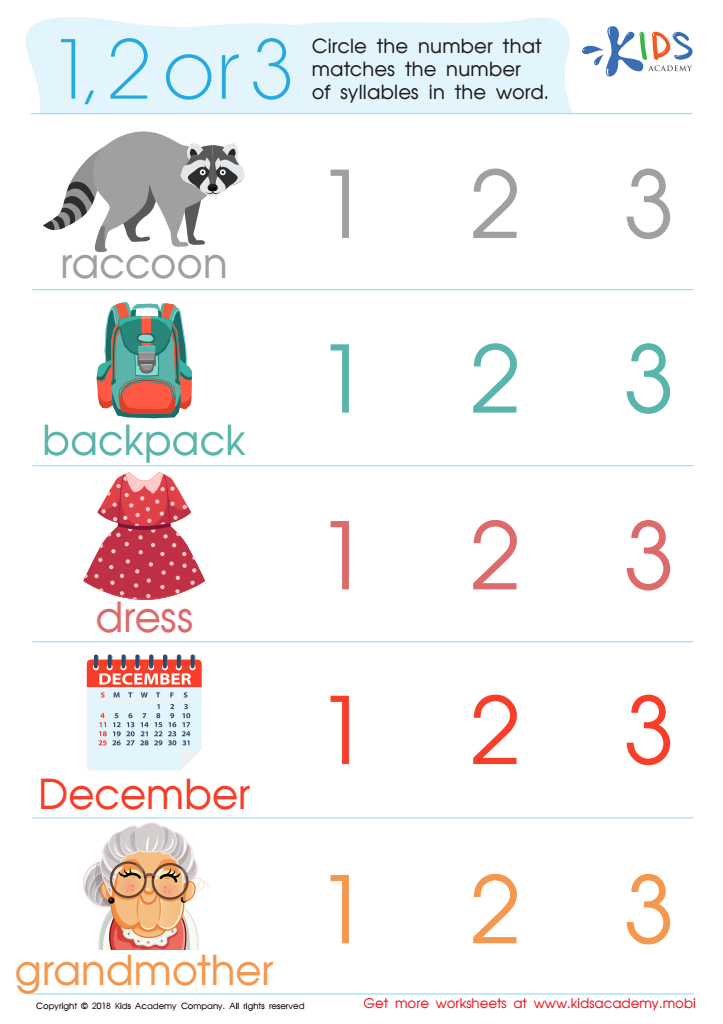
1, 2 or 3? Worksheet
Do your kids know about syllables? Test their understanding with this worksheet. Read the words aloud and ask them to say them with you. Help them circle the number that matches the number of syllables in each word. Perfect for expanding knowledge or testing how much they've already learned.
1, 2 or 3? Worksheet
Worksheet
Join Kids Academy for Free
Who is primarily going to use this learning content?








Number recognition and understanding the normal alphabet are crucial building blocks in early childhood education, particularly for children aged 3-7. At this stage, children are developing key cognitive skills that will set the foundation for their future academic success. Recognizing numbers and letters is essential for several reasons.
Firstly, number recognition helps children understand basic mathematical concepts like counting and simple addition. Mastery of these foundational skills supports their ability to comprehend more complex mathematical ideas later on. Engaging with number recognition activities can also bolster a child's confidence and enthusiasm for learning mathematics.
Similarly, recognizing letters and sounds lays the groundwork for literacy development. A strong grasp of the alphabet enables children to learn to read and write, critical skills for effective communication and academic achievement. Early exposure to letters and numbers enhances children's cognitive abilities, including memory, problem-solving, and critical thinking.
By fostering number recognition and letter understanding, parents and teachers contribute to a child's overall readiness for school. Early intervention can help in identifying any areas where additional support may be needed, ensuring that children receive a well-rounded education and are prepared to succeed in their learning journeys. Therefore, prioritizing these skills is fundamental for laying a sound educational foundation.







