Alphabet understanding Normal Letter Recognition Worksheets for Ages 3-7
5 filtered results
-
From - To
Discover our engaging "Alphabet Understanding Normal Letter Recognition Worksheets" designed for children ages 3-7. These worksheets focus on developing essential letter recognition skills through fun activities that make learning enjoyable. With a variety of colorful and interactive exercises, kids will identify uppercase and lowercase letters, match letters to corresponding images, and reinforce their understanding of the alphabet. Perfect for preschool and early elementary classrooms or at-home learning, these worksheets support foundational literacy skills, fostering confidence in young learners. Help your child master letter recognition with our captivating and educational resources that cater to their developmental needs!
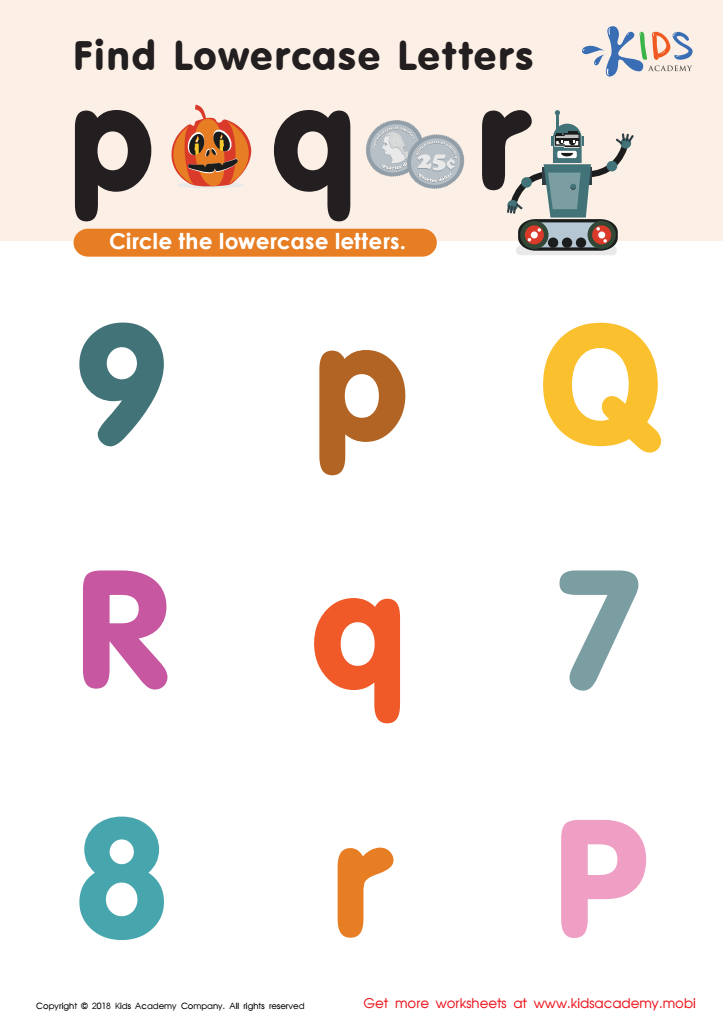
Find lowercase Letters p q r Worksheet
 Assign to My Students
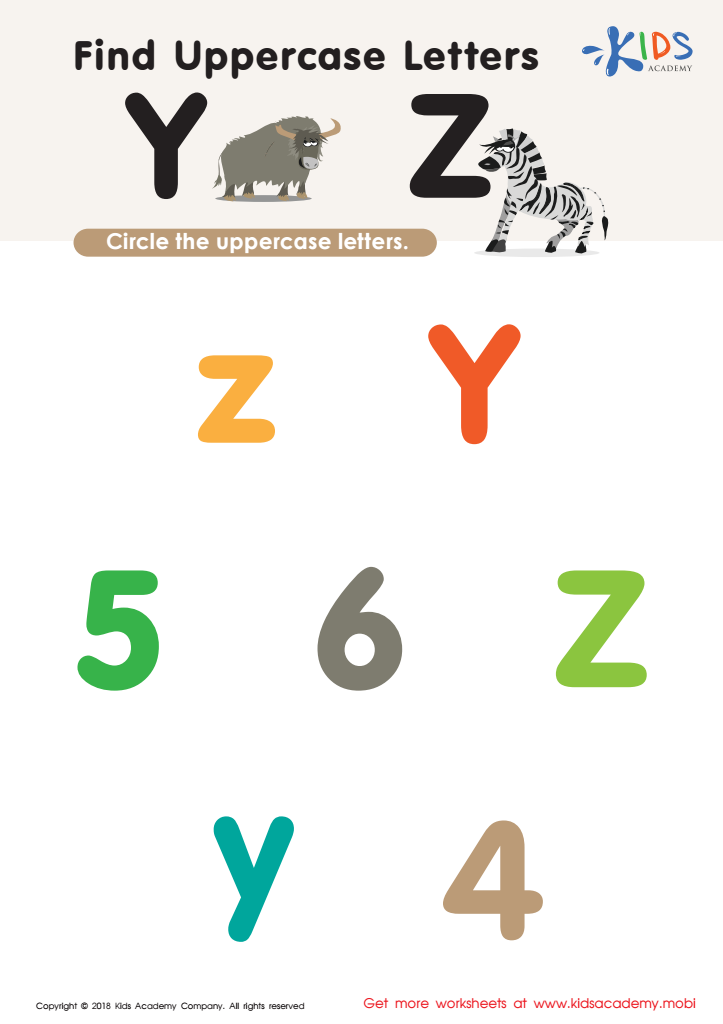
Find Uppercase Letters Y Z Worksheet
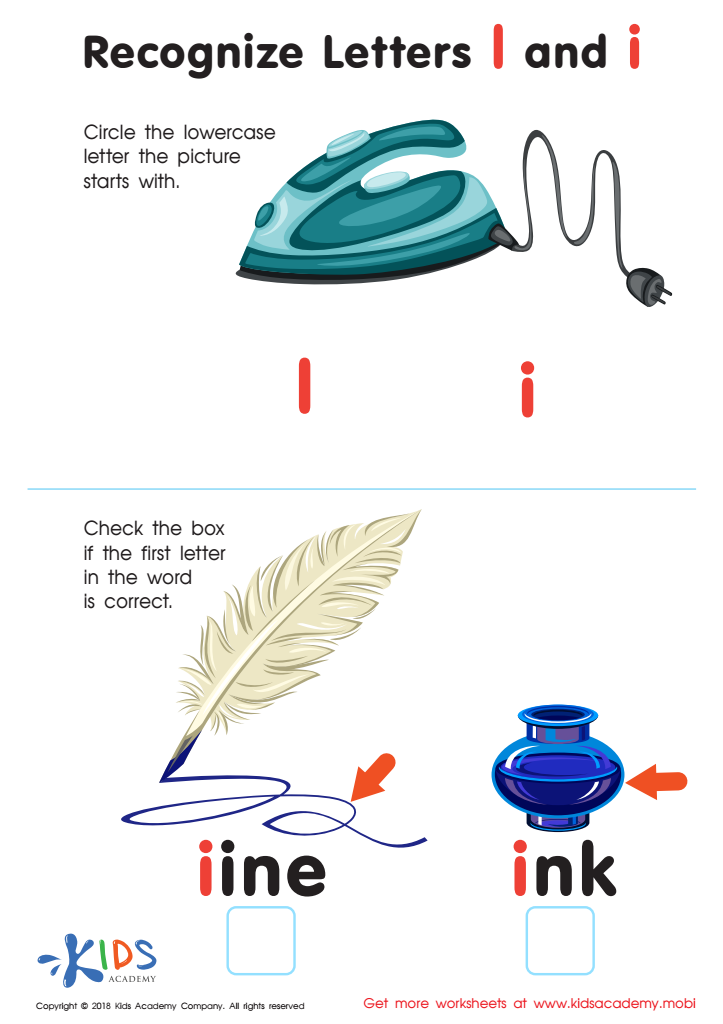
Recognize Letters l and i Worksheet
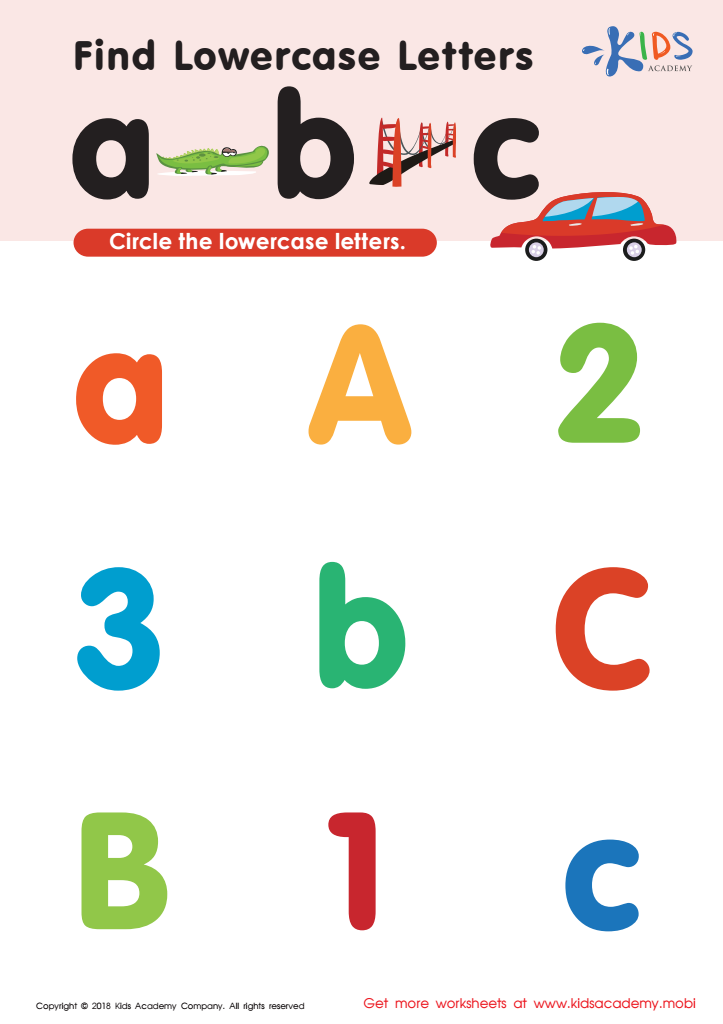
Find lowercase letters a b c Worksheet
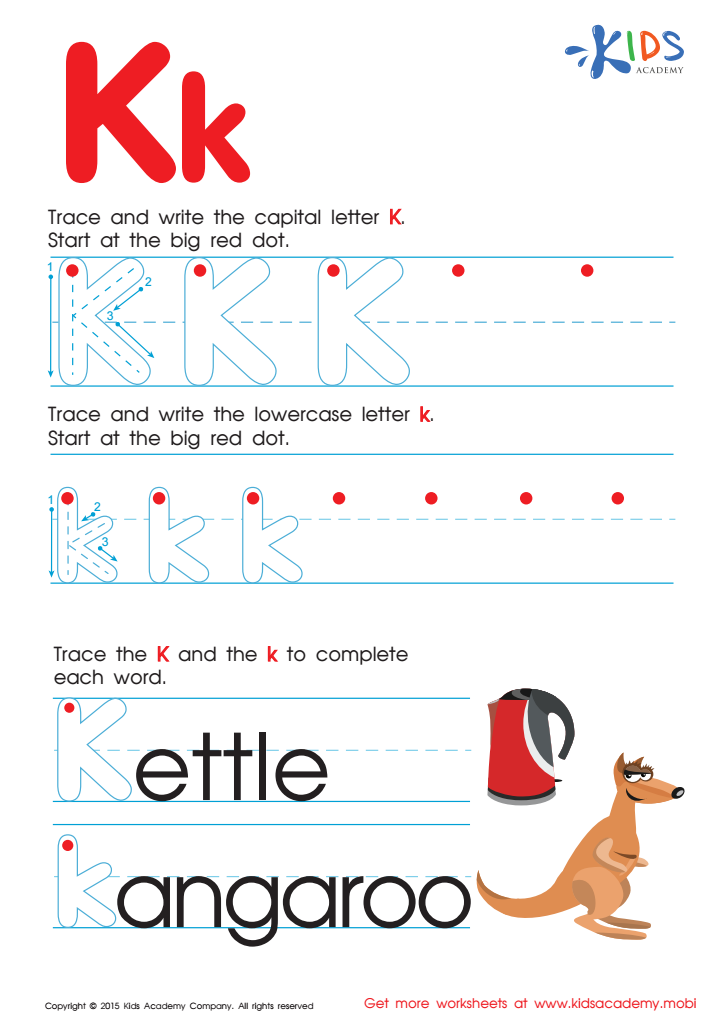
Letter K Tracing Page








Alphabet understanding and normal letter recognition are crucial components of early literacy for children aged 3-7. During these formative years, children are building the foundation for their future reading and writing skills. Recognizing letters not only fosters the ability to decode text, but it also enhances children's phonemic awareness—essential for them to understand the relationship between sounds and letters.
Parents and teachers should prioritize letter recognition because it directly influences later academic success. Mastery of the alphabet allows children to easily interact with books, understand instructions, and communicate effectively through writing. In addition, letter recognition builds confidence; children who can identify letters are more likely to engage enthusiastically in literacy activities.
Moreover, fostering early alphabet understanding encourages cognitive development by improving memory skills and critical thinking as children learn to form words and simple sentences. The social aspect is also important; learning through games and group activities promotes interaction, cooperation, and shared learning experiences.
In sum, by focusing on letter recognition, parents and teachers lay a fundamental building block for lifelong learning, language acquisition, and a love for reading, significantly enhancing children’s educational trajectory and personal growth.








