Fine motor skills development Normal Letter Recognition Worksheets for Ages 3-7
3 filtered results
-
From - To
Unlock your child's potential with our Fine Motor Skills Development Normal Letter Recognition Worksheets designed specifically for children ages 3-7. These engaging worksheets offer a fun and interactive way to enhance letter recognition while developing essential fine motor skills. Each activity is strategically crafted to improve hand-eye coordination, strengthen the grip, and refine other motor skills through tracing, coloring, and playful exercises. These worksheets provide a perfect balance of learning and enjoyment, making them an excellent resource for parents and educators alike. Foster a love for learning and watch your child thrive as they master the alphabet with confidence. Download now!
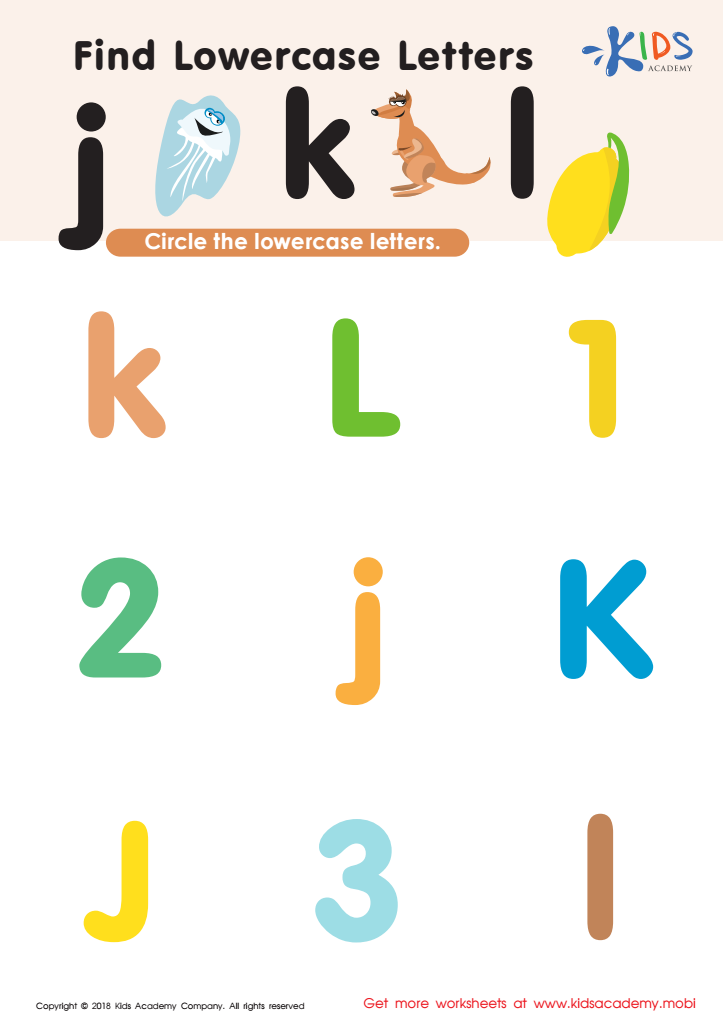
Find Lowercase Letters j k l Worksheet
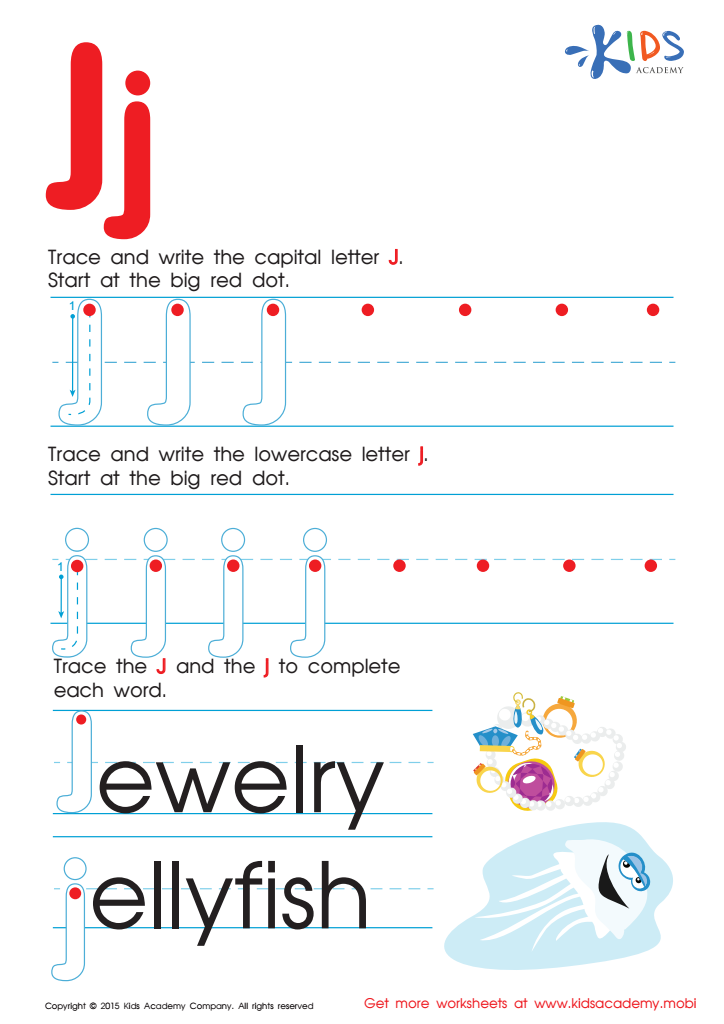
Letter J Tracing Page
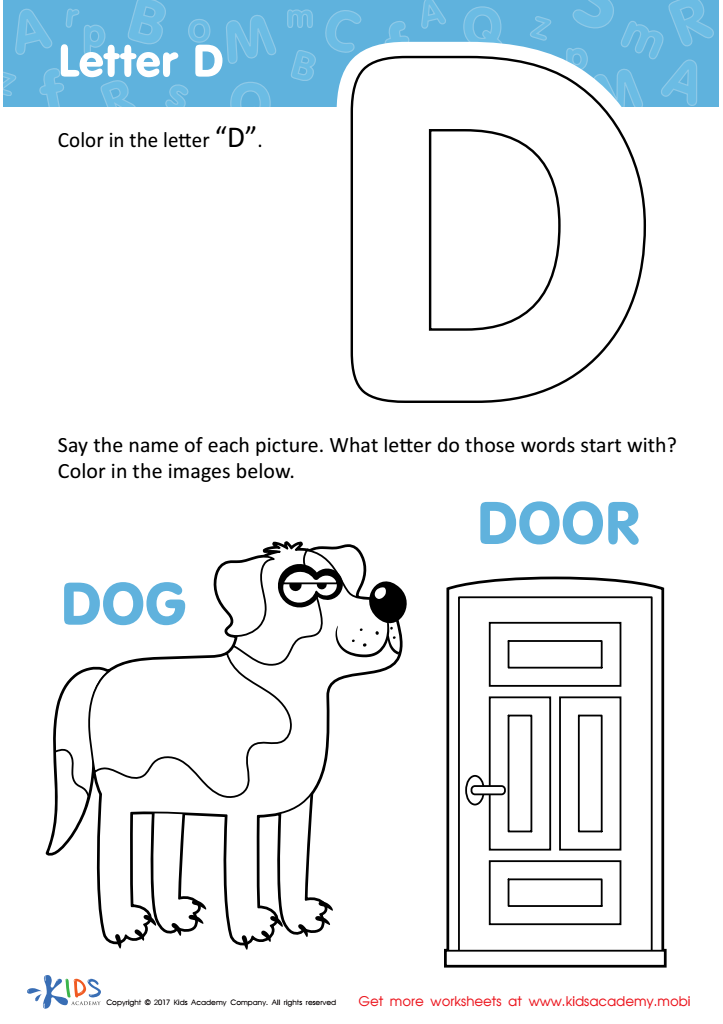
Letter D Coloring Sheet
 Assign to My Students








Fine motor skills development and normal letter recognition are crucial components in the early educational journey of children aged 3 to 7. Parents and teachers should prioritize these skills for several reasons. Firstly, fine motor skills, which include hand-eye coordination and the ability to manipulate small objects, are foundational for various everyday tasks, such as writing, cutting, and buttoning clothing. Mastery of these skills not only builds independence but also boosts self-esteem as children successfully navigate these activities.
Similarly, normal letter recognition lays the groundwork for literacy. Recognizing letters is a precursor to reading, enabling children to decode words and comprehend text. Early familiarity with letters strengthens vocabulary and language skills, providing children with the tools to express themselves effectively.
Furthermore, both skills are interconnected. As children learn to write letters, they simultaneously practice fine motor skills, making the learning process organic and engaging. Parents and teachers can facilitate this development through playful activities, such as crafting, drawing, and interactive games. Investing in these foundational skills fosters a love for learning and equips children with essential capabilities that pave the way for future academic success. In summary, nurturing fine motor skills and letter recognition is vital for enhancing children's cognitive and physical development during these formative years.








