
Letter tracing skills Normal Letter Recognition Worksheets for Ages 3-7
3 filtered results
Difficulty Level
Grade
Age
-
From - To
Subject
Activity
Standards
Enhance your child's letter tracing skills with our engaging normal letter recognition worksheets designed for ages 3-7. Our expertly crafted activities help young learners master the alphabet by tracing and identifying both uppercase and lowercase letters. Through fun and interactive exercises, your child will develop fine motor skills, improve pencil control, and build a strong foundation for reading and writing. These printable worksheets are perfect for both classroom settings and home learning, ensuring consistent practice to boost confidence and accuracy in letter formation. Give your child the tools they need to succeed with our comprehensive letter tracing resources.
Favorites
With answer key
Interactive
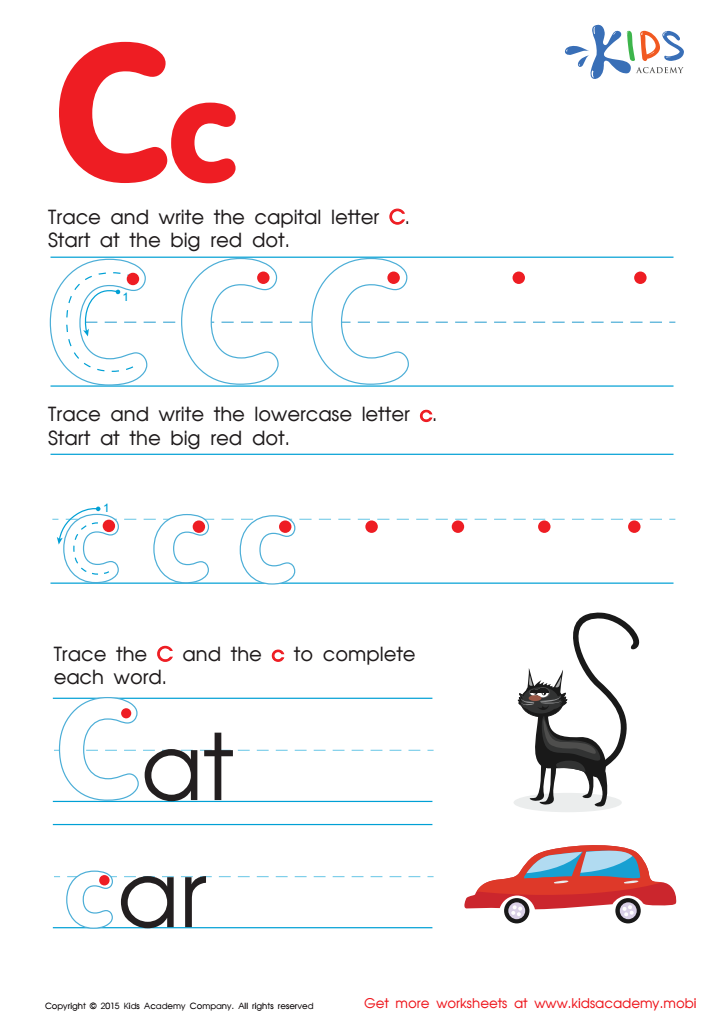
Letter C Tracing Page
Trace and write the letter 'C'! Put the pencil at the red dot then follow the lines – the capital letter first then the lowercase one. Cats love it and so will you! Get more free printables to practice tracing and writing.
Letter C Tracing Page
Worksheet
Letter W Coloring Sheet
Let your child have fun with this letter "W" coloring page! They can use their imagination to color the whale and discover the letter and its sound. Give them a helping hand to make it a whale of a time!
Download (PDF)
 Assign to My Students
Assign to My Students
Letter W Coloring Sheet
Worksheet
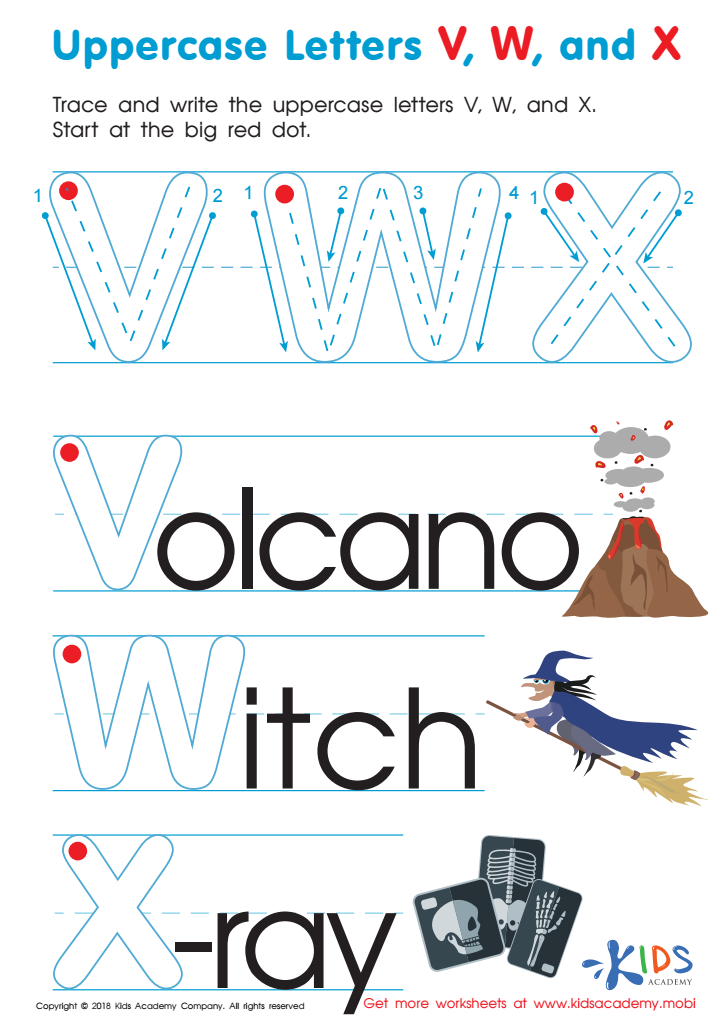
Uppercase Letters V, W, and X Worksheet
This worksheet is perfect for kids struggling to write uppercase letters V, W, and X. Warm up their brains first by having them name words starting with these letters. Then, help them trace and write each letter from the big red dot. With your assistance, they will quickly sharpen their writing skills.
Uppercase Letters V, W, and X Worksheet
Worksheet
Join Kids Academy for Free
Who is primarily going to use this learning content?








Parents and teachers play a crucial role in fostering letter tracing skills and normal letter recognition for children aged 3-7, impacting their reading and writing development significantly. These foundational skills pave the way for literacy, enabling children to become proficient readers and effective communicators.
-
Brain Development: During early childhood, the brain is incredibly plastic, making it an optimal time for learning visual and motor skills. Letter tracing helps refine hand-eye coordination and fine motor skills that are essential for writing.
-
Literacy Foundation: Recognizing and tracing letters aids in creating a solid phonetic and alphabetic awareness, which is fundamental for reading. Recognizing the shape and sound of each letter sets the stage for word formation, early reading, and spelling skills.
-
Confidence Building: Achieving mastery in tracing and recognizing letters before formal schooling begins can boost a child’s confidence. It reduces anxiety associated with learning and encourages a positive attitude towards education.
-
Engagement and Interest: Tracing activities make learning interactive and fun, capturing a child’s interest and promoting a lifelong love for reading and learning.
-
Early Diagnosis and Support: Early engagement allows parents and teachers to identify potential learning difficulties such as dyslexia and intervene with appropriate strategies, providing the necessary support to keep the child on a successful learning track.
Overall, focusing on these skills fosters cognitive development and sets a strong foundation for academic success.








