Vowel Recognition Normal Letter Recognition Worksheets for Ages 3-7
4 filtered results
-
From - To
Discover our engaging Vowel Recognition Normal Letter Recognition Worksheets designed specifically for children ages 3-7! These worksheets promote early literacy skills, focusing on vowel identification and differentiation among the letters of the alphabet. Featuring colorful illustrations and interactive activities, kids will love practicing their letter recognition in a fun and effective way. Each worksheet encourages critical thinking and promotes language development, making learning enjoyable. Perfect for preschool, kindergarten, or home use, our resources help young learners build a strong foundation in reading and writing. Start your child's journey to literacy with our easy-to-use, printable worksheets today!
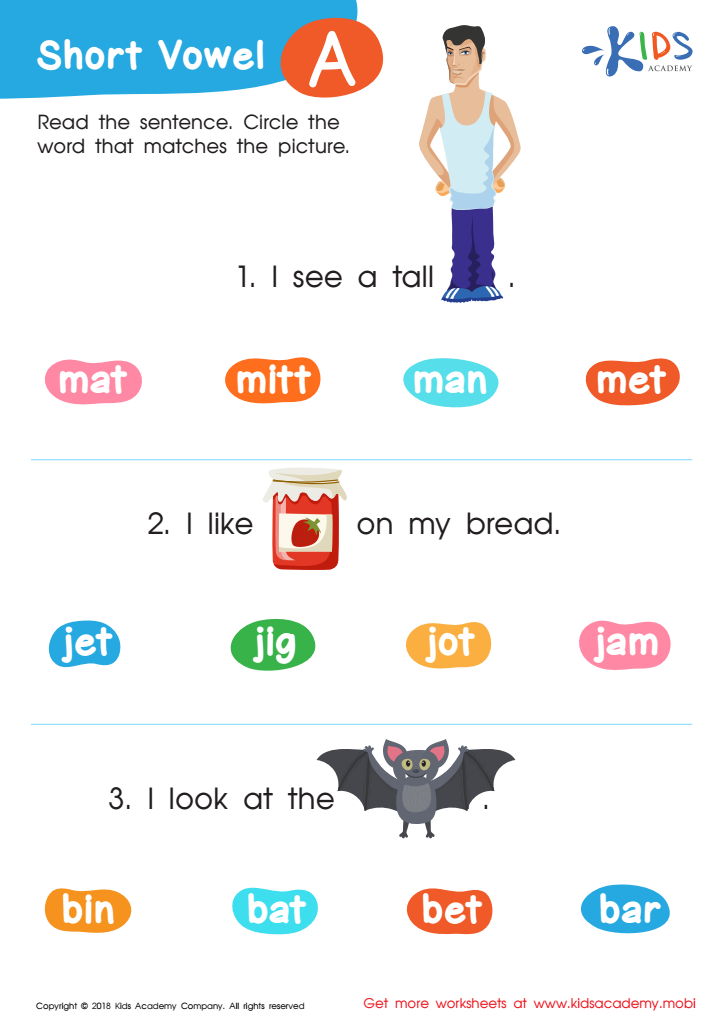
Short Vowel /a/ Worksheet
 Assign to My Students
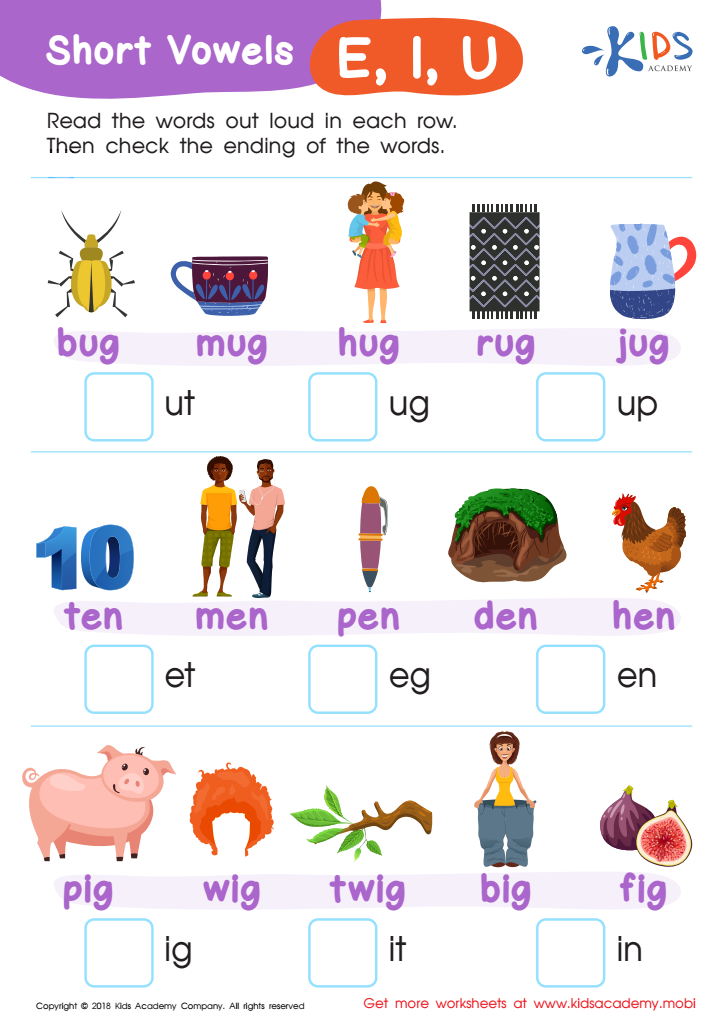
Short Vowels /e/, /i/, and /u/ Worksheet
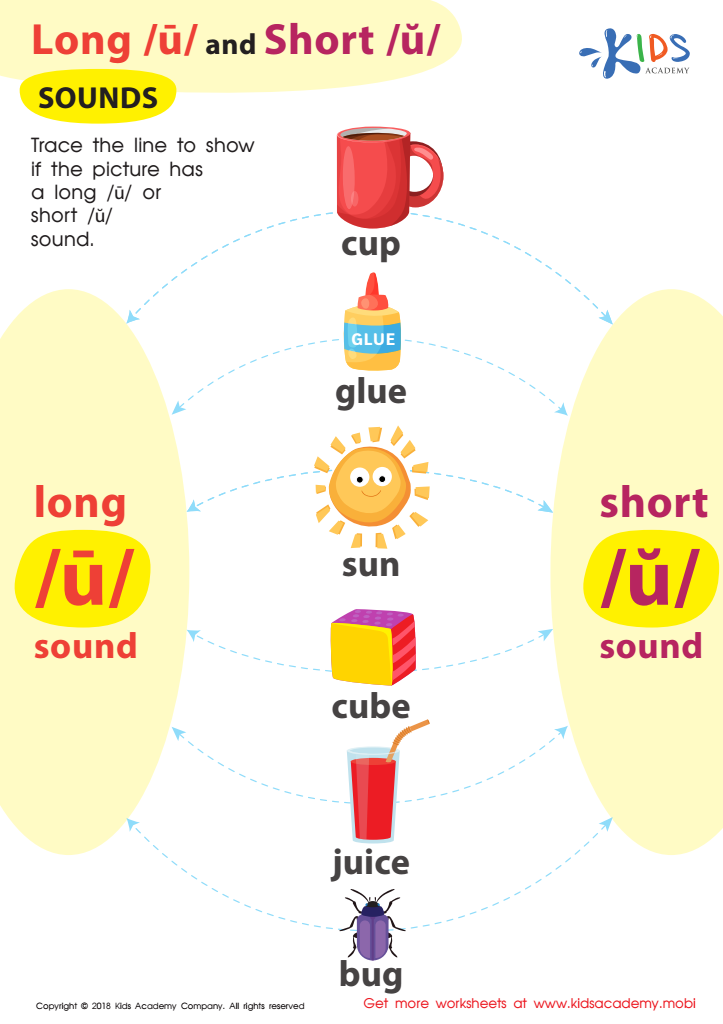
Reading: Long U and Short U Sounds Worksheet
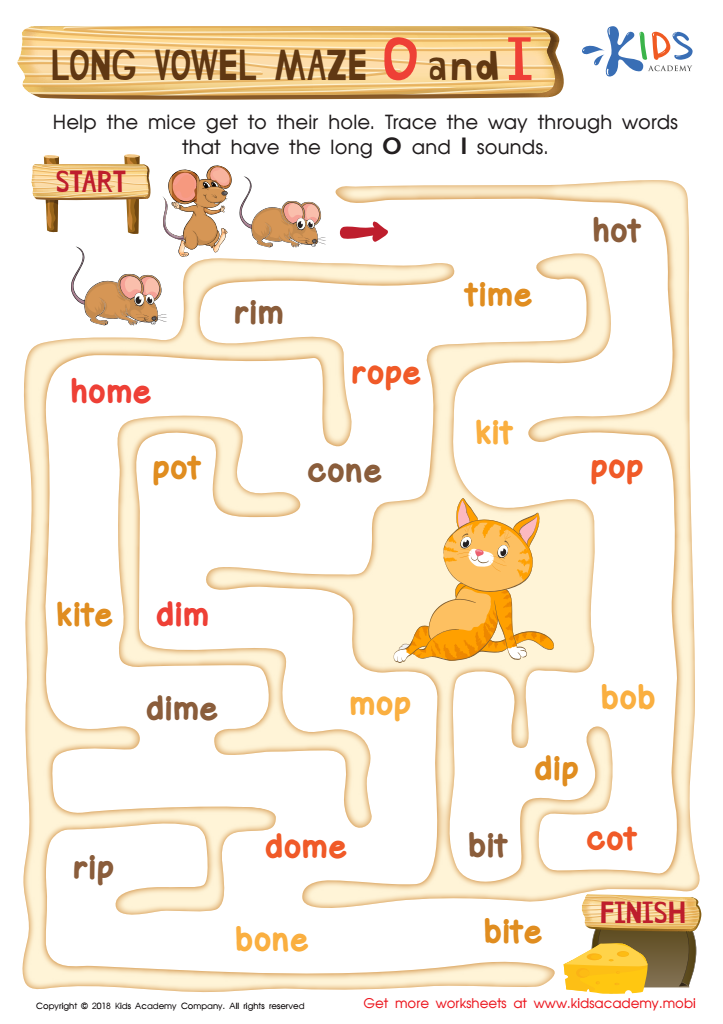
Long Vowel Maze /o/ and /i/ Worksheet








Vowel recognition and letter recognition are foundational skills in early literacy development for children ages 3-7, and both parents and teachers should prioritize these skills for several key reasons.
Firstly, vowels are the building blocks of language. Mastering vowel sounds helps children understand how to construct words, which is essential for developing reading and writing capabilities. Recognition of letters, including both vowels and consonants, focuses on a child's ability to identify and differentiate letters, reinforcing their understanding of the alphabet.
Additionally, these skills promote phonemic awareness, which is crucial for decoding words. Better phonemic awareness leads to improved reading fluency and comprehension. Research shows that children who develop strong letter and vowel recognition skills tend to excel in all areas of literacy as they progress in school.
Moreover, engaged parents and teachers can foster enjoyable, interactive learning experiences. Using games, songs, and hands-on activities enhances a child's motivation and interest in learning.
In summary, caring about vowel and letter recognition supports children's literacy development, ensuring they acquire essential skills for academic success. By fostering these abilities early on, parents and teachers set the stage for lifelong learning and effective communication.








