
Handwriting practice Normal Letter Sounds Worksheets for Ages 3-7
4 filtered results
Difficulty Level
Grade
Age
-
From - To
Subject
Activity
Standards
Make handwriting practice enjoyable for ages 3-7 with our expertly crafted worksheets focusing on normal letter sounds! Our activities enhance early literacy and fine motor skills through engaging exercises. Each sheet provides ample space for children to trace and write, bolstering their confidence and control. Perfect for early learners, our worksheets make mastering letter sounds fun and stress-free. Help your child build a solid linguistic foundation while encouraging curiosity and self-expression. Whether you're a parent, teacher, or guardian, explore our comprehensive worksheet collection to support your child's educational journey today!
Favorites
With answer key
Interactive
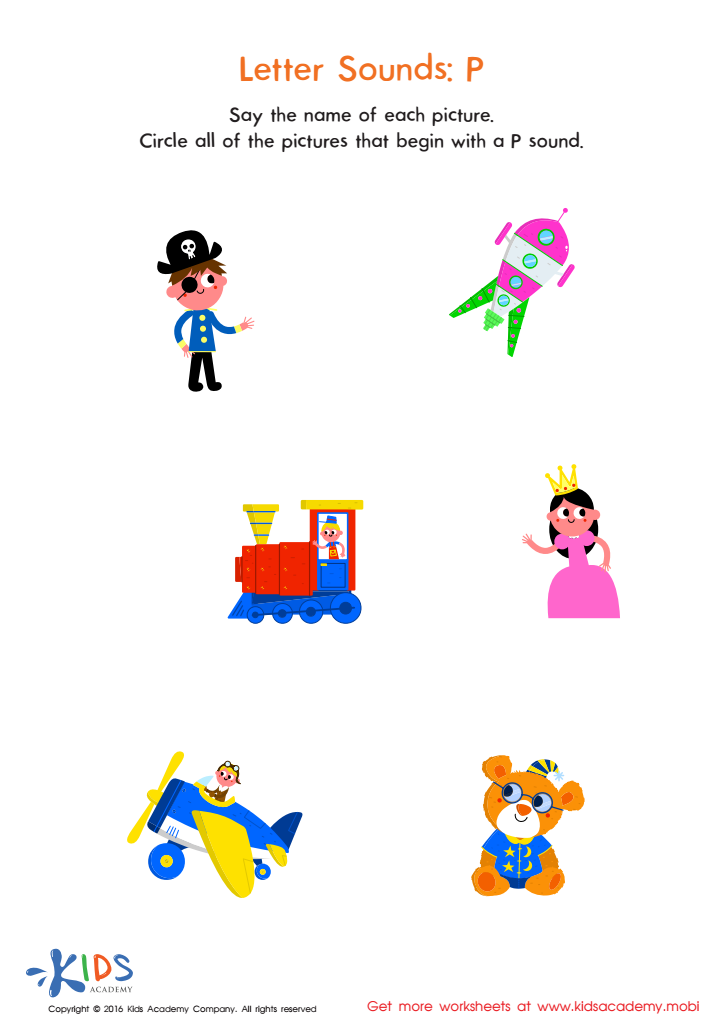
Letter P Sound Worksheet
Think P! Kids practice phonics with this fun letter P worksheet. With delightful illustrations, they'll sound out simple words and get closer to reading.
 Assign to My Students
Letter P Sound Worksheet
Worksheet
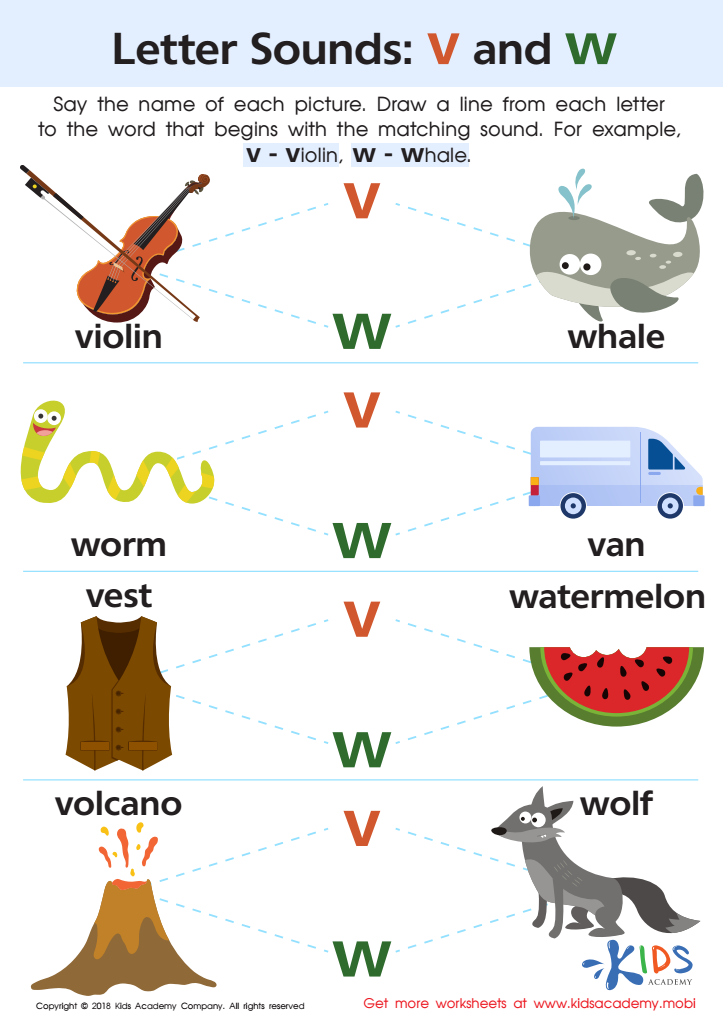
Letter V and W Sounds Worksheet
Help your child master the sounds of W & V while completing this fun phonics worksheet. Have them trace the dotted line from letter to picture while saying words like "worm", "violin" and "van" aloud to notice how each word begins with either W or V. Listen and pay attention to the pronunciation to complete the practice.
Letter V and W Sounds Worksheet
Worksheet
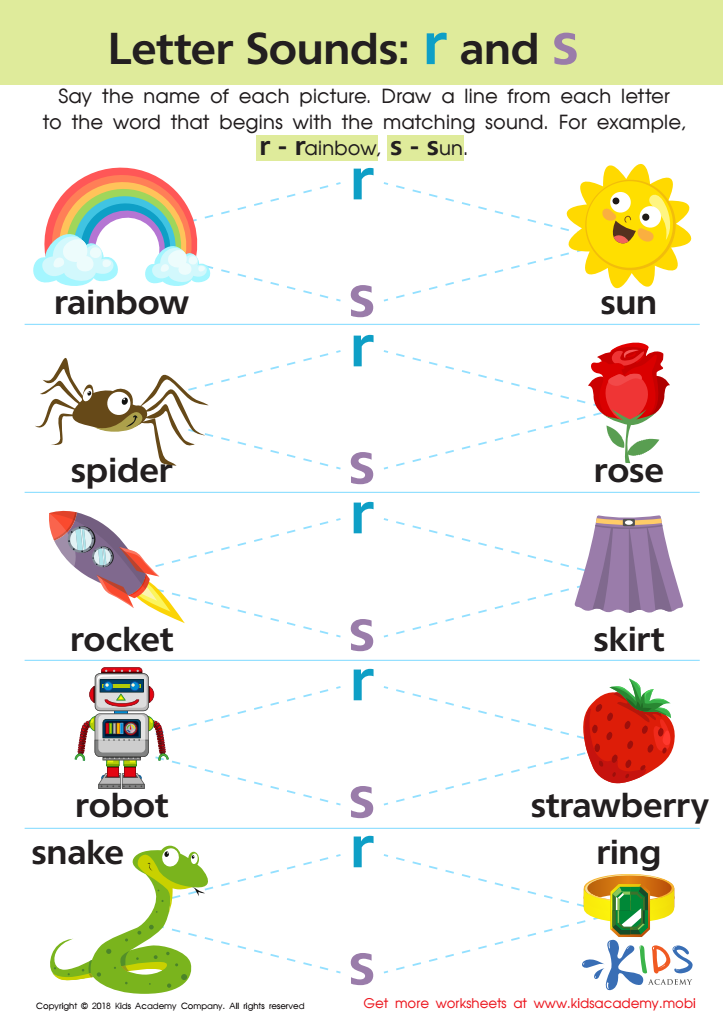
Letter R and S Sounds Worksheet
Kids Academy's phonics worksheet is full of fun and color! Help your child name the pictures and read the words under each one. Does it begin with an R or S? Then, use a pencil to trace the dotted line from the letter to its image. It's a great way to practice phonics skills!
Letter R and S Sounds Worksheet
Worksheet
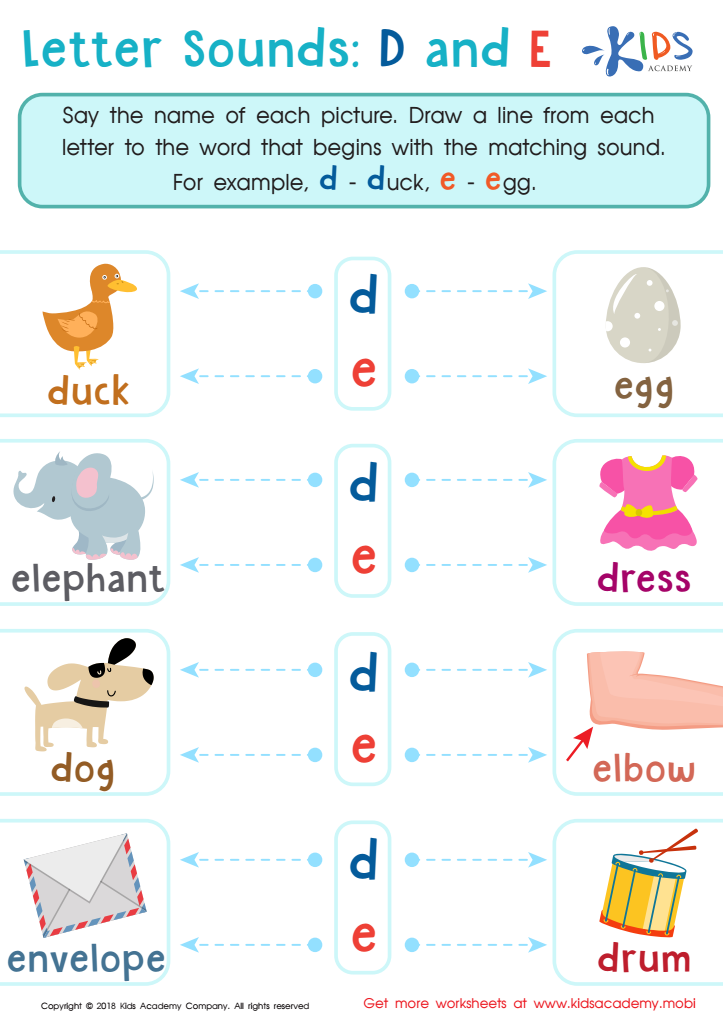
Letter D and E Sounds Worksheet
Kids can use picture clues and visual discrimination to name cheerful pics and isolate the beginning sound. This free PDF worksheet will help them develop phonological awareness, differentiate between "D" and "E", and hone fine-motor skills. It'll also boost their confidence as they become readers.
Letter D and E Sounds Worksheet
Worksheet
Join Kids Academy for Free
Who is primarily going to use this learning content?








Handwriting practice and the mastery of normal letter sounds during the ages of 3-7 are crucial developmental milestones that form the bedrock of literacy skills. For children in this age range, fine motor skills are still developing. Handwriting practice helps refine these skills by improving hand-eye coordination, dexterity, and muscle memory. As children repeatedly form letters, they create connections in the brain that facilitate smooth, legible writing, which is essential for effective communication.
Simultaneously, learning letter sounds is a fundamental step towards phonemic awareness, a critical precursor to reading. Understanding the relationship between letters and their sounds helps children decode words, an ability central to reading proficiency. Early literacy skills not only pave the way for a lifelong love of reading but also have cascading effects on overall academic success.
Moreover, consistent handwriting and phonics practice can enhance a child's confidence and independence. When children can write clearly and understand letter sounds, they feel more capable and willing to engage with learning materials, participate in classroom activities, and express themselves creatively through writing.
When parents and teachers prioritize handwriting practice and letter sounds for young learners, they invest in building a solid foundation for the child’s future educational achievements and lifelong learning capabilities.






