Phonics recognition Normal Letter Sounds Worksheets for Ages 3-7
5 filtered results
-
From - To
Introduce your child to the world of reading with our engaging Phonics Recognition Normal Letter Sounds Worksheets, designed specifically for ages 3-7. These expertly crafted worksheets focus on helping young learners recognize and pronounce fundamental letter sounds, laying a strong foundation for early literacy. Bursting with fun and interactive activities, each worksheet promotes phonemic awareness and boosts reading confidence. Ideal for parents and teachers alike, these resources ensure an enjoyable learning experience at home or in the classroom. Spark your child's love for reading today with our vibrant and educational phonics worksheets!
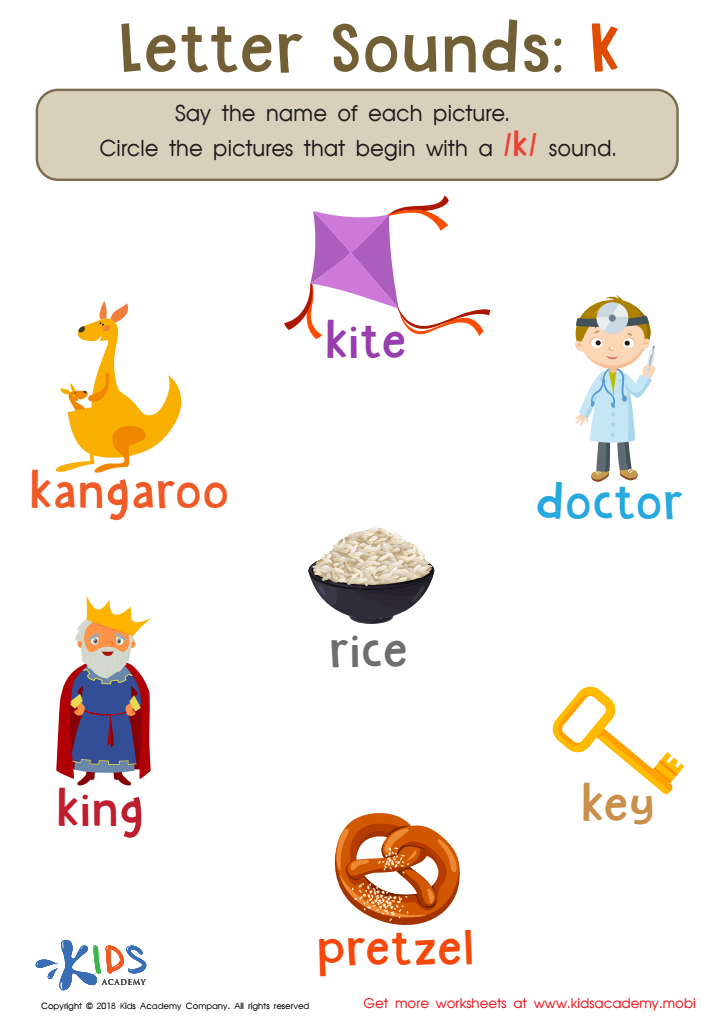
Letter K Sounds Worksheet
 Assign to My Students
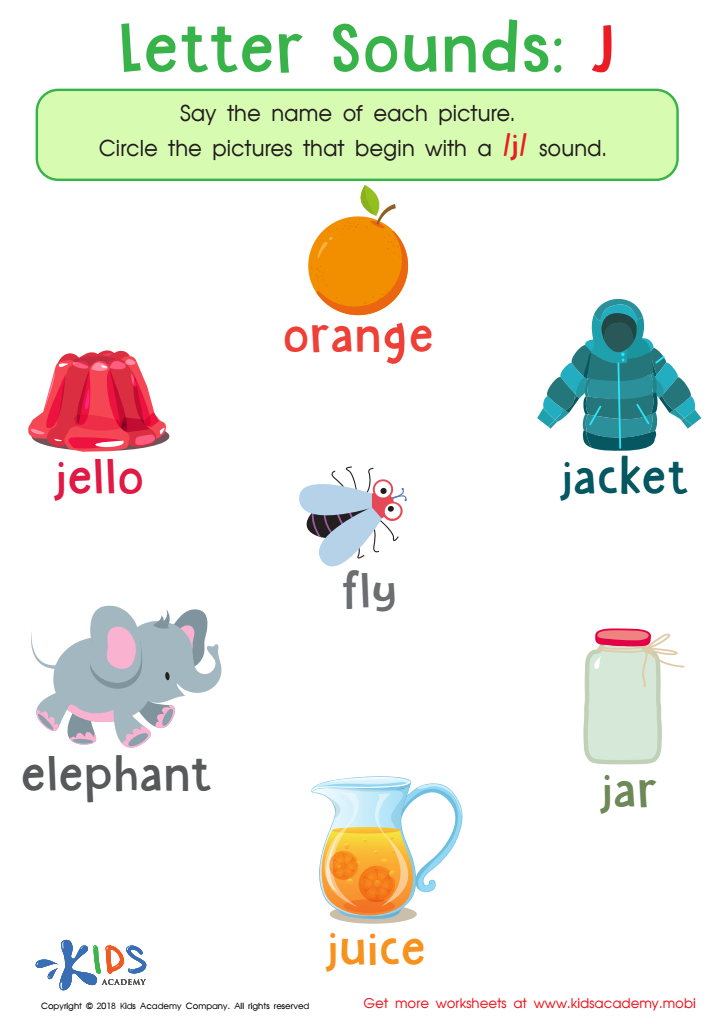
Letter Sounds: J Printable Worksheet
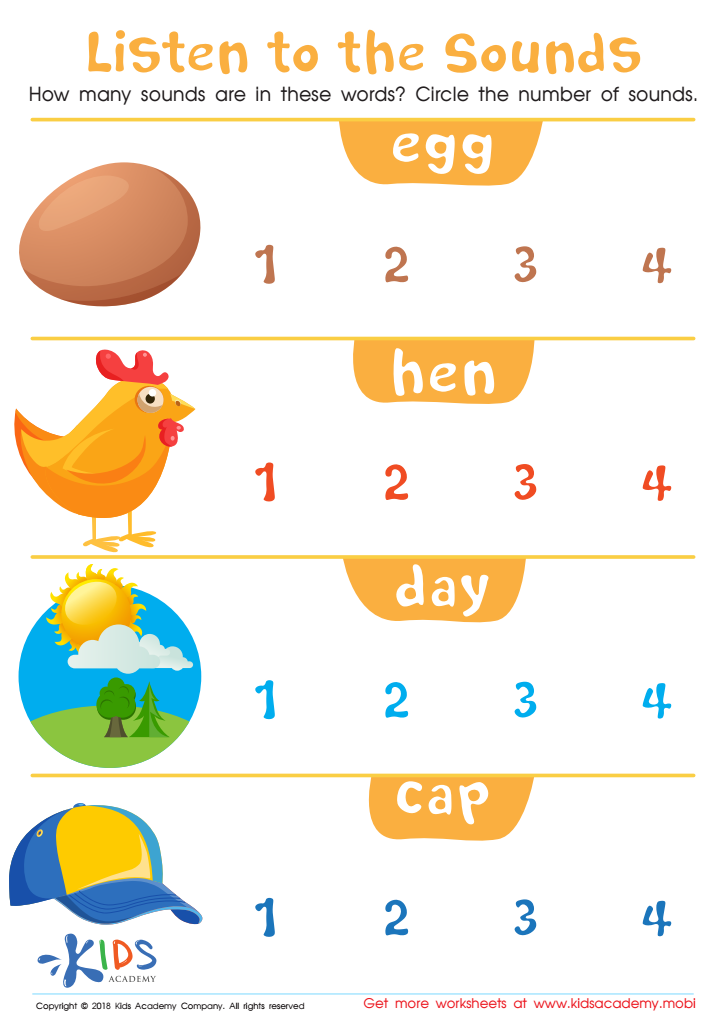
Listen to the Sounds Worksheet
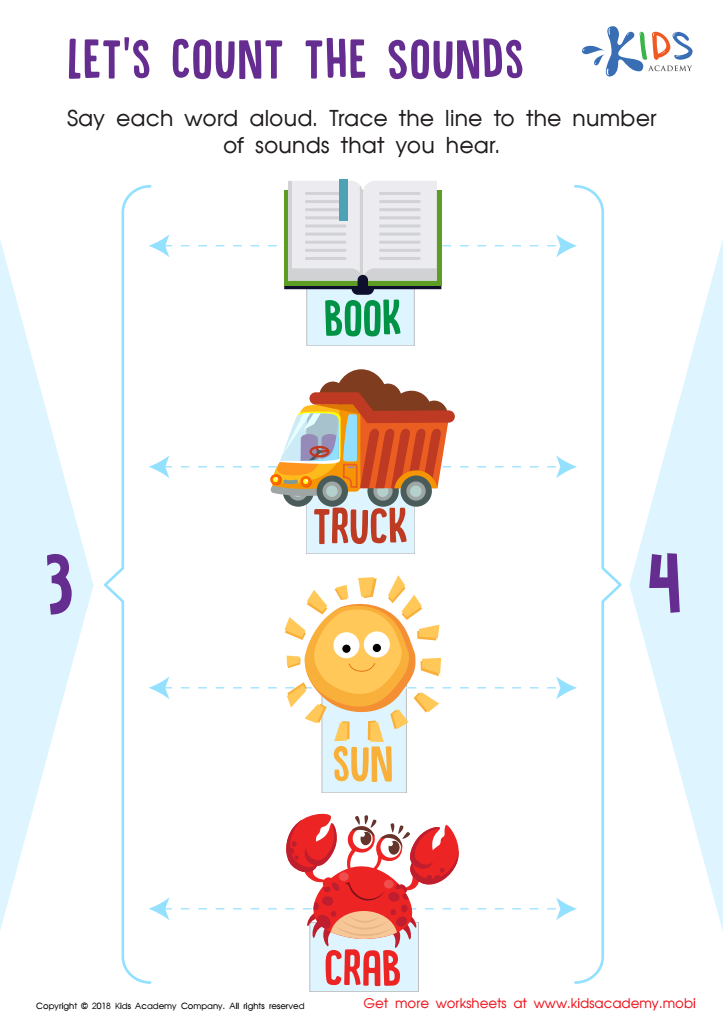
Let's Count the Sounds Worksheet
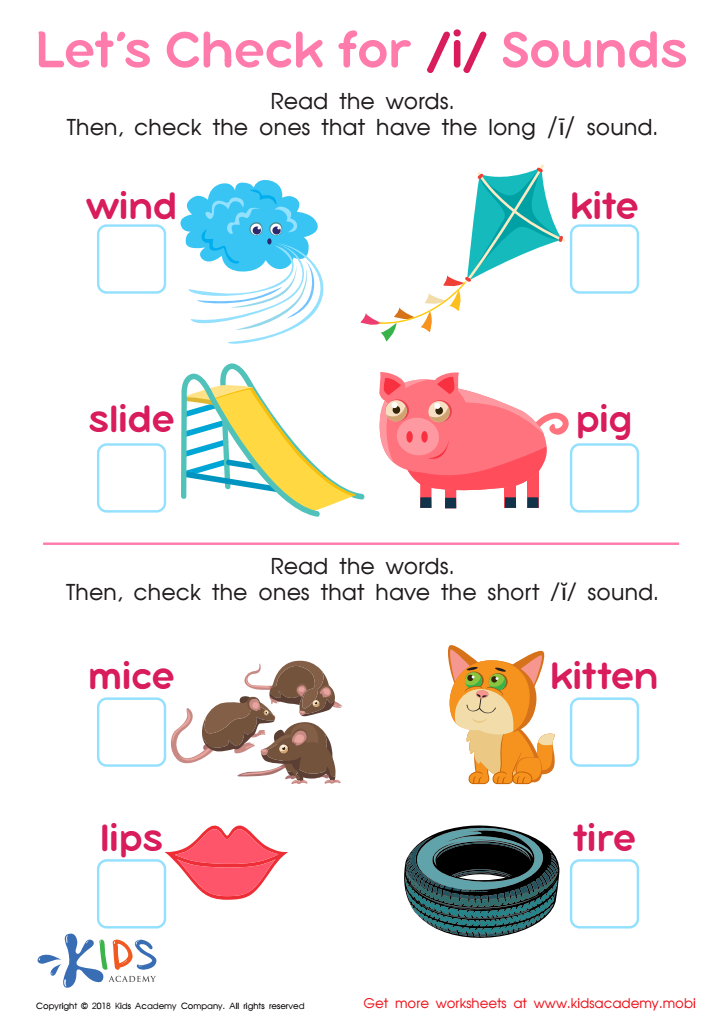
Let's Check for «i» Sounds Worksheet








Phonics recognition and the ability to identify normal letter sounds are fundamental skills for children aged 3-7 because they form the foundation for successful reading and writing. At this pivotal stage in development, young learners are especially receptive to language acquisition. By understanding the relationship between letters and their corresponding sounds, children can more easily decode words. This is essential for reading fluency and comprehension.
For parents and teachers, prioritizing phonics recognition helps children build confidence as independent readers. When a child can associate letters with sounds, they are equipped to tackle unfamiliar words, enhancing their vocabulary and encouraging a love for reading. This skill also supports correct spelling and boosts writing capabilities.
Neglecting phonics education at this critical age can lead to literacy difficulties that may persist and worsen over time. Struggling students might develop reading aversions or fall behind academically. Early intervention and consistent practice in phonics ensure that children enter higher grade levels with the necessary tools to thrive academically.
Moreover, phonics recognition promotes cognitive skills like memory and attention to detail. Encouraging phonics through engaging activities and consistent practice within the home and classroom can set a child on a path to academic success and lifelong learning. Thus, it is something both parents and teachers should deeply care about.






