Reading comprehension Normal Rhyming Worksheets for Ages 3-7
6 filtered results
-
From - To
Discover our engaging "Normal Rhyming Worksheets" designed specifically for children aged 3-7! These worksheets enhance reading comprehension while making learning fun through the playful rhythm of rhymes. Each activity encourages early literacy skills by helping young learners recognize word patterns and sounds, fostering a love for reading from a young age. Ideal for home or classroom use, our resources promote critical thinking and vocabulary development in a delightful way. Explore a variety of interactive exercises, each crafted to build confidence and improve language skills. Give your child the gift of reading with our captivating and educational rhyming worksheets!
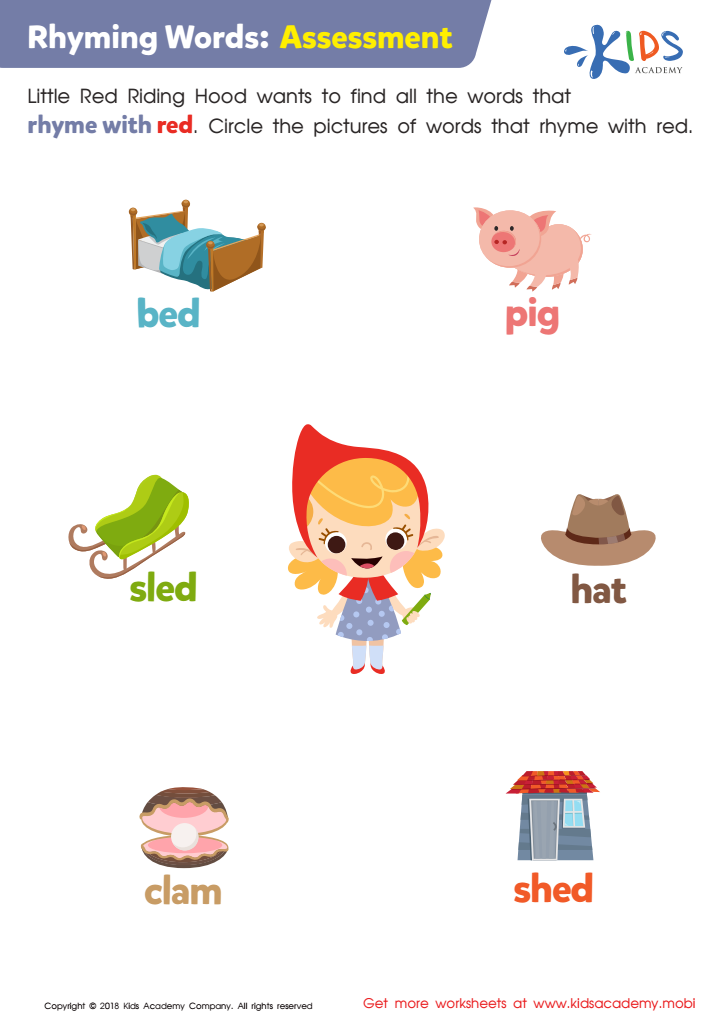
Rhyming Words: Assessment Worksheet
 Assign to My Students
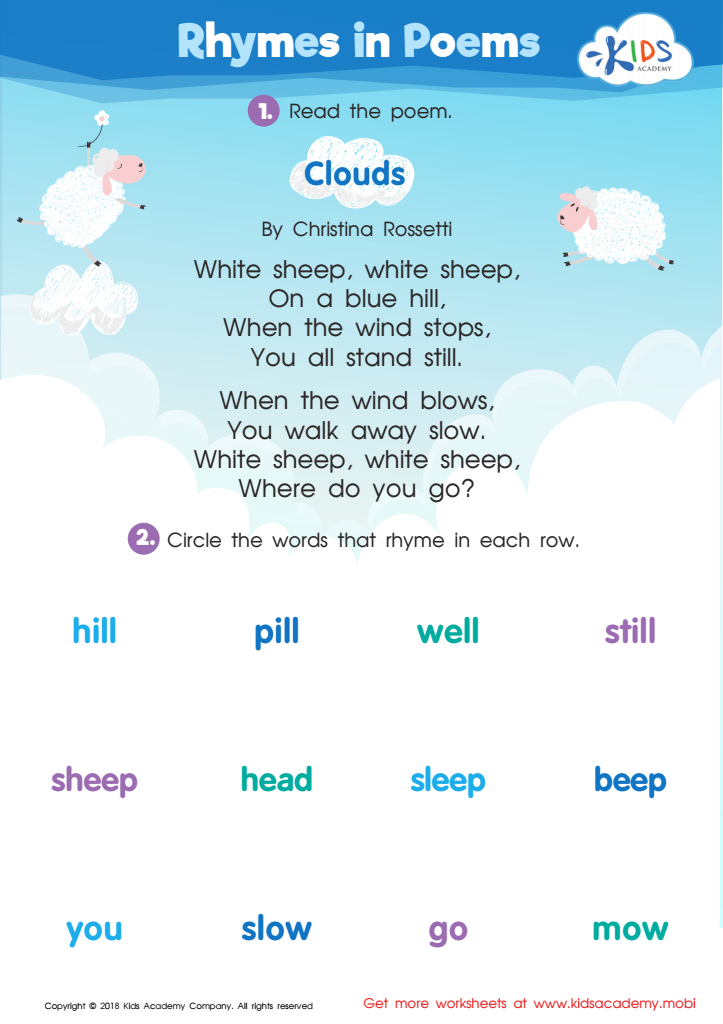
Rhymes in Poems Worksheet
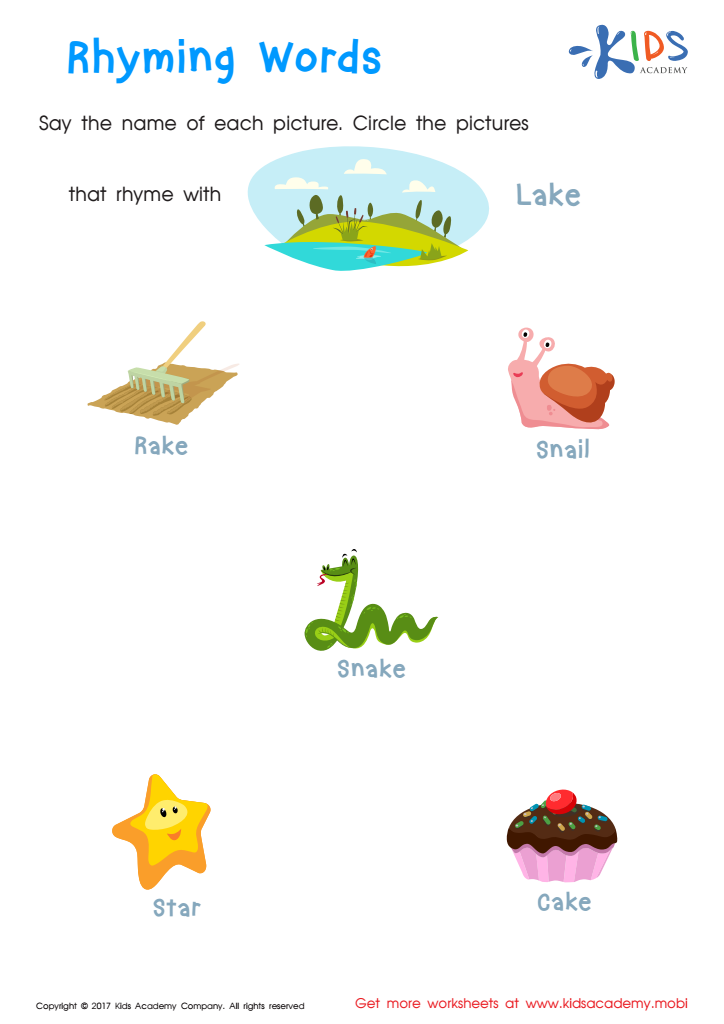
Rhyming Words Rhyming Worksheet
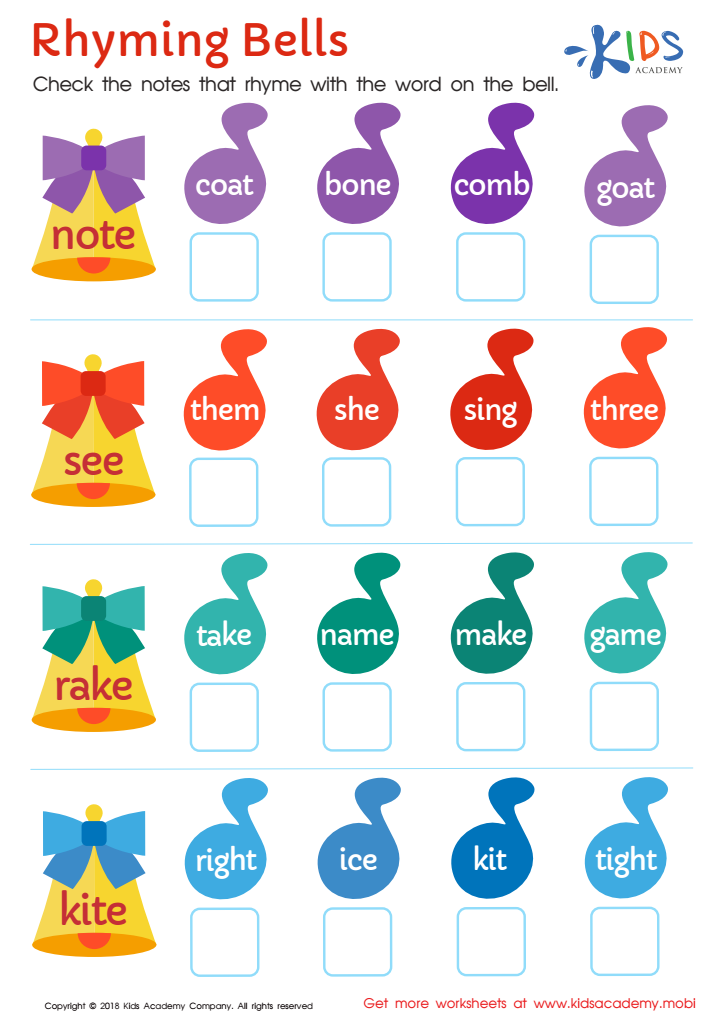
Rhyming Bells Worksheet
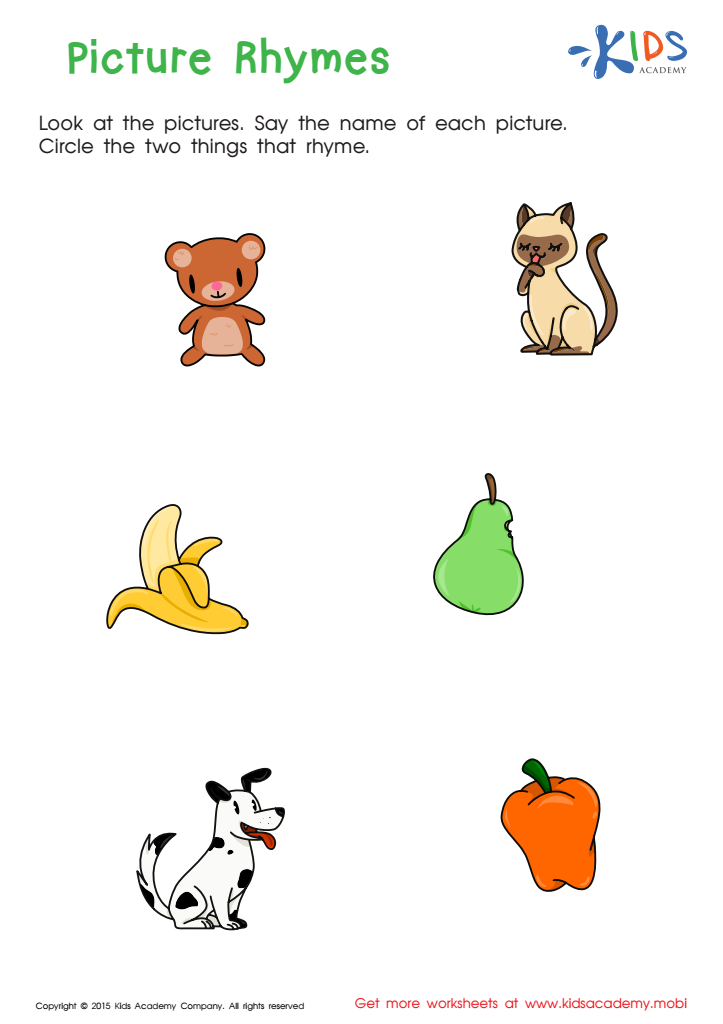
First Words: Picture Rhymes Worksheet
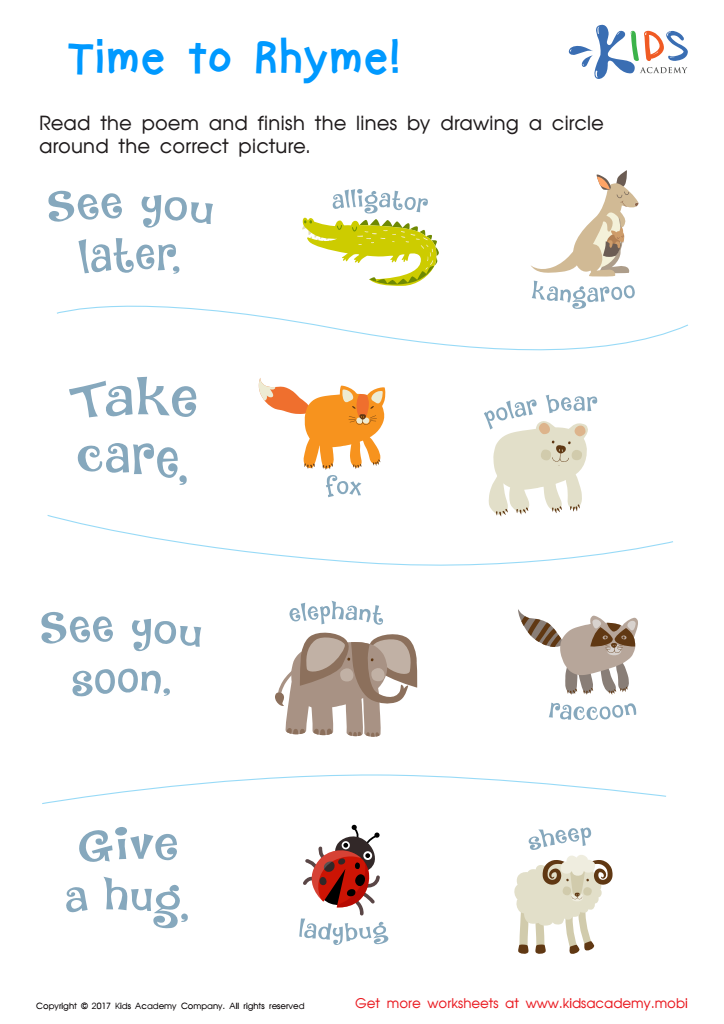
Time to Rhyme Rhyming Worksheet








Parents and teachers should prioritize reading comprehension, particularly through normal rhyming, for children aged 3-7 because it fosters essential cognitive and linguistic skills. At this early stage, children are naturally drawn to the rhythm and melody of rhymes, making reading an enjoyable and engaging experience. This playful element helps capture their attention, which is vital for effective learning.
Rhyming supports phonemic awareness, a critical precursor to reading proficiency. By listening to and practicing rhymes, children learn to identify sounds and syllables, facilitating easier decoding of words later on. As they grasp the connection between sounds and meanings, their vocabulary expands, enriching their language development.
Moreover, reading rhymes enhances memory retention. The repetitive structure of rhyme makes it easier for young learners to recall stories and concepts, reinforcing comprehension. Through shared curiosity and inquiry, discussions about rhyming texts invite critical thinking and comprehension skills, such as prediction and summarization.
Ultimately, nurturing reading comprehension through normal rhyming early on sets a solid foundation for lifelong reading habits, encouraging curiosity and a love for learning, crucial attributes for academic and personal success. Thus, investing in this playful yet purposeful approach is vital for fostering a child's potential.






