Contextual understanding Normal Building Vocabulary Worksheets for Ages 3-7
4 filtered results
-
From - To
Enhance your child's vocabulary with our Contextual Understanding Normal Building Vocabulary Worksheets, designed for ages 3-7. These engaging worksheets promote language development by helping young learners grasp word meanings through context. Fun and age-appropriate activities create a dynamic learning environment, making vocabulary acquisition enjoyable. Children will explore familiar scenarios, improving their comprehension and language skills crucial for future reading and communication. Ideal for parents and educators, our worksheets encourage interactive learning, sparking curiosity and creativity in early learners. Foster a love for language today with our thoughtfully crafted resources tailored to support your child's developmental milestones!
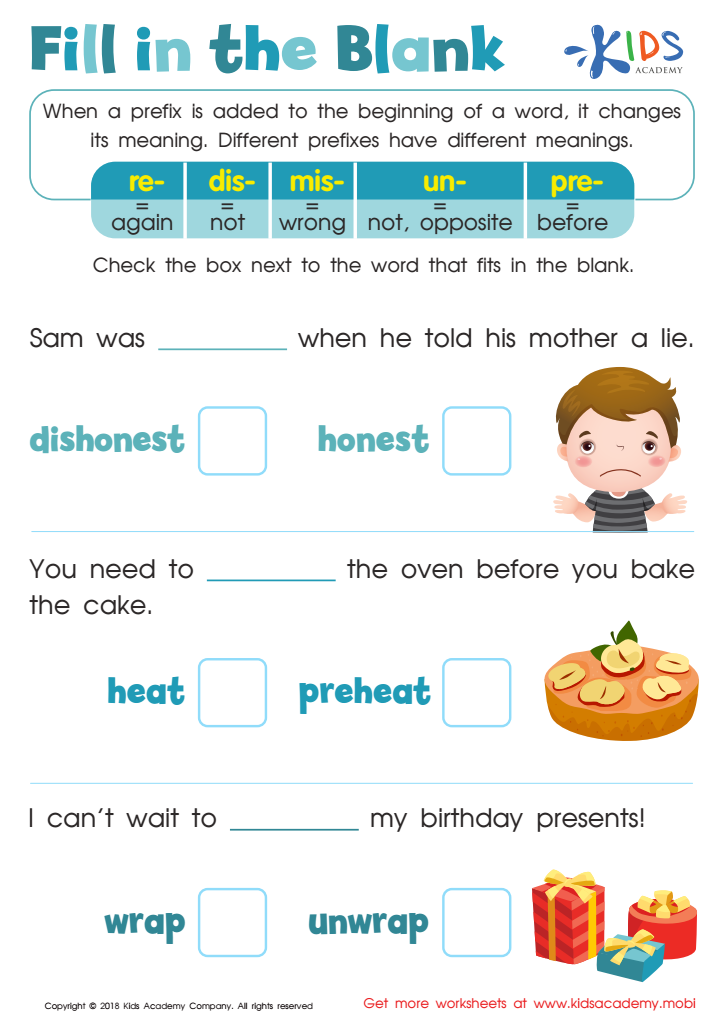
Reading: Fill in the Blank Worksheet
 Assign to My Students











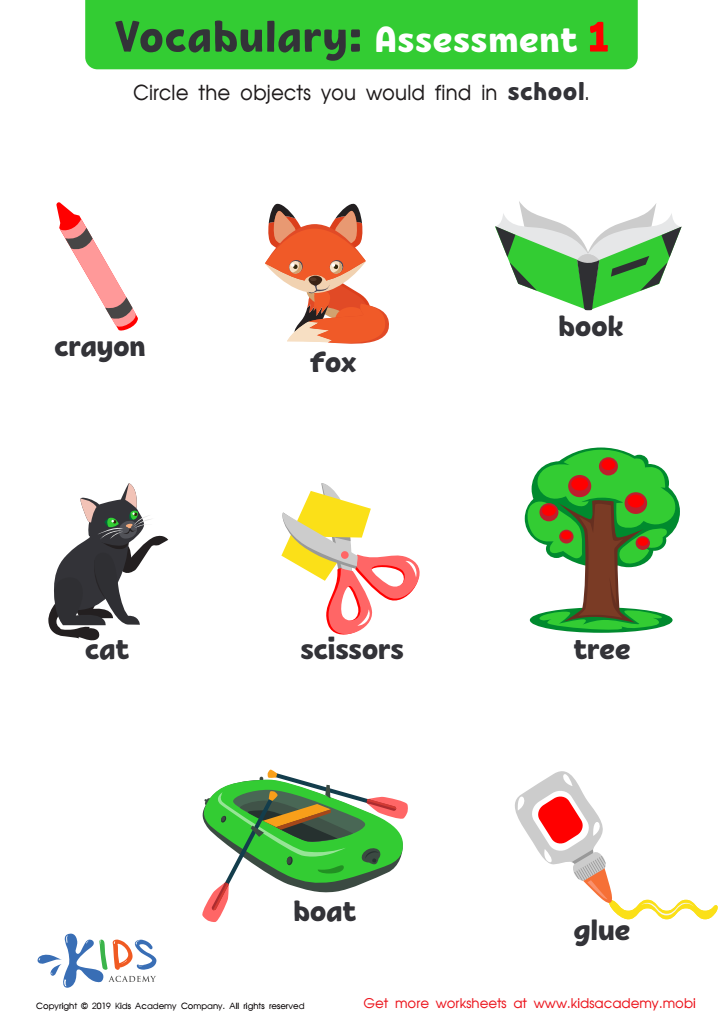
Vocabulary: Assessment 1 Worksheet
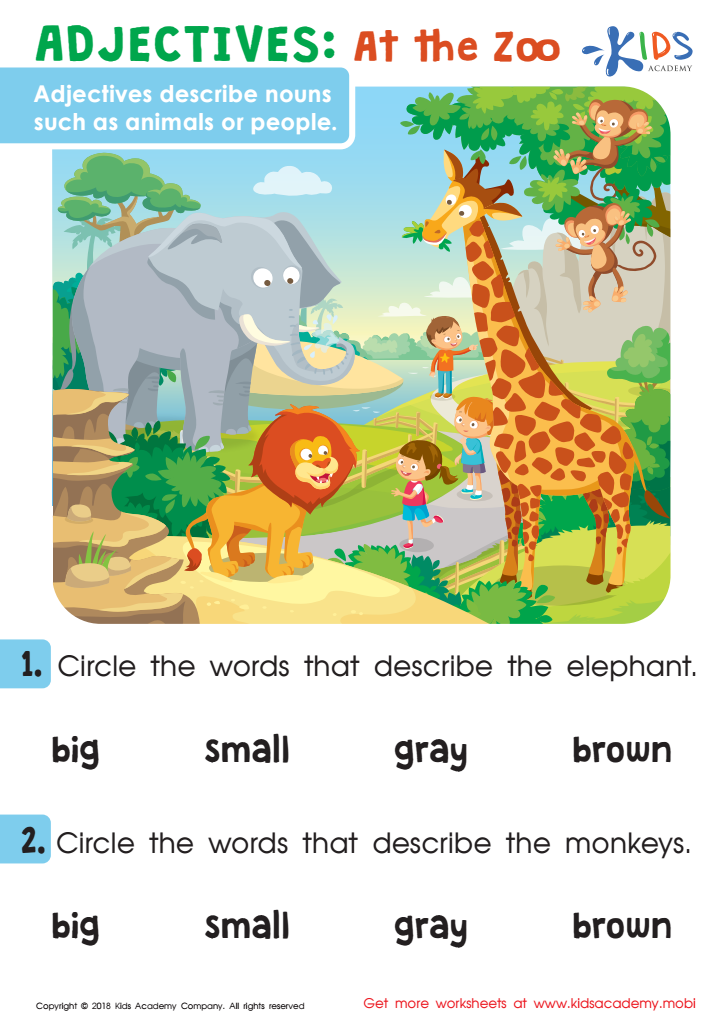
Adjectives: At The Zoo Worksheet
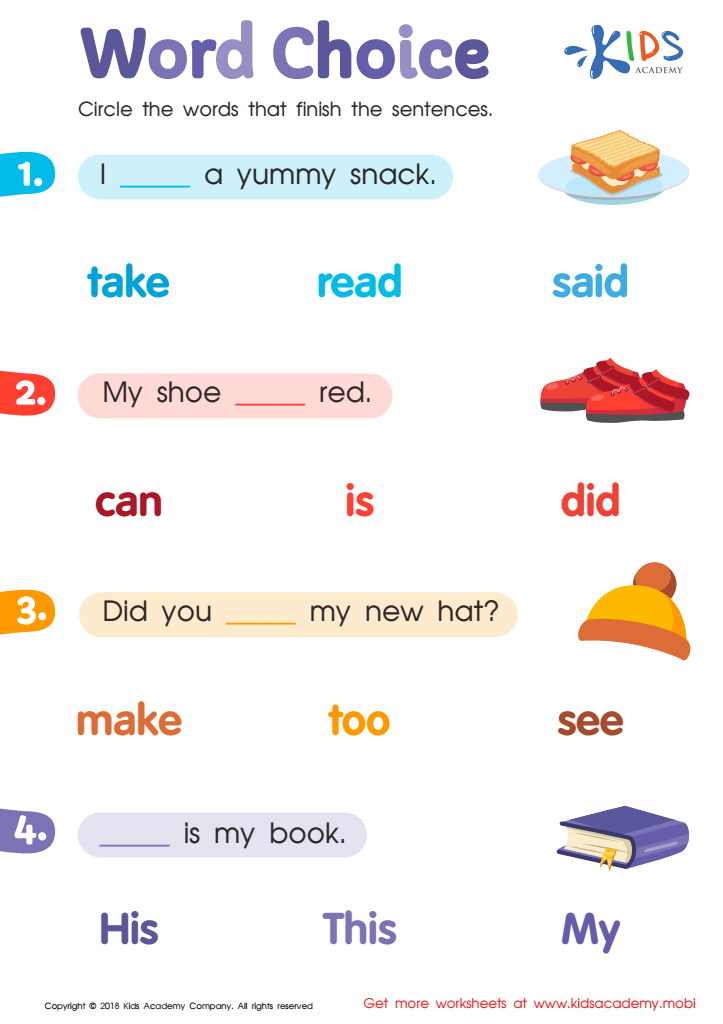
Word Choice Worksheet








Contextual understanding and normal building vocabulary are crucial for children aged 3-7, as they form the foundation for effective communication and literacy skills. During this developmental stage, children are eager to explore language and their environment, and understanding words in context helps them make connections between new vocabulary and real-world experiences. This process not only enriches their language skills but also enhances their cognitive development, enabling them to better express their thoughts and emotions.
Parents and teachers play a vital role in fostering this understanding. Engaging children in conversations, storytelling, and interactive reading helps them relate new words to familiar contexts. This exposure builds their confidence and encourages them to use new vocabulary in meaningful ways, promoting a deeper grasp of language.
Moreover, integrating contextual understanding into education can help close the vocabulary gap often seen in young learners from different backgrounds. By prioritizing vocabulary development, adults can empower children to succeed academically and socially, equipping them with essential skills for future learning. Ultimately, caring about contextual understanding shapes not only a child's language abilities but also their overall intellectual growth and self-expression, laying the groundwork for lifelong learning.








