Historical Knowledge Normal Reading Comprehension Worksheets for Ages 3-7
5 filtered results
-
From - To
Our Historical Knowledge Reading Comprehension Worksheets are perfect for ages 3-7, providing an enriching journey into the past. These worksheets combine engaging stories with comprehension questions to build reading skills while introducing young learners to important historical events and figures. Designed to enhance critical thinking and understanding, each worksheet is crafted to inspire curiosity about history in a fun, approachable manner. Whether in the classroom or at home, these educational resources help kids develop foundational skills in both reading and history, ensuring a well-rounded early education. Engage young minds with our special collection today!
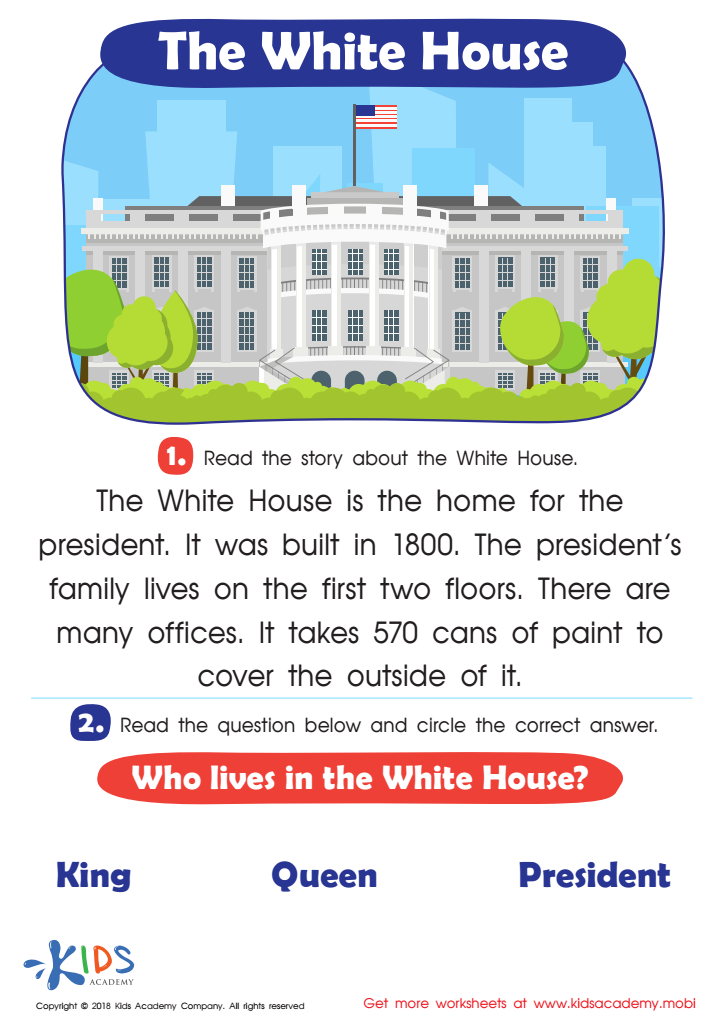
White House Worksheet
 Assign to My Students
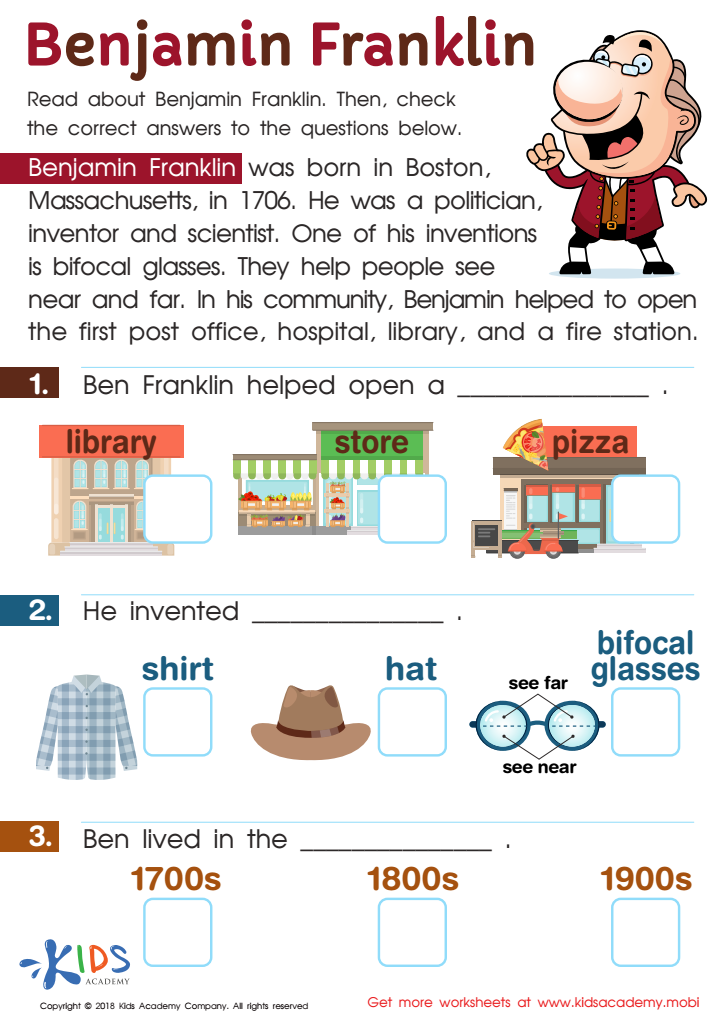
Benjamin Franklin Worksheet
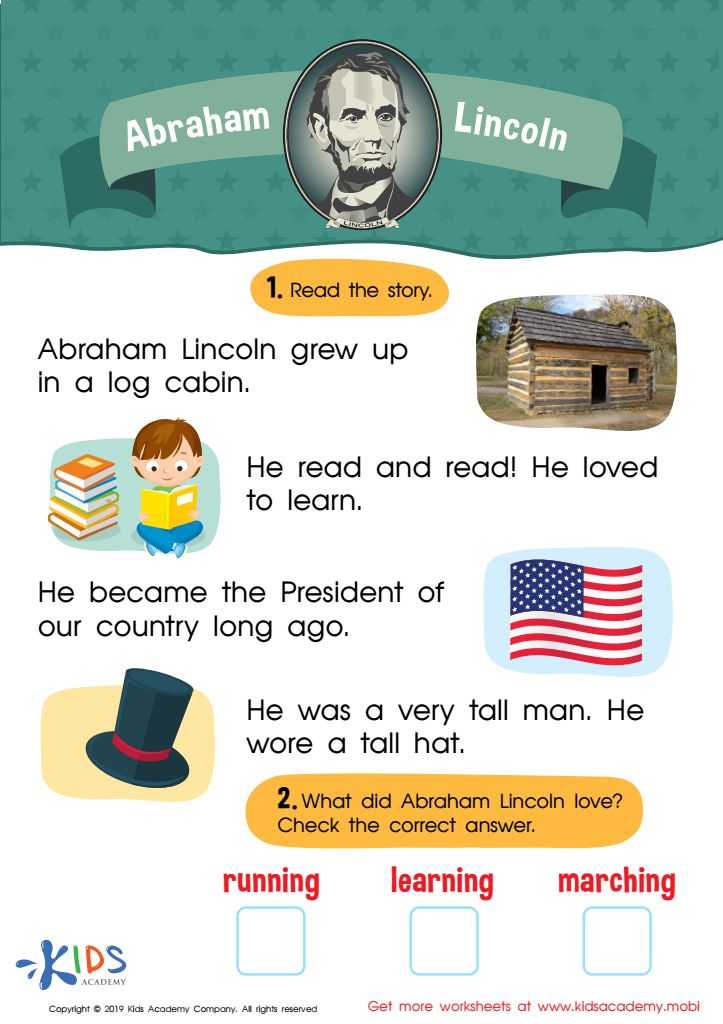
Abraham Lincoln Worksheet
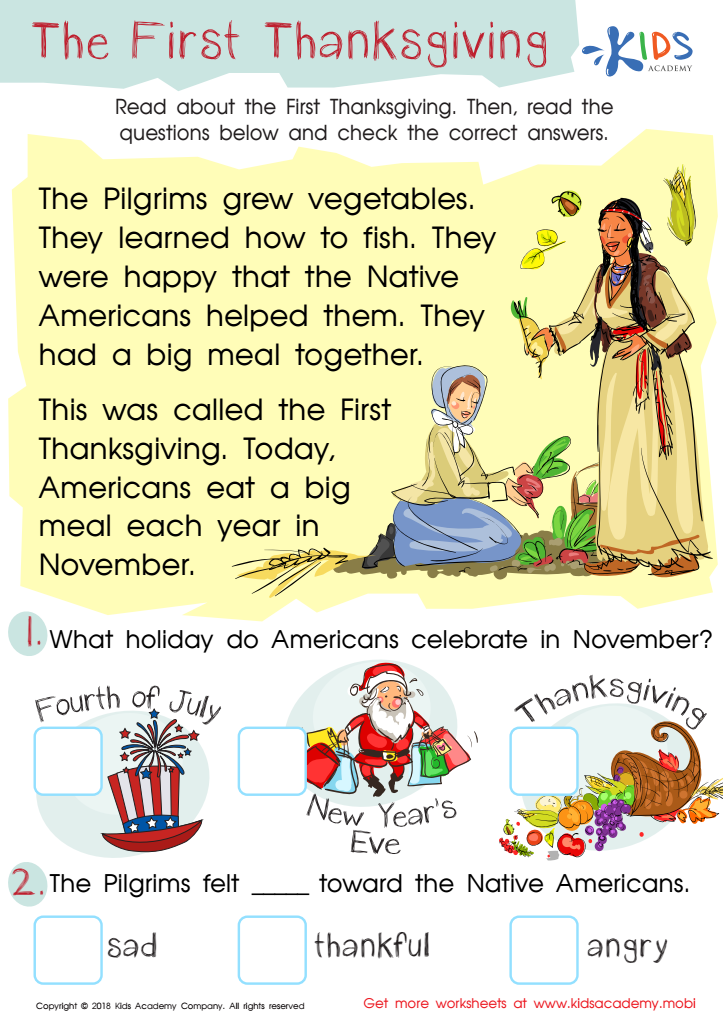
Assessment: First Thanksgiving Worksheet
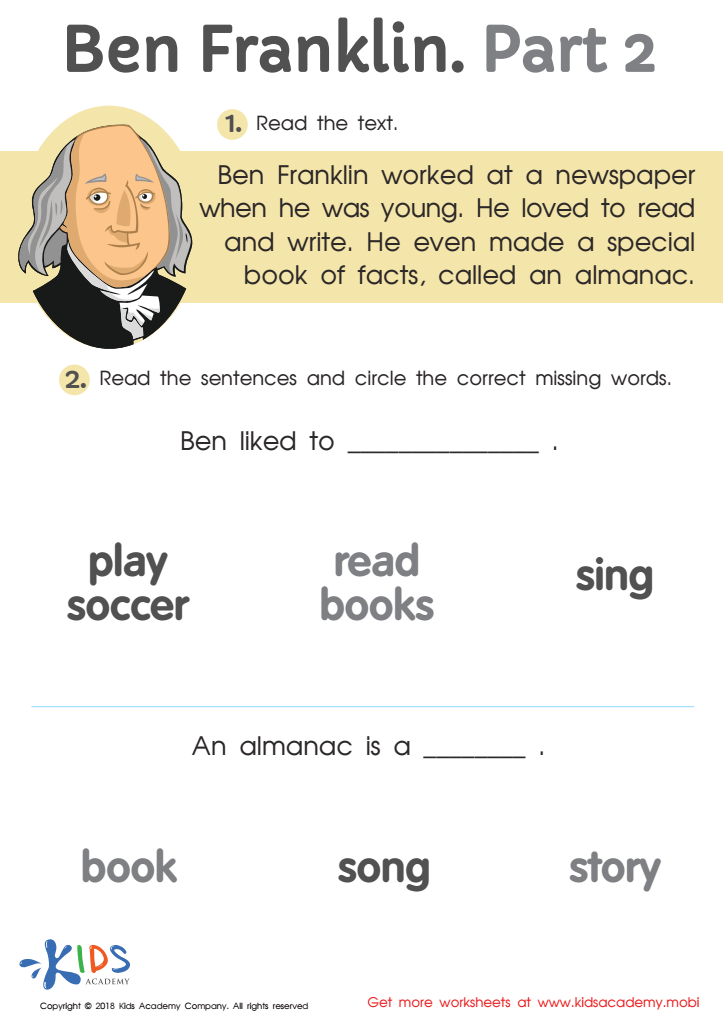
Ben Franklin Part 2 Worksheet







Developing historical knowledge and reading comprehension between ages 3-7 lays a vital foundation for a child's overall cognitive and emotional development. When parents and teachers focus on these areas, they offer children a sense of identity and continuity. Learning about historical events, people, and cultural practices enables young learners to understand how society has evolved and where they fit into it. This helps to build their awareness of community, empathy, and respect for diversity.
Early consistent exposure to reading comprehension activities can improve language skills, expand vocabulary, and foster a love for reading. Understanding the context—knowing 'why' something happened or 'who' did it—plays a crucial role in making the stories more engaging and easier to grasp. This not only aids in memory retention but also encourages a child's natural curiosity and critical thinking skills.
Besides, managing historical knowledge and reading comprehension in these formative years can boost a child's self-confidence. They are likely to participate more actively in conversations and educational activities if they can meaningfully contribute. In turn, this paves the way for academic success in the ensuing years, equipping them with essential skills to navigate their education journey confidently. Therefore, nurturing these skills benefits not just individual growth, but society as a whole.








