Categorization skills Normal Science Worksheets for Ages 3-7
4 filtered results
-
From - To
Enhance your child's cognitive development with our Categorization Skills Normal Science Worksheets for ages 3-7. These expertly designed activities help young learners improve their ability to classify and organize different objects and concepts. By engaging in fun and interactive exercises, children will practice sorting by various attributes such as size, shape, and color. These worksheets not only bolster critical thinking but also lay a strong foundation for future scientific understanding. Ideal for preschool and early elementary students, our printables make learning both effective and enjoyable. Unlock your child's potential with our comprehensive set of categorization worksheets.
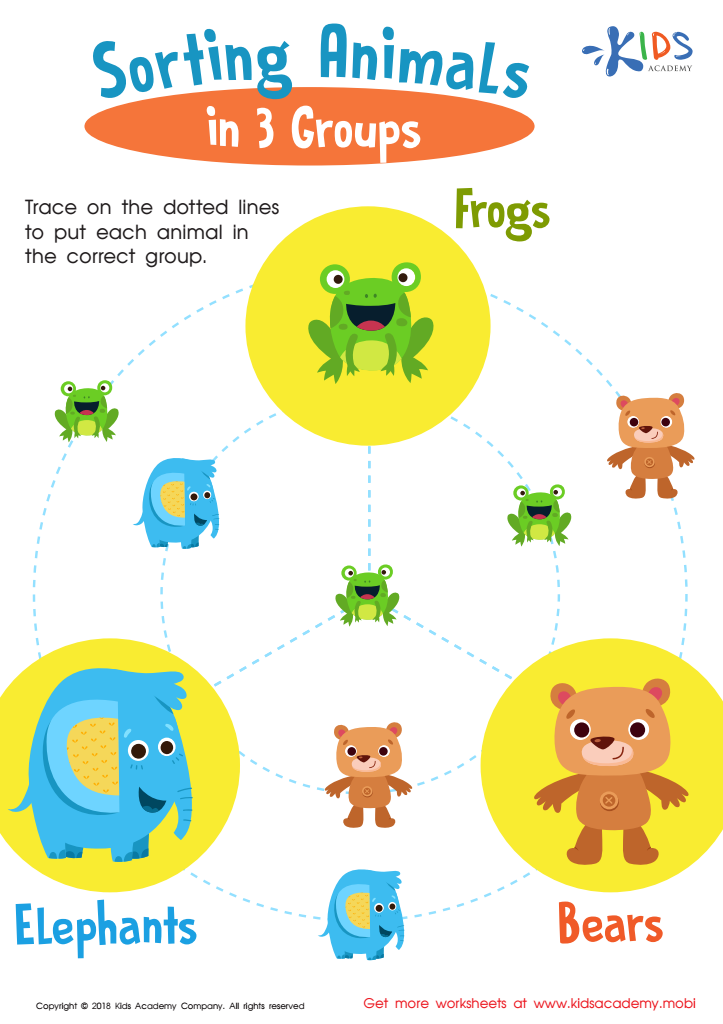
Sorting Animals in 3 Groups Worksheet
 Assign to My Students
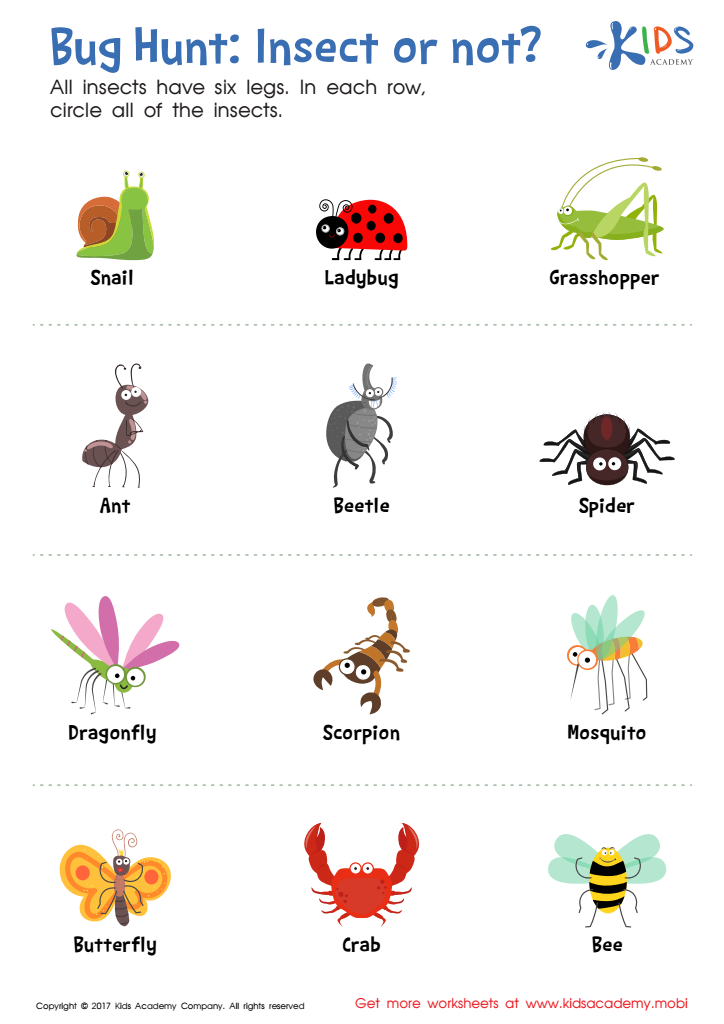
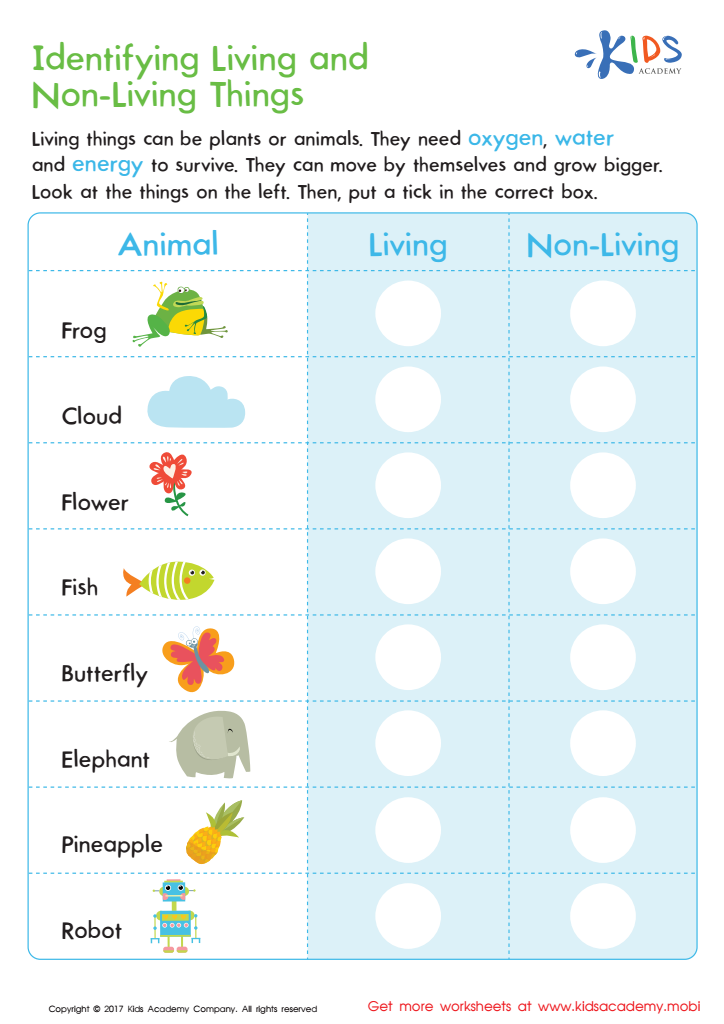
Identifying Living or Non–living Worksheet
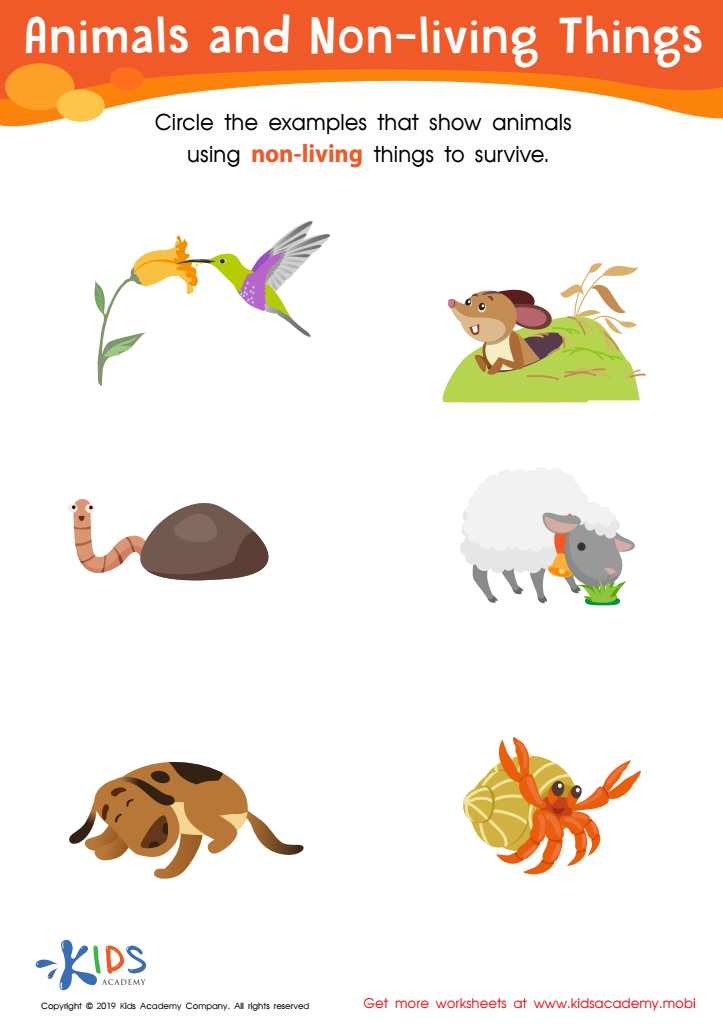
Animals and Non-Living Things Worksheet





Categorization skills are crucial for young children ages 3-7 as they lay the foundation for cognitive development and scientific thinking. These skills enable children to organize information by grouping shared characteristics, which is essential for understanding their world. For example, recognizing that apples, bananas, and grapes are all fruits helps children develop the ability to identify patterns and relationships—key components of critical thinking.
Parents and teachers should care about nurturing categorization skills because they enhance observational prowess, making children more attentive to their surroundings. This, in turn, helps in language acquisition as they learn terms to describe and differentiate objects. Through activities like sorting blocks by color or animals by species, children improve their problem-solving abilities and learn to make informed predictions—core practices in science.
Moreover, categorization facilitates memory retention. When children can group objects based on similarities, they find it easier to recall and apply knowledge in new contexts. This skill also fosters emotional and social intelligence, as understanding categories helps children make sense of social norms and roles.
In summary, by supporting the development of categorization skills, parents and teachers not only advance children's academic readiness but also equip them with essential life skills for future learning and everyday situations.







