Knowledge application Normal Science Worksheets for Ages 3-7
3 filtered results
-
From - To
Unlock the wonders of science for young minds with our "Knowledge Application Normal Science Worksheets" designed for ages 3-7! These engaging worksheets provide an interactive way for children to explore basic scientific concepts through fun and age-appropriate activities. From identifying colors in nature to understanding the weather, each worksheet fosters curiosity and critical thinking skills. Ideal for parents and teachers, these resources support early childhood learning while making science enjoyable. Encourage your little ones to investigate, ask questions, and make connections to the world around them. Start their exciting scientific journey today with our carefully crafted worksheets!
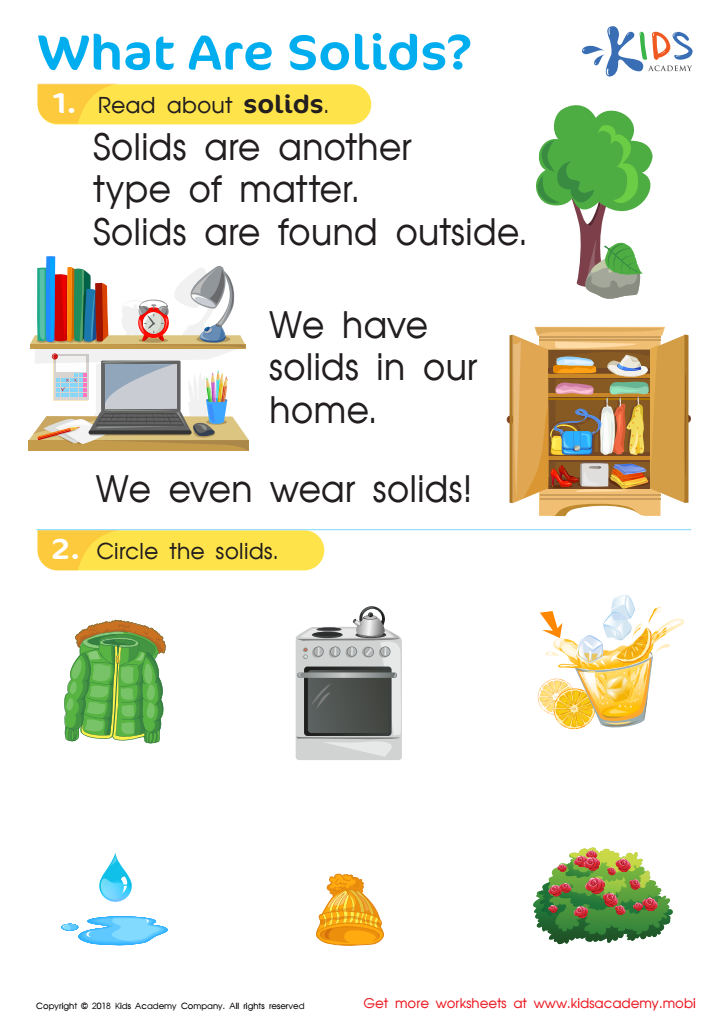
What Are Solids? Worksheet
 Assign to My Students
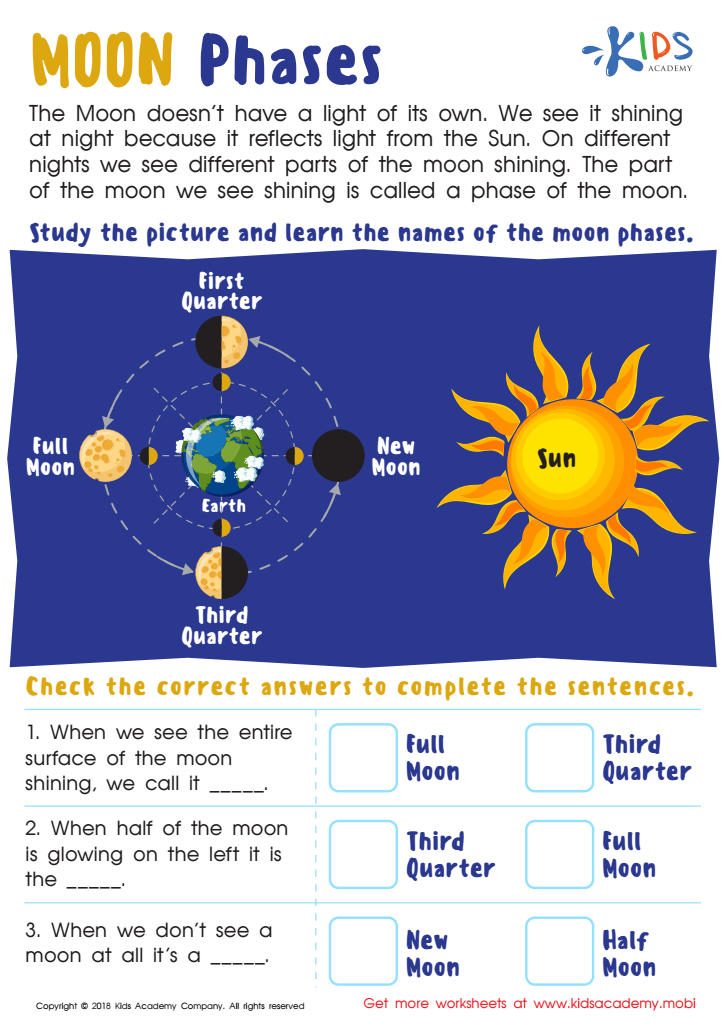
Moon Phases Worksheet
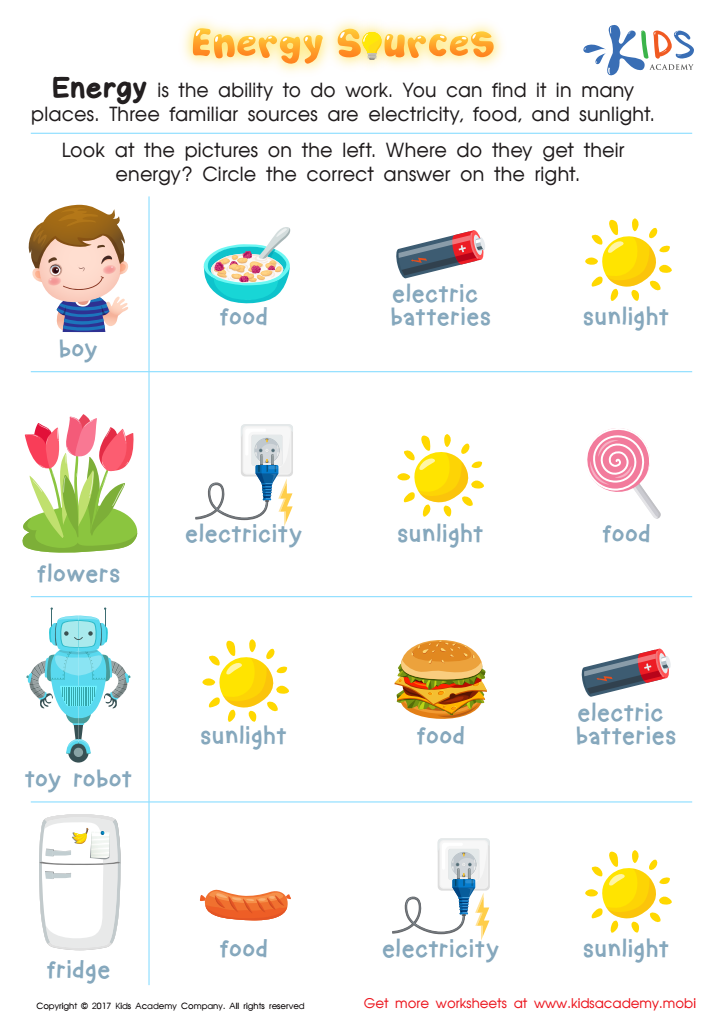
Energy Sources Printable




.jpg)

Knowledge application in the context of Normal Science for children aged 3-7 is crucial for fostering a strong foundation in critical thinking, problem-solving, and scientific inquiry. At this developmental stage, children are naturally curious, and nurturing this curiosity can lead to a deeper understanding of the world around them. Engaging with scientific principles through hands-on activities helps them learn to make observations, form hypotheses, and test their ideas, reinforcing the importance of inquiry-based learning.
Parents and teachers should recognize that early exposure to scientific concepts sets the stage for lifelong learning and exploration. Incorporating science into everyday experiences—such as nature walks, simple experiments, or playful questioning—encourages children to ask “why” and “how,” promoting cognitive development and enhancing language skills.
Moreover, applying knowledge through Normal Science also helps children develop resilience and a growth mindset, as they learn from trial and error. By fostering a supportive environment that emphasizes exploration and discovery, adults can cultivate an appreciation for science that lasts into adulthood. Ultimately, nurturing scientific thinking in young children not only supports their academic growth but also prepares them to navigate and understand the complexities of the world as informed citizens.







