Matching skills Normal Science Worksheets for Ages 3-7
4 filtered results
-
From - To
Discover the joy of learning with our Matching Skills Normal Science Worksheets for ages 3-7, designed to spark curiosity and foster foundational skills. These engaging worksheets help young learners enhance their understanding of basic scientific concepts through fun, interactive matching activities. Perfect for early childhood development, each printable worksheet targets critical thinking, observation, and reasoning abilities. Our science-themed exercises cover a range of captivating topics, providing the ideal stepping stone for budding scientists. Empower your child’s learning journey today with resources that make education both enjoyable and impactful. Download your free printable worksheets now!
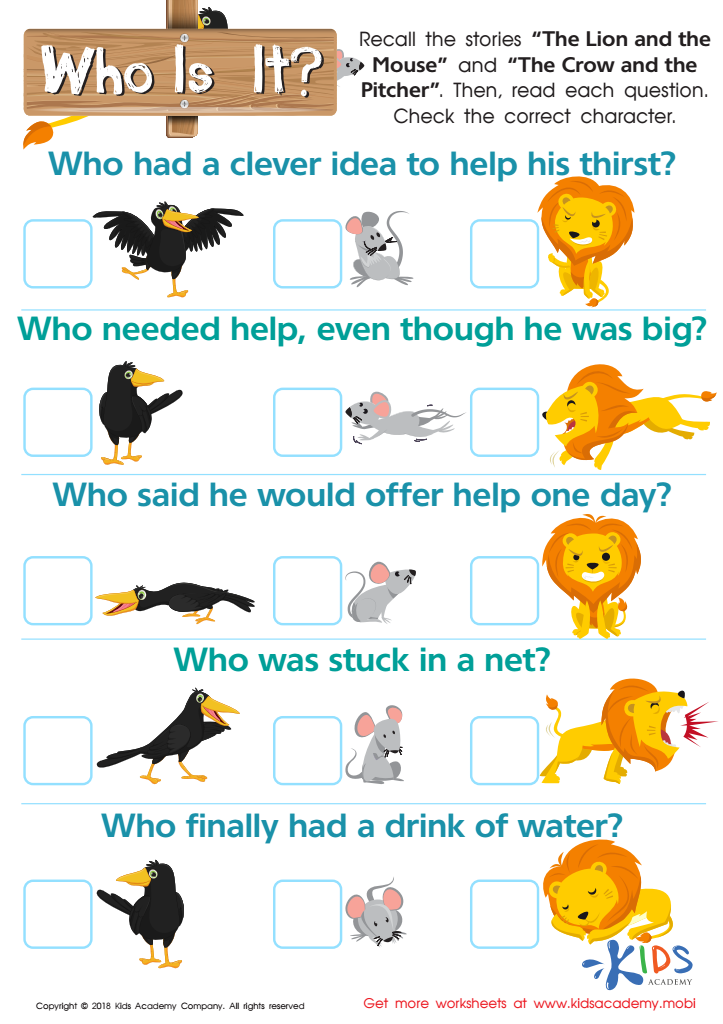
Who Is It? Worksheet
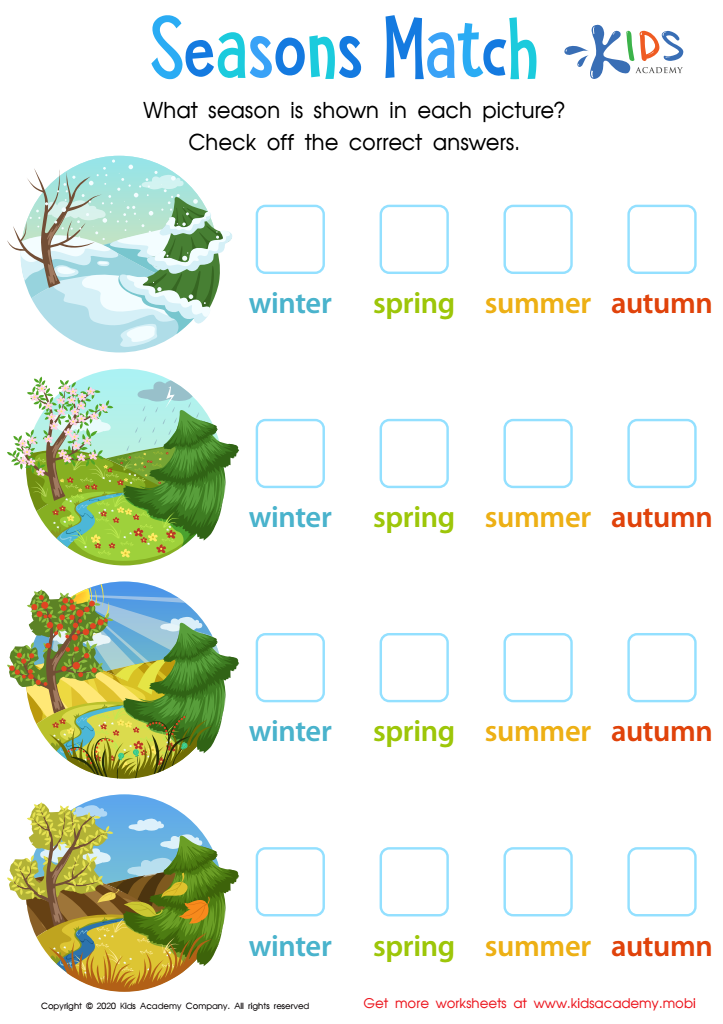
Seasons Match Worksheet
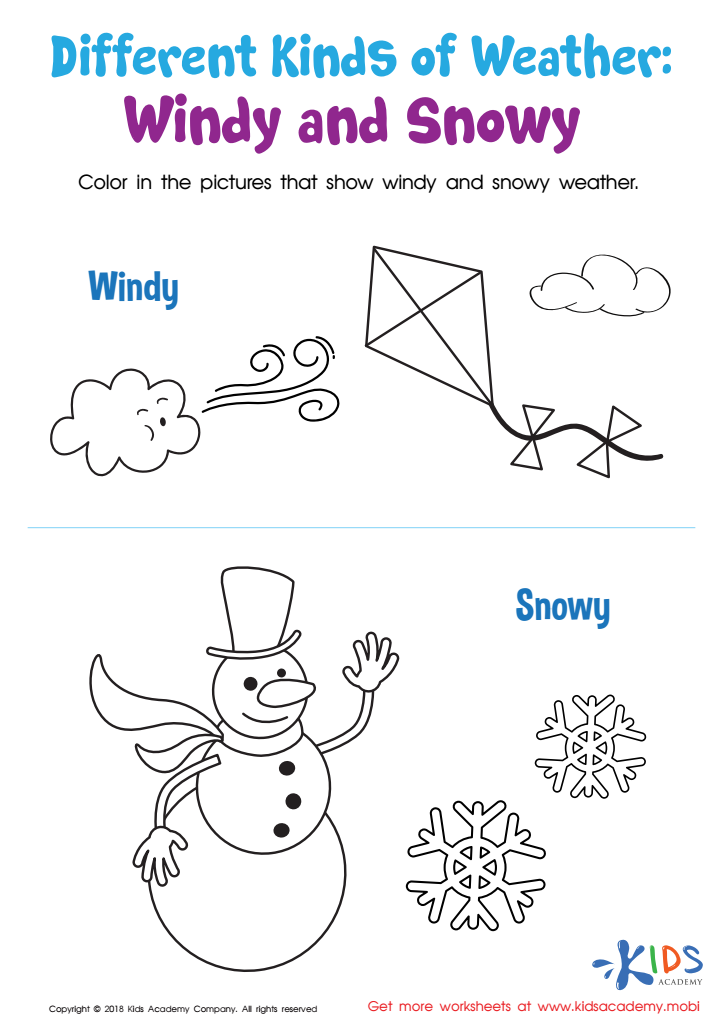
Different Kinds of Weather: Windy and Snowy Worksheet
 Assign to My Students
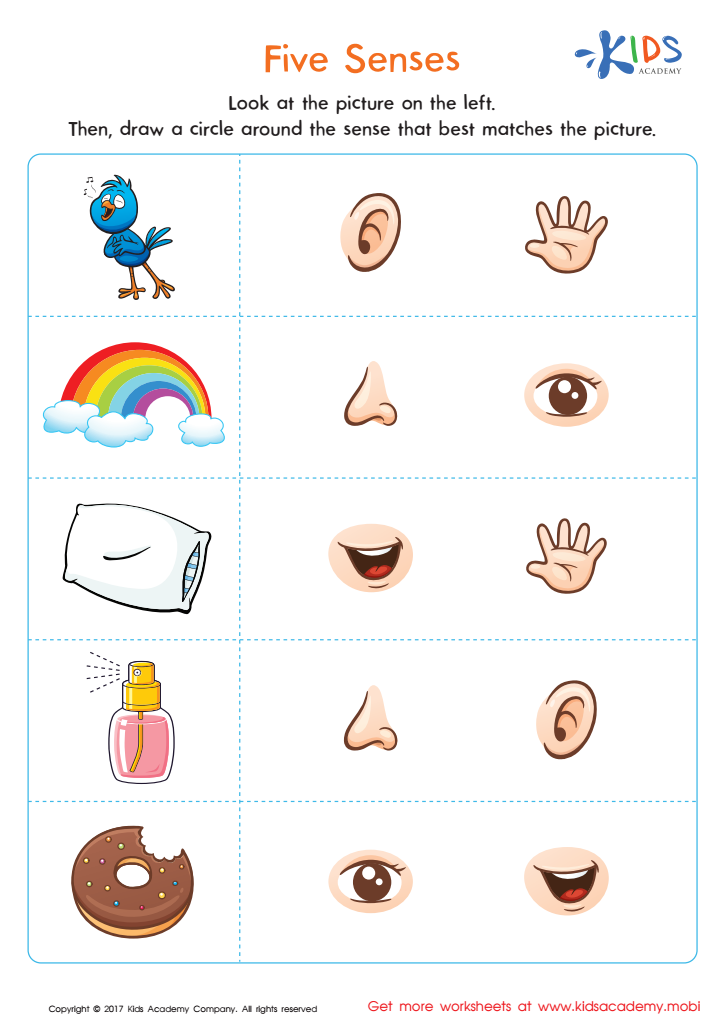
Five Senses Printable






Matching skills in early childhood, particularly between the ages of 3-7, are fundamental for cognitive and developmental growth. For both parents and teachers, fostering these skills through activities labeled as "Normal Science" ensures that children are not only entertained but also engaged in meaningful learning experiences that form the foundation for later academic success.
Matching games and activities enhance children's abilities to observe, compare, and categorize objects or information, thereby sharpening their attention to detail and boosting their memory. These skills underpin essential cognitive abilities such as logical thinking, problem-solving, and critical analysis. When children match items based on attributes like color, shape, size, or patterns, they develop early numeracy and literacy skills that contribute to mastering reading and mathematics efficiently.
Moreover, matching activities are often inclusive and can be tailored to suit various skill levels and learning styles, ensuring that all children can participate and benefit. This inclusivity helps build children's confidence and encourages a love for learning from an early age.
For teachers and parents, integrating matching skills into daily routines or playtime not only supports academic readiness but also promotes bonding and social development as children learn to share, take turns, and sometimes collaborate with peers or family members. Therefore, investing time in matching games is a valuable and scientifically-backed strategy for nurturing well-rounded and capable young learners.







